

18
JACK COHEN
show an asymmetric healing of its papilla after plucking or an afterfeather. Perhaps all that may be said is that contour feathers have
barb-ridge obliquity, dorsally high mucopolysaccharides in the dermal
papilla, asymmetric healing, and after-feathers; down feathers do not.
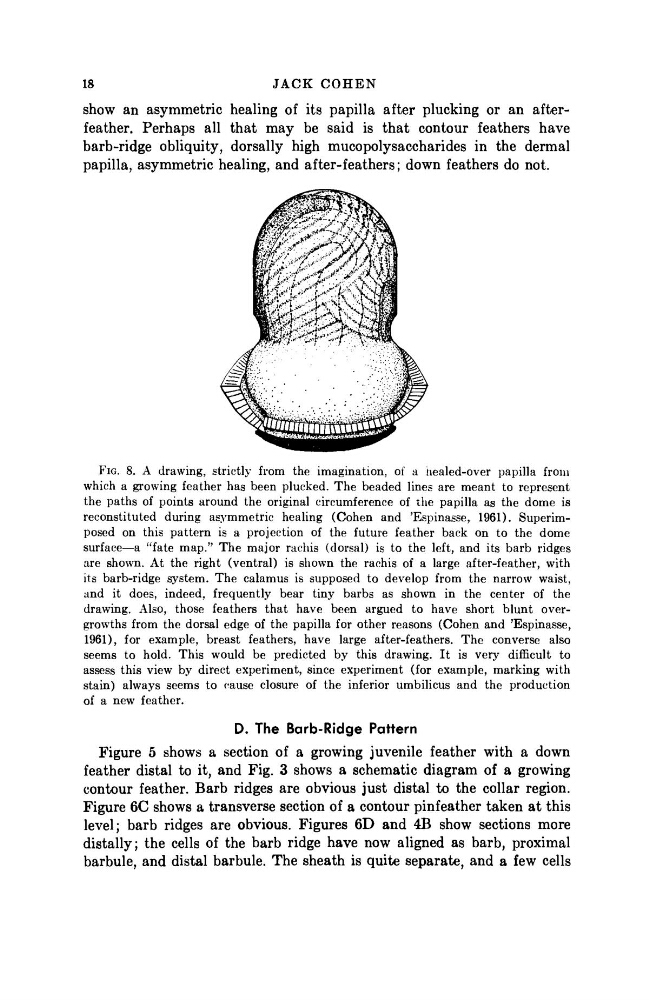
FIG. 8. A drawing, strictly from the imagination, of a healed-over papilla from
which a growing feather has been plucked. The beaded lines are meant to represent
the paths of points around the original circumference of the papilla as the dome is
reconstituted during asymmetric healing (Cohen and 'Espinasse, 1961). Superimposed on this pattern is a projection of the future feather back on to the dome
surface—a "fate map." The major rachis (dorsal) is to the left, and its barb ridges
are shown. At the right (ventral) is shown the rachis of a large after-feather, with
its barb-ridge system. The calamus is supposed to develop from the narrow waist,
and it does, indeed, frequently bear tiny barbs as shown in the center of the
drawing. Also, those feathers that have been argued to have short blunt overgrowths from the dorsal edge of the papilla for other reasons (Cohen and 'Espinasse,
1961), for example, breast feathers, have large after-feathers. The converse also
seems to hold. This would be predicted by this drawing. It is very difficult to
assess this view by direct experiment, since experiment (for example, marking with
stain) always seems to cause closure of the inferior umbilicus and the production
of a new feather.
D. The Barb-Ridge Pattern
Figure 5 shows a section of a growing juvenile feather with a down
feather distal to it, and Fig. 3 shows a schematic diagram of a growing
contour feather. Barb ridges are obvious just distal to the collar region.
Figure 6C shows a transverse section of a contour pinfeather taken at this
level; barb ridges are obvious. Figures 6D and 4B show sections more
distally; the cells of the barb ridge have now aligned as barb, proximal
barbule, and distal barbule. The sheath is quite separate, and a few cells
JACK COHEN
show an asymmetric healing of its papilla after plucking or an afterfeather. Perhaps all that may be said is that contour feathers have
barb-ridge obliquity, dorsally high mucopolysaccharides in the dermal
papilla, asymmetric healing, and after-feathers; down feathers do not.
FIG. 8. A drawing, strictly from the imagination, of a healed-over papilla from
which a growing feather has been plucked. The beaded lines are meant to represent
the paths of points around the original circumference of the papilla as the dome is
reconstituted during asymmetric healing (Cohen and 'Espinasse, 1961). Superimposed on this pattern is a projection of the future feather back on to the dome
surface—a "fate map." The major rachis (dorsal) is to the left, and its barb ridges
are shown. At the right (ventral) is shown the rachis of a large after-feather, with
its barb-ridge system. The calamus is supposed to develop from the narrow waist,
and it does, indeed, frequently bear tiny barbs as shown in the center of the
drawing. Also, those feathers that have been argued to have short blunt overgrowths from the dorsal edge of the papilla for other reasons (Cohen and 'Espinasse,
1961), for example, breast feathers, have large after-feathers. The converse also
seems to hold. This would be predicted by this drawing. It is very difficult to
assess this view by direct experiment, since experiment (for example, marking with
stain) always seems to cause closure of the inferior umbilicus and the production
of a new feather.
D. The Barb-Ridge Pattern
Figure 5 shows a section of a growing juvenile feather with a down
feather distal to it, and Fig. 3 shows a schematic diagram of a growing
contour feather. Barb ridges are obvious just distal to the collar region.
Figure 6C shows a transverse section of a contour pinfeather taken at this
level; barb ridges are obvious. Figures 6D and 4B show sections more
distally; the cells of the barb ridge have now aligned as barb, proximal
barbule, and distal barbule. The sheath is quite separate, and a few cells