

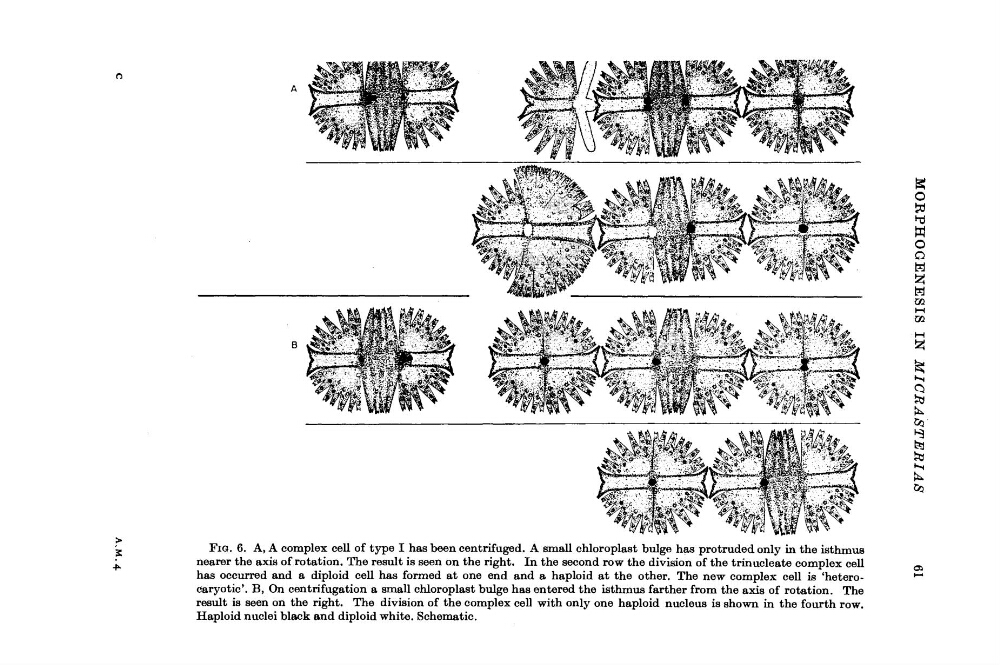
FIG. 6. A, A complex cell of type I has been centrifuged. A small chloroplast bulge has protruded only in the isthmus
nearer the axis of rotation. The result is seen on the right. In the second row the division of the trinucleate complex cell
has occurred and a diploid cell has formed at one end and a haploid at the other. The new complex cell is 'heteroearyotic'. B, On centrifugation a small chloroplast bulge has entered the isthmus farther from the axis of rotation. The
result is seen on the right. The division of the complex cell with only one haploid nucleus is shown in the fourth row.
Haploid nuclei black and diploid white. Schematic.
o
A y
i
B
A . M . 4
MORPHOGENESIS IN MIGRASTERIAS
61
nearer the axis of rotation. The result is seen on the right. In the second row the division of the trinucleate complex cell
has occurred and a diploid cell has formed at one end and a haploid at the other. The new complex cell is 'heteroearyotic'. B, On centrifugation a small chloroplast bulge has entered the isthmus farther from the axis of rotation. The
result is seen on the right. The division of the complex cell with only one haploid nucleus is shown in the fourth row.
Haploid nuclei black and diploid white. Schematic.
o
A y
i
B
A . M . 4
MORPHOGENESIS IN MIGRASTERIAS
61