

120
LUISE STANGE
a synthesis of protein rich in arginine must also take place in the
nucleoli of these cells.
At first no differences in nucleolar size are recognizable between
neighbouring cells (Fig. la, b). But after this initial phase in which
neighbouring cells seem to behave in the same manner, differences
appear between these cells (Fig. lc). In some cells the nucleolus dissolves and nuclear and cell division occurs. In some other cells the
nucleolus increases further in size and the cells grow out and form
rhizoids. In many cells, finally, the nucleolus decreases again in size.
Furthermore, not all the dividing cells continue to divide. Many of these
cells cease to regenerate further after the first or after several divisions.
Only very few cells proceed with division and growth and produce a
regenerative plant. In this way, in the union of originally uniform cells
with enlarged nucleoli striking differences appear between the cells. In
the reaction of the isolated cells, therefore, two phases can be distinguished: in the first, all isolated cells show some changes of their
properties, while in the second phase, embryonization proceeds only in
some cells and in different directions ('Umstimmung-Differenzierung',
Stange, 1957, 1959).
Concomitant with the increase in nucleolar size, an accumulation of
starch in the cells is observed. This accumulation of starch takes place
in all isolated cells to the same extent with the exception of the cells in
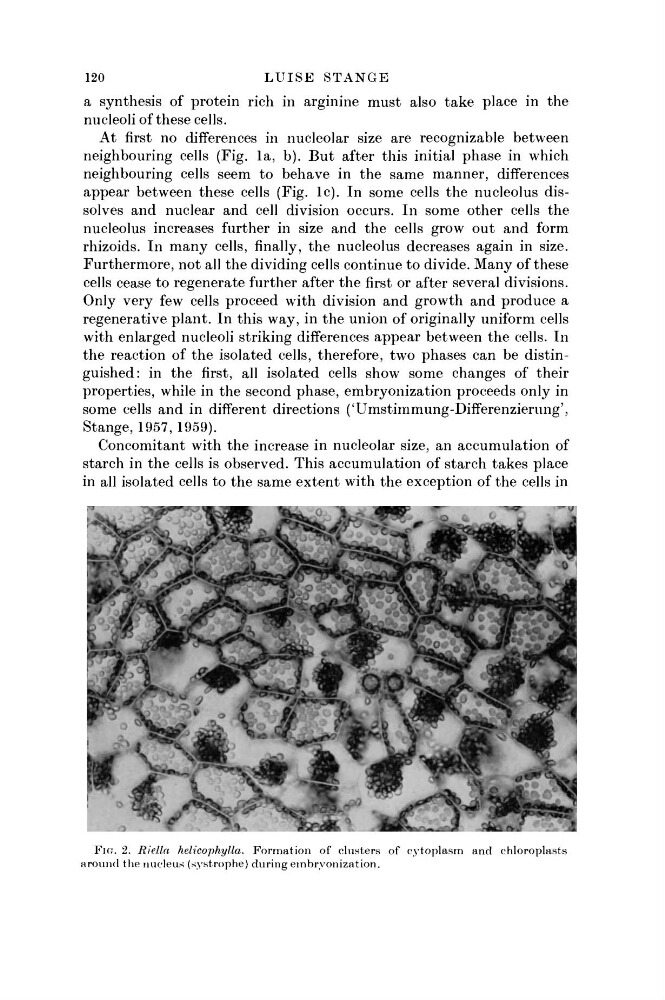
FIG. 2. Riella helicophylla. Formation of clusters of cytoplasm and chloroplasts
around the nucleus (systrophe) during embryonization.
LUISE STANGE
a synthesis of protein rich in arginine must also take place in the
nucleoli of these cells.
At first no differences in nucleolar size are recognizable between
neighbouring cells (Fig. la, b). But after this initial phase in which
neighbouring cells seem to behave in the same manner, differences
appear between these cells (Fig. lc). In some cells the nucleolus dissolves and nuclear and cell division occurs. In some other cells the
nucleolus increases further in size and the cells grow out and form
rhizoids. In many cells, finally, the nucleolus decreases again in size.
Furthermore, not all the dividing cells continue to divide. Many of these
cells cease to regenerate further after the first or after several divisions.
Only very few cells proceed with division and growth and produce a
regenerative plant. In this way, in the union of originally uniform cells
with enlarged nucleoli striking differences appear between the cells. In
the reaction of the isolated cells, therefore, two phases can be distinguished: in the first, all isolated cells show some changes of their
properties, while in the second phase, embryonization proceeds only in
some cells and in different directions ('Umstimmung-Differenzierung',
Stange, 1957, 1959).
Concomitant with the increase in nucleolar size, an accumulation of
starch in the cells is observed. This accumulation of starch takes place
in all isolated cells to the same extent with the exception of the cells in
FIG. 2. Riella helicophylla. Formation of clusters of cytoplasm and chloroplasts
around the nucleus (systrophe) during embryonization.