

270
G E R H A R D K R A U S E AND K L A U S S A N D E R
islands during later cleavage; the thickness of the blastoderm (curve
IV); and the thickness of the secondary periplasm. During germ band
concentration, this bipolar gradient system shifts its maximum to the
72% level (curve VII). Obviously it belongs to the embryonic system
and not to the whole of the egg. Blastoderm formation, segmentation,
and all subsequent processes of differentiation also start from this
100 V.
AC
0%
Age in h
ENT
(Li gated/fixed)
wo-/.
/2d
12/2β
DC
24/26
24/36
12/36
12/38*24/36
Ο'Λ
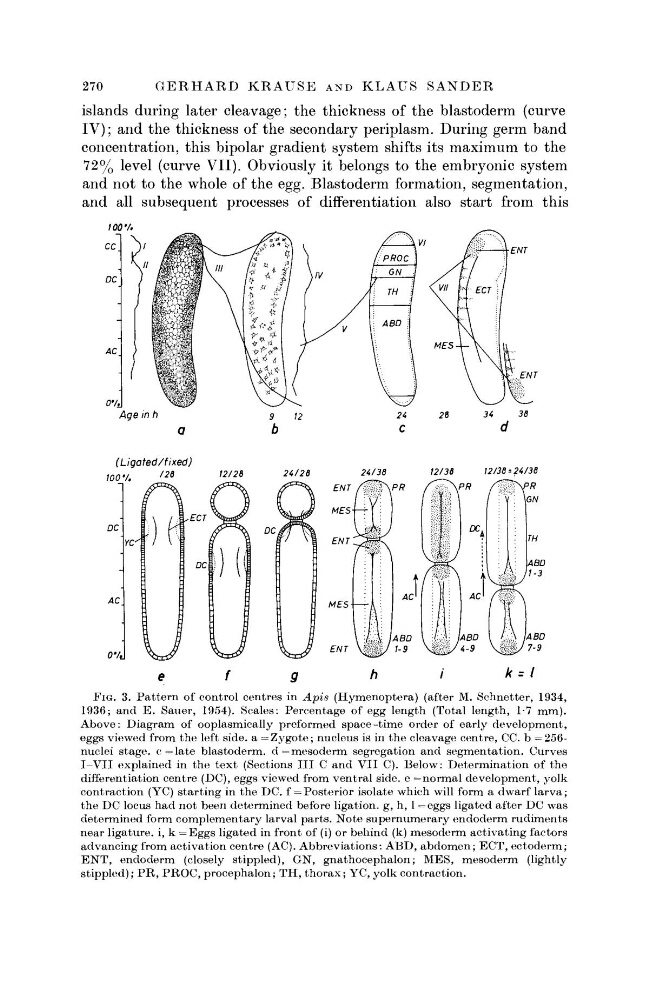
FIG. 3. Pattern of control centres in Apis (Hymenoptera) (after M. Schnetter, 1934,
1936; and E. Sauer, 1954). Scales: Percentage of egg length (Total length, 1-7 mm).
Above: Diagram of ooplasmically preformed space-time order of early development,
eggs viewed from the left side, a =Zygote; nucleus is in the cleavage centre, CC. b = 256nuclei stage, c =late blastoderm. d = mesoderm segregation and segmentation. Curves
I - V I I explained in the text (Sections I I I C and VII C). Below: Determination of the
differentiation centre (DC), eggs viewed from ventral side, e = normal development, yolk
contraction (YC) starting in the DC. f = Posterior isolate which will form a dwarf larva;
the DC locus had not been determined before ligation. g, h, 1 =eggs ligated after DC was
determined form complementary larval parts. Note supernumerary endoderm rudiments
near ligature, i, k = Eggs ligated in front of (i) or behind (k) mesoderm activating factors
advancing from activation centre (AC). Abbreviations: ABD, abdomen; ECT, ectoderm;
ENT, endoderm (closely stippled), GN, gnathocephalon; MES, mesoderm (lightly
stippled); PR, PROC, procephalon; TH, thorax; YC, yolk contraction.
G E R H A R D K R A U S E AND K L A U S S A N D E R
islands during later cleavage; the thickness of the blastoderm (curve
IV); and the thickness of the secondary periplasm. During germ band
concentration, this bipolar gradient system shifts its maximum to the
72% level (curve VII). Obviously it belongs to the embryonic system
and not to the whole of the egg. Blastoderm formation, segmentation,
and all subsequent processes of differentiation also start from this
100 V.
AC
0%
Age in h
ENT
(Li gated/fixed)
wo-/.
/2d
12/2β
DC
24/26
24/36
12/36
12/38*24/36
Ο'Λ
FIG. 3. Pattern of control centres in Apis (Hymenoptera) (after M. Schnetter, 1934,
1936; and E. Sauer, 1954). Scales: Percentage of egg length (Total length, 1-7 mm).
Above: Diagram of ooplasmically preformed space-time order of early development,
eggs viewed from the left side, a =Zygote; nucleus is in the cleavage centre, CC. b = 256nuclei stage, c =late blastoderm. d = mesoderm segregation and segmentation. Curves
I - V I I explained in the text (Sections I I I C and VII C). Below: Determination of the
differentiation centre (DC), eggs viewed from ventral side, e = normal development, yolk
contraction (YC) starting in the DC. f = Posterior isolate which will form a dwarf larva;
the DC locus had not been determined before ligation. g, h, 1 =eggs ligated after DC was
determined form complementary larval parts. Note supernumerary endoderm rudiments
near ligature, i, k = Eggs ligated in front of (i) or behind (k) mesoderm activating factors
advancing from activation centre (AC). Abbreviations: ABD, abdomen; ECT, ectoderm;
ENT, endoderm (closely stippled), GN, gnathocephalon; MES, mesoderm (lightly
stippled); PR, PROC, procephalon; TH, thorax; YC, yolk contraction.