

264
GERHARD KRAUSE AND KLAUS SANDER
both longitudinally and transversally. The intervals between two subsequent mitoses are equal in the two egg types, but the haploid nuclei
have smaller plasma islands and migrate more slowly. During the
heterochronous mitoses following the 1024-nuclei stage, the number
of nuclei in the male egg, and subsequently the number of blastoderm
40 4 -
35
I
30
£ 25 4 -
Nov. Dec.
Jan.
Feb. Mar.
Apr.
May June July
Aug.
Weight of pupae in mg
50
IC <
20
30 40 50
Number of nursing workers
Intercast
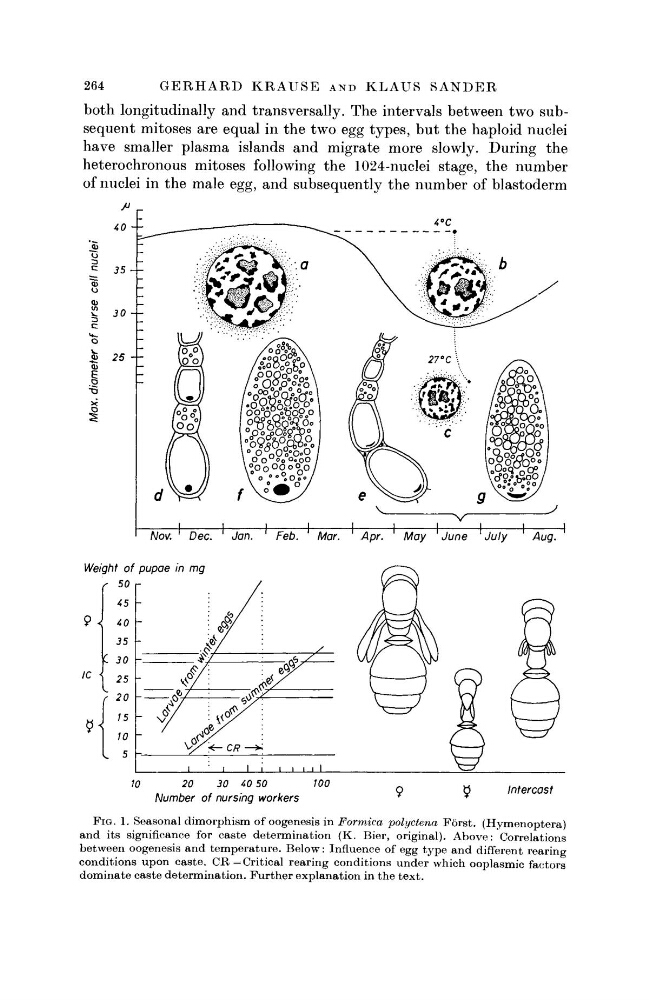
FIG. 1. Seasonal dimorphism of oogenesis in Formica polyctena Forst. (Hymenoptera)
and its significance for caste determination (K. Bier, original). Above: Correlations
between oogenesis and temperature. Below: Influence of egg type and different rearing
conditions upon caste. CR = Critical rearing conditions under which ooplasmic factors
dominate caste determination. Further explanation in the text.
GERHARD KRAUSE AND KLAUS SANDER
both longitudinally and transversally. The intervals between two subsequent mitoses are equal in the two egg types, but the haploid nuclei
have smaller plasma islands and migrate more slowly. During the
heterochronous mitoses following the 1024-nuclei stage, the number
of nuclei in the male egg, and subsequently the number of blastoderm
40 4 -
35
I
30
£ 25 4 -
Nov. Dec.
Jan.
Feb. Mar.
Apr.
May June July
Aug.
Weight of pupae in mg
50
IC <
20
30 40 50
Number of nursing workers
Intercast
FIG. 1. Seasonal dimorphism of oogenesis in Formica polyctena Forst. (Hymenoptera)
and its significance for caste determination (K. Bier, original). Above: Correlations
between oogenesis and temperature. Below: Influence of egg type and different rearing
conditions upon caste. CR = Critical rearing conditions under which ooplasmic factors
dominate caste determination. Further explanation in the text.