

P R O T E I N S I N D E V E L O P M E N T
237
This precipitate was designated euglobulin a + 6.f A molar solution of
KSCN or LiCl was added (1 : 1) to a solution of euglobulin a + b, stored
for one night in a cold room, and the salting-out diagram plotted. It was
found that Li induces precipitation at a lower concentration of ammonium sulphate; SCN induces precipitation at a higher concentration of
ammonium sulphate (Table 1); that is to say that the proteins treated
in vivo and in vitro with NaSCN or LiCl react in the same way.
• LiCl
° Contr
- NaSCN
,\ Δ
10
20
30
40
50
60
70 C
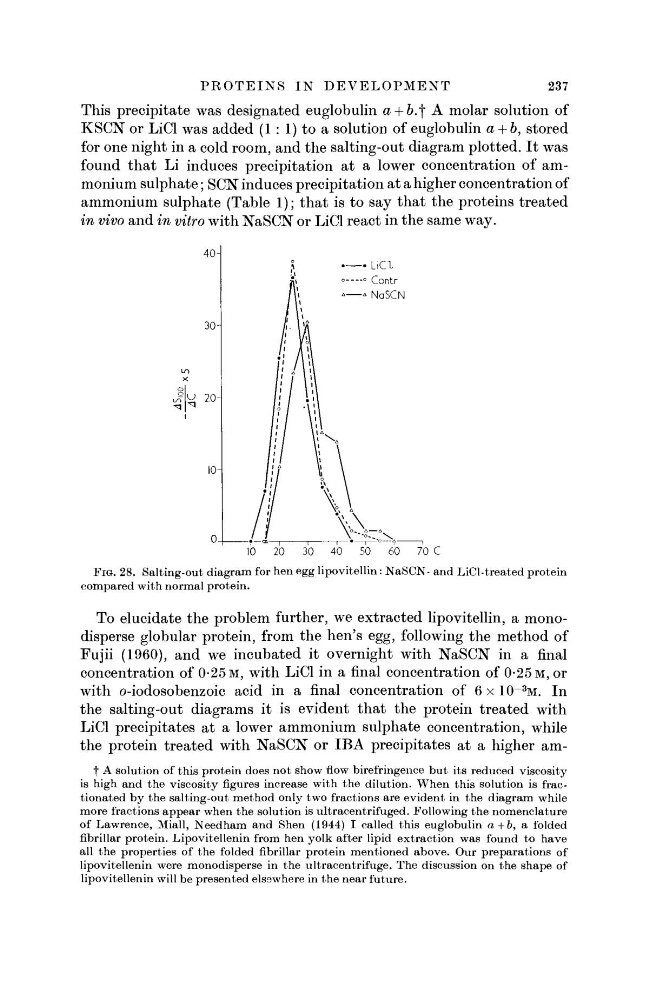
FIG. 28. Salting-out diagram for hen egg lipovitellin: NaSCN- and LiCl-treated protein
compared with normal protein.
To elucidate the problem further, we extracted lipovitellin, a monodisperse globular protein, from the hen's egg, following the method of
Fujii (1960), and we incubated it overnight with NaSCN in a final
concentration of 0-25 M, with LiCl in a final concentration of 0-25 M, or
with o-iodosobenzoic acid in a final concentration of 6 x 10~
3 M. In
the salting-out diagrams it is evident that the protein treated with
LiCl precipitates at a lower ammonium sulphate concentration, while
the protein treated with NaSCN or IBA precipitates at a higher amt A solution of this protein does not show flow birefringence but its reduced viscosity
is high and the viscosity figures increase with the dilution. When this solution is fractionated by the salting-out method only two fractions are evident in the diagram while
more fractions appear when the solution is ultracentrifuged. Following the nomenclature
of Lawrence, Miall, Needham and Shen (1944) I called this euglobulin a +6, a folded
fibrillar protein. Lipovitellenin from hen yolk after lipid extraction was found to have
all the properties of the folded fibrillar protein mentioned above. Our preparations of
lipovitellenin were monodisperse in the ultracentrifuge. The discussion on the shape of
lipovitellenin will be presented elsewhere in the near future.
237
This precipitate was designated euglobulin a + 6.f A molar solution of
KSCN or LiCl was added (1 : 1) to a solution of euglobulin a + b, stored
for one night in a cold room, and the salting-out diagram plotted. It was
found that Li induces precipitation at a lower concentration of ammonium sulphate; SCN induces precipitation at a higher concentration of
ammonium sulphate (Table 1); that is to say that the proteins treated
in vivo and in vitro with NaSCN or LiCl react in the same way.
• LiCl
° Contr
- NaSCN
,\ Δ
10
20
30
40
50
60
70 C
FIG. 28. Salting-out diagram for hen egg lipovitellin: NaSCN- and LiCl-treated protein
compared with normal protein.
To elucidate the problem further, we extracted lipovitellin, a monodisperse globular protein, from the hen's egg, following the method of
Fujii (1960), and we incubated it overnight with NaSCN in a final
concentration of 0-25 M, with LiCl in a final concentration of 0-25 M, or
with o-iodosobenzoic acid in a final concentration of 6 x 10~
3 M. In
the salting-out diagrams it is evident that the protein treated with
LiCl precipitates at a lower ammonium sulphate concentration, while
the protein treated with NaSCN or IBA precipitates at a higher amt A solution of this protein does not show flow birefringence but its reduced viscosity
is high and the viscosity figures increase with the dilution. When this solution is fractionated by the salting-out method only two fractions are evident in the diagram while
more fractions appear when the solution is ultracentrifuged. Following the nomenclature
of Lawrence, Miall, Needham and Shen (1944) I called this euglobulin a +6, a folded
fibrillar protein. Lipovitellenin from hen yolk after lipid extraction was found to have
all the properties of the folded fibrillar protein mentioned above. Our preparations of
lipovitellenin were monodisperse in the ultracentrifuge. The discussion on the shape of
lipovitellenin will be presented elsewhere in the near future.