

284
J E A N B R Ä C H E T
determine whether, as in planarians and Hydra, the two substances
always act in the same way.
When higher concentrations (30-10 /xg/ml) of lipoic acid than that
used by Eakin are used (Brächet, 1962), it is possible to obtain effects on
morphogenesis which, by and large, resemble those produced b y
mercaptoethanol. At these concentrations, cleavage of amphibian eggs
proceeds at a perfectly normal rate, but morphogenetic movements,
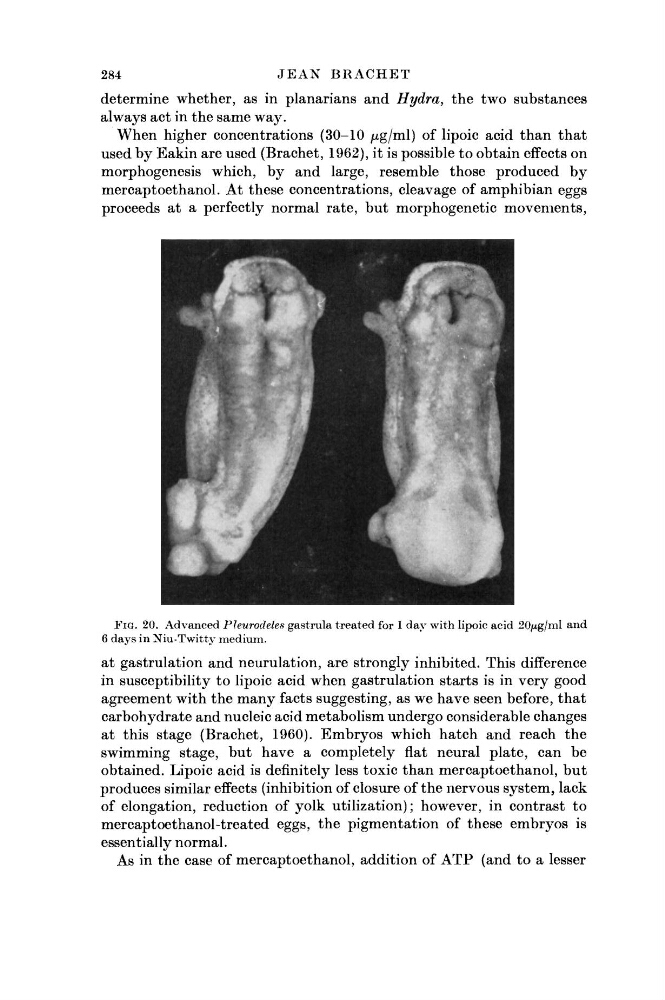
FIG. 20. Advanced Pleurodeles gastrula treated for 1 day with lipoic acid 20/ug/ml and
6 days in Niu-Twitty medium.
at gastrulation and neurulation, are strongly inhibited. This difference
in susceptibility to lipoic acid when gastrulation starts is in very good
agreement with the many facts suggesting, as we have seen before, that
carbohydrate and nucleic acid metabolism undergo considerable changes
at this stage (Brächet, 1960). Embryos which hatch and reach the
swimming stage, but have a completely flat neural plate, can be
obtained. Lipoic acid is definitely less toxic than mercaptoethanol, but
produces similar effects (inhibition of closure of the nervous system, lack
of elongation, reduction of yolk utilization); however, in contrast to
mercaptoethanol-treated eggs, the pigmentation of these embryos is
essentially normal.
As in the case of mercaptoethanol, addition of A T P (and to a lesser
J E A N B R Ä C H E T
determine whether, as in planarians and Hydra, the two substances
always act in the same way.
When higher concentrations (30-10 /xg/ml) of lipoic acid than that
used by Eakin are used (Brächet, 1962), it is possible to obtain effects on
morphogenesis which, by and large, resemble those produced b y
mercaptoethanol. At these concentrations, cleavage of amphibian eggs
proceeds at a perfectly normal rate, but morphogenetic movements,
FIG. 20. Advanced Pleurodeles gastrula treated for 1 day with lipoic acid 20/ug/ml and
6 days in Niu-Twitty medium.
at gastrulation and neurulation, are strongly inhibited. This difference
in susceptibility to lipoic acid when gastrulation starts is in very good
agreement with the many facts suggesting, as we have seen before, that
carbohydrate and nucleic acid metabolism undergo considerable changes
at this stage (Brächet, 1960). Embryos which hatch and reach the
swimming stage, but have a completely flat neural plate, can be
obtained. Lipoic acid is definitely less toxic than mercaptoethanol, but
produces similar effects (inhibition of closure of the nervous system, lack
of elongation, reduction of yolk utilization); however, in contrast to
mercaptoethanol-treated eggs, the pigmentation of these embryos is
essentially normal.
As in the case of mercaptoethanol, addition of A T P (and to a lesser