

266
J E A N B R Ä C H E T
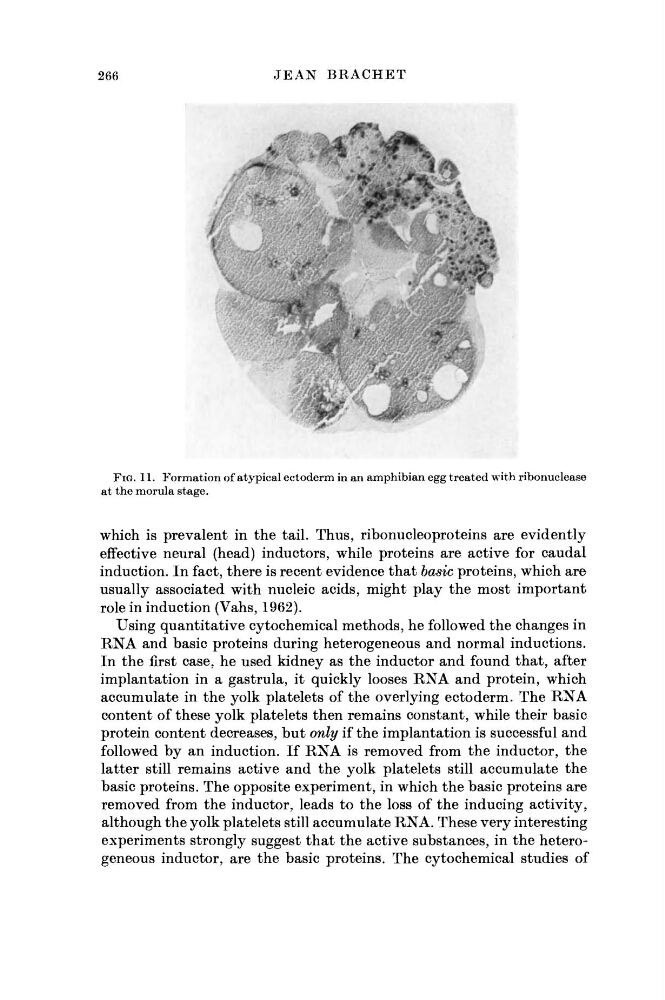
FIG. 11. Formation of atypical ectoderm in an amphibian egg treated with ribonuclease
at the morula stage.
which is p r e v a l e n t in t h e tail. T h u s , ribonucleoproteins are evidentlyeffective neural (head) inductors, while proteins are active for c a u d a l
induction. I n fact, t h e r e is recent evidence t h a t basic proteins, which a r e
usually associated w i t h nucleic acids, m i g h t p l a y t h e m o s t i m p o r t a n t
role in induction (Vahs, 1962).
Using q u a n t i t a t i v e cytochemical m e t h o d s , he followed t h e changes in
R N A a n d basic proteins during heterogeneous a n d n o r m a l inductions.
I n t h e first case, he used kidney as t h e i n d u c t o r a n d found t h a t , after
i m p l a n t a t i o n in a gastrula, it quickly looses R N A a n d protein, which
a c c u m u l a t e in t h e yolk platelets of t h e overlying e c t o d e r m . T h e R N A
c o n t e n t of these yolk platelets t h e n r e m a i n s constant, while their basic
protein c o n t e n t decreases, b u t only if t h e i m p l a n t a t i o n is successful a n d
followed b y a n induction. If R N A is r e m o v e d from t h e inductor, t h e
l a t t e r still remains active a n d t h e yolk platelets still a c c u m u l a t e t h e
basic proteins. T h e opposite experiment, in which t h e basic proteins a r e
r e m o v e d from t h e inductor, leads t o t h e loss of t h e inducing activity,
a l t h o u g h t h e yolk platelets still a c c u m u l a t e R N A . These very interesting
e x p e r i m e n t s strongly suggest t h a t t h e active substances, in t h e heterogeneous inductor, are t h e basic proteins. T h e cytochemical studies of
J E A N B R Ä C H E T
FIG. 11. Formation of atypical ectoderm in an amphibian egg treated with ribonuclease
at the morula stage.
which is p r e v a l e n t in t h e tail. T h u s , ribonucleoproteins are evidentlyeffective neural (head) inductors, while proteins are active for c a u d a l
induction. I n fact, t h e r e is recent evidence t h a t basic proteins, which a r e
usually associated w i t h nucleic acids, m i g h t p l a y t h e m o s t i m p o r t a n t
role in induction (Vahs, 1962).
Using q u a n t i t a t i v e cytochemical m e t h o d s , he followed t h e changes in
R N A a n d basic proteins during heterogeneous a n d n o r m a l inductions.
I n t h e first case, he used kidney as t h e i n d u c t o r a n d found t h a t , after
i m p l a n t a t i o n in a gastrula, it quickly looses R N A a n d protein, which
a c c u m u l a t e in t h e yolk platelets of t h e overlying e c t o d e r m . T h e R N A
c o n t e n t of these yolk platelets t h e n r e m a i n s constant, while their basic
protein c o n t e n t decreases, b u t only if t h e i m p l a n t a t i o n is successful a n d
followed b y a n induction. If R N A is r e m o v e d from t h e inductor, t h e
l a t t e r still remains active a n d t h e yolk platelets still a c c u m u l a t e t h e
basic proteins. T h e opposite experiment, in which t h e basic proteins a r e
r e m o v e d from t h e inductor, leads t o t h e loss of t h e inducing activity,
a l t h o u g h t h e yolk platelets still a c c u m u l a t e R N A . These very interesting
e x p e r i m e n t s strongly suggest t h a t t h e active substances, in t h e heterogeneous inductor, are t h e basic proteins. T h e cytochemical studies of