

THE BLOOD OF CHICK EMBRYOS
231
AGE OF EMBRYO/DAYS/
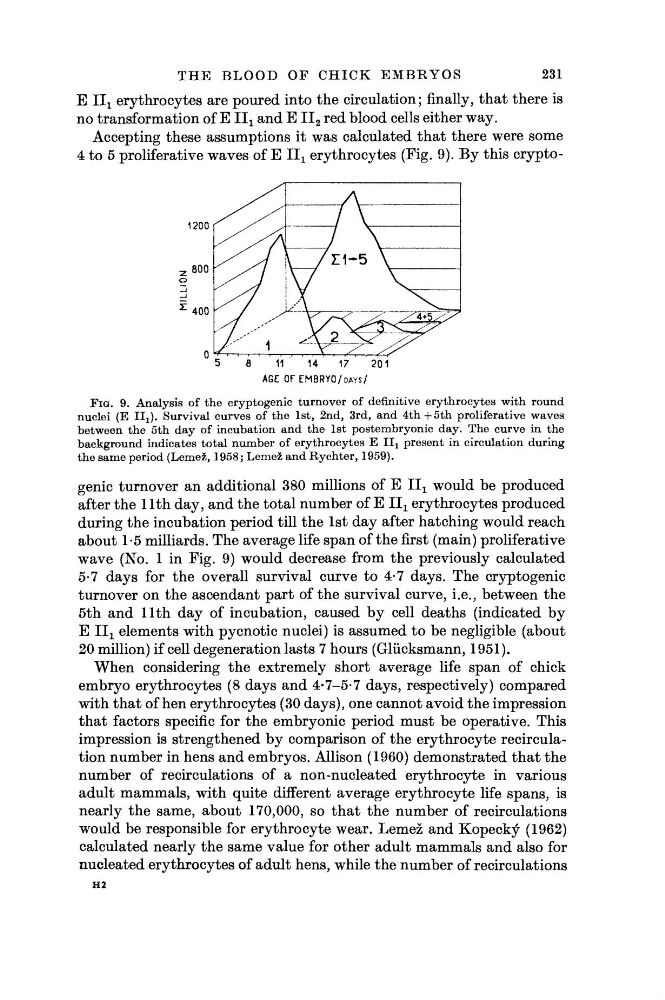
FIG. 9. Analysis of the cryptogenic turnover of definitive erythrocytes with round
nuclei (E IIj). Survival curves of the 1st, 2nd, 3rd, and 4th + 5th proliferative waves
between the 5th day of incubation and the 1st postembryonic day. The curve in the
background indicates total number of erythrocytes Ε II X present in circulation during
the same period (LemeZ, 1958; Lemefc and Rychter, 1959).
genie turnover an additional 380 millions of Ε 11^ would be produced
after the 11th day, and the total number of Ε II X erythrocytes produced
during the incubation period till the 1st day after hatching would reach
about 1-5 milliards. The average life span of the first (main) proliferative
wave (No. 1 in Fig. 9) would decrease from the previously calculated
5-7 days for the overall survival curve to 4-7 days. The cryptogenic
turnover on the ascendant part of the survival curve, i.e., between the
5th and 11th day of incubation, caused by cell deaths (indicated by
Ε ΙΙχ elements with pyenotic nuclei) is assumed to be negligible (about
20 million) if cell degeneration lasts 7 hours (Glücksmann, 1951).
When considering the extremely short average life span of chick
embryo erythrocytes (8 days and 4-7-5-7 days, respectively) compared
with that of hen erythrocytes (30 days), one cannot avoid the impression
that factors specific for the embryonic period must be operative. This
impression is strengthened by comparison of the erythrocyte recirculation number in hens and embryos. Allison (1960) demonstrated that the
number of recirculations of a non-nucleated erythrocyte in various
adult mammals, with quite different average erythrocyte life spans, is
nearly the same, about 170,000, so that the number of recirculations
would be responsible for erythrocyte wear. Lemez and Kopecky' (1962)
calculated nearly the same value for other adult mammals and also for
nucleated erythrocytes of adult hens, while the number of recirculations
H2
Ε ΙΙ Χ erythrocytes are poured into the circulation ; finally, that there is
no transformation of Ε U x and ΕII 2 red blood cells either way.
Accepting these assumptions it was calculated that there were some
4 to 5 proliferative waves of Ε II X erythrocytes (Fig. 9). By this crypto-
231
AGE OF EMBRYO/DAYS/
FIG. 9. Analysis of the cryptogenic turnover of definitive erythrocytes with round
nuclei (E IIj). Survival curves of the 1st, 2nd, 3rd, and 4th + 5th proliferative waves
between the 5th day of incubation and the 1st postembryonic day. The curve in the
background indicates total number of erythrocytes Ε II X present in circulation during
the same period (LemeZ, 1958; Lemefc and Rychter, 1959).
genie turnover an additional 380 millions of Ε 11^ would be produced
after the 11th day, and the total number of Ε II X erythrocytes produced
during the incubation period till the 1st day after hatching would reach
about 1-5 milliards. The average life span of the first (main) proliferative
wave (No. 1 in Fig. 9) would decrease from the previously calculated
5-7 days for the overall survival curve to 4-7 days. The cryptogenic
turnover on the ascendant part of the survival curve, i.e., between the
5th and 11th day of incubation, caused by cell deaths (indicated by
Ε ΙΙχ elements with pyenotic nuclei) is assumed to be negligible (about
20 million) if cell degeneration lasts 7 hours (Glücksmann, 1951).
When considering the extremely short average life span of chick
embryo erythrocytes (8 days and 4-7-5-7 days, respectively) compared
with that of hen erythrocytes (30 days), one cannot avoid the impression
that factors specific for the embryonic period must be operative. This
impression is strengthened by comparison of the erythrocyte recirculation number in hens and embryos. Allison (1960) demonstrated that the
number of recirculations of a non-nucleated erythrocyte in various
adult mammals, with quite different average erythrocyte life spans, is
nearly the same, about 170,000, so that the number of recirculations
would be responsible for erythrocyte wear. Lemez and Kopecky' (1962)
calculated nearly the same value for other adult mammals and also for
nucleated erythrocytes of adult hens, while the number of recirculations
H2
Ε ΙΙ Χ erythrocytes are poured into the circulation ; finally, that there is
no transformation of Ε U x and ΕII 2 red blood cells either way.
Accepting these assumptions it was calculated that there were some
4 to 5 proliferative waves of Ε II X erythrocytes (Fig. 9). By this crypto-