

208
LEO LEME2
globin concentration (Fig. 2B), except that the second minimal value
appears on the 9th day and then the values increase up to the 16th day,
when a steady level of 35% is maintained. The maximum average haematocrit values in embryos (Rychter et al., 1955a, 36-7% ; Johnston, 1955,
39·8% ; Barnes and Jensen, 1959, 33-8%), in contrast to the erythrocyte
count and haemoglobin level, are significantly higher than the average
values found in adult hens (Rychter et al., 1955a, 31-0%; Medway and
0^
0 L
-JO
2
5
8
11
14
17
20 1
A
AGE OF EMBRYO/DAYS/
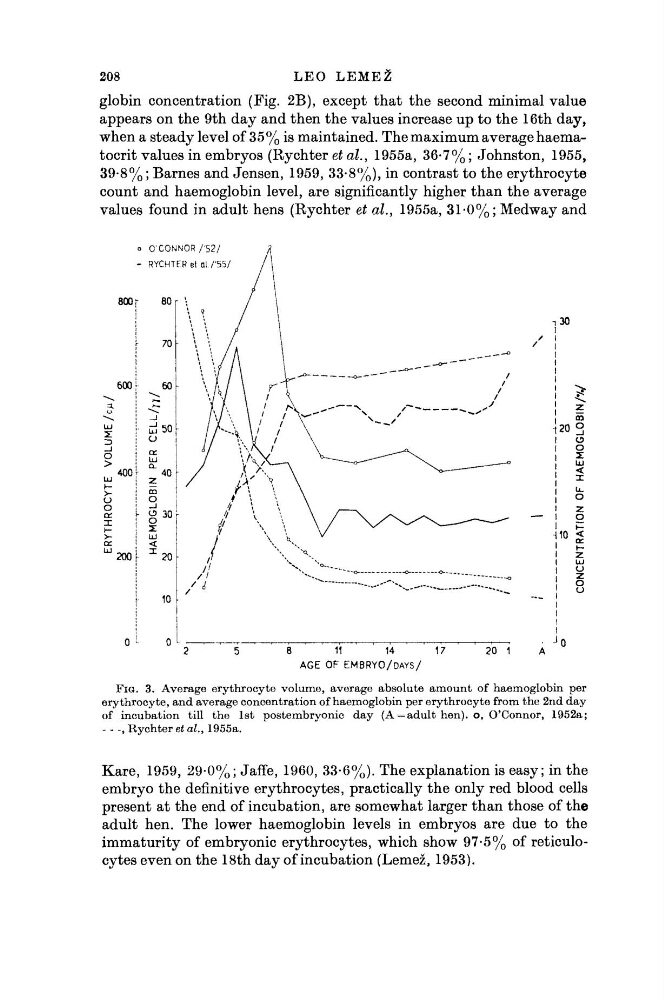
FIG. 3. Average erythrocyte volume, average absolute amount of haemoglobin per
erythrocyte, and average concentration of haemoglobin per erythrocyte from the 2nd day
of incubation till the 1st postembryonic day (A = adult hen), o, O'Connor, 1952a;
- - -, Rychter et al. t 1955a.
Kare, 1959, 29-0%; Jaffe, 1960, 33-6%). The explanation is easy; in the
embryo the definitive erythrocytes, practically the only red blood cells
present at the end of incubation, are somewhat larger than those of the
adult hen. The lower haemoglobin levels in embryos are due to the
immaturity of embryonic erythrocytes, which show 97-5% of reticulocytes even on the 18th day of incubation (Lemez, 1953).
LEO LEME2
globin concentration (Fig. 2B), except that the second minimal value
appears on the 9th day and then the values increase up to the 16th day,
when a steady level of 35% is maintained. The maximum average haematocrit values in embryos (Rychter et al., 1955a, 36-7% ; Johnston, 1955,
39·8% ; Barnes and Jensen, 1959, 33-8%), in contrast to the erythrocyte
count and haemoglobin level, are significantly higher than the average
values found in adult hens (Rychter et al., 1955a, 31-0%; Medway and
0^
0 L
-JO
2
5
8
11
14
17
20 1
A
AGE OF EMBRYO/DAYS/
FIG. 3. Average erythrocyte volume, average absolute amount of haemoglobin per
erythrocyte, and average concentration of haemoglobin per erythrocyte from the 2nd day
of incubation till the 1st postembryonic day (A = adult hen), o, O'Connor, 1952a;
- - -, Rychter et al. t 1955a.
Kare, 1959, 29-0%; Jaffe, 1960, 33-6%). The explanation is easy; in the
embryo the definitive erythrocytes, practically the only red blood cells
present at the end of incubation, are somewhat larger than those of the
adult hen. The lower haemoglobin levels in embryos are due to the
immaturity of embryonic erythrocytes, which show 97-5% of reticulocytes even on the 18th day of incubation (Lemez, 1953).