

108
ALBERTO MONROY AND RACHELE MAGGIO
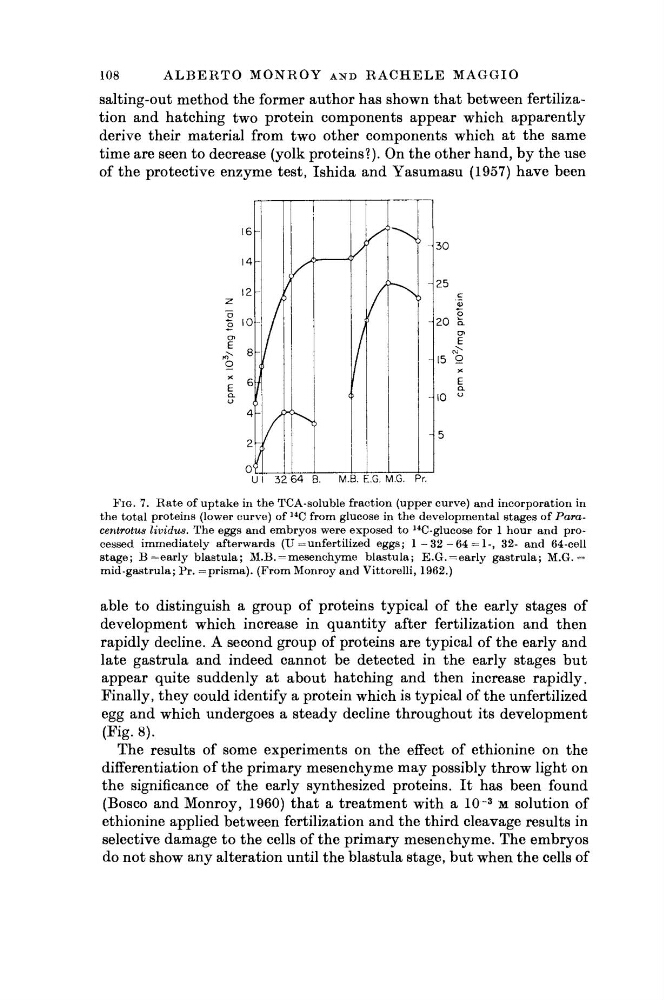
FIG. 7. Rate of uptake in the TCA-soluble fraction (upper curve) and incorporation in
the total proteins (lower curve) of
14
C from glucose in the developmental stages of Paracentrotus lividus. The eggs and embryos were exposed to
14
C-glucose for 1 hour and processed immediately afterwards (U = unfertilized eggs; 1 -32 -64 = 1-, 32- and 64-cell
stage; Β = early blastula; M.B. = mesenchyme blastula; E.G. = early gastrula; M.G. =
mid-gastrula; Pr. =prisma). (From Monroy and Vittorelli, 1962.)
able to distinguish a group of proteins typical of the early stages of
development which increase in quantity after fertilization and then
rapidly decline. A second group of proteins are typical of the early and
late gastrula and indeed cannot be detected in the early stages but
appear quite suddenly at about hatching and then increase rapidly.
Finally, they could identify a protein which is typical of the unfertilized
egg and which undergoes a steady decline throughout its development
(Fig. 8).
The results of some experiments on the effect of ethionine on the
differentiation of the primary mesenchyme may possibly throw light on
the significance of the early synthesized proteins. It has been found
(Bosco and Monroy, 1960) that a treatment with a 10~
3 M solution of
ethionine applied between fertilization and the third cleavage results in
selective damage to the cells of the primary mesenchyme. The embryos
do not show any alteration until the blastula stage, but when the cells of
salting-out method the former author has shown that between fertilization and hatching two protein components appear which apparently
derive their material from two other components which at the same
time are seen to decrease (yolk proteins?). On the other hand, by the use
of the protective enzyme test, Ishida and Yasumasu (1957) have been
ALBERTO MONROY AND RACHELE MAGGIO
FIG. 7. Rate of uptake in the TCA-soluble fraction (upper curve) and incorporation in
the total proteins (lower curve) of
14
C from glucose in the developmental stages of Paracentrotus lividus. The eggs and embryos were exposed to
14
C-glucose for 1 hour and processed immediately afterwards (U = unfertilized eggs; 1 -32 -64 = 1-, 32- and 64-cell
stage; Β = early blastula; M.B. = mesenchyme blastula; E.G. = early gastrula; M.G. =
mid-gastrula; Pr. =prisma). (From Monroy and Vittorelli, 1962.)
able to distinguish a group of proteins typical of the early stages of
development which increase in quantity after fertilization and then
rapidly decline. A second group of proteins are typical of the early and
late gastrula and indeed cannot be detected in the early stages but
appear quite suddenly at about hatching and then increase rapidly.
Finally, they could identify a protein which is typical of the unfertilized
egg and which undergoes a steady decline throughout its development
(Fig. 8).
The results of some experiments on the effect of ethionine on the
differentiation of the primary mesenchyme may possibly throw light on
the significance of the early synthesized proteins. It has been found
(Bosco and Monroy, 1960) that a treatment with a 10~
3 M solution of
ethionine applied between fertilization and the third cleavage results in
selective damage to the cells of the primary mesenchyme. The embryos
do not show any alteration until the blastula stage, but when the cells of
salting-out method the former author has shown that between fertilization and hatching two protein components appear which apparently
derive their material from two other components which at the same
time are seen to decrease (yolk proteins?). On the other hand, by the use
of the protective enzyme test, Ishida and Yasumasu (1957) have been