

84
A . M O S C O N A , O . A . T R O W E L L A N D E . N . W l L L M E R
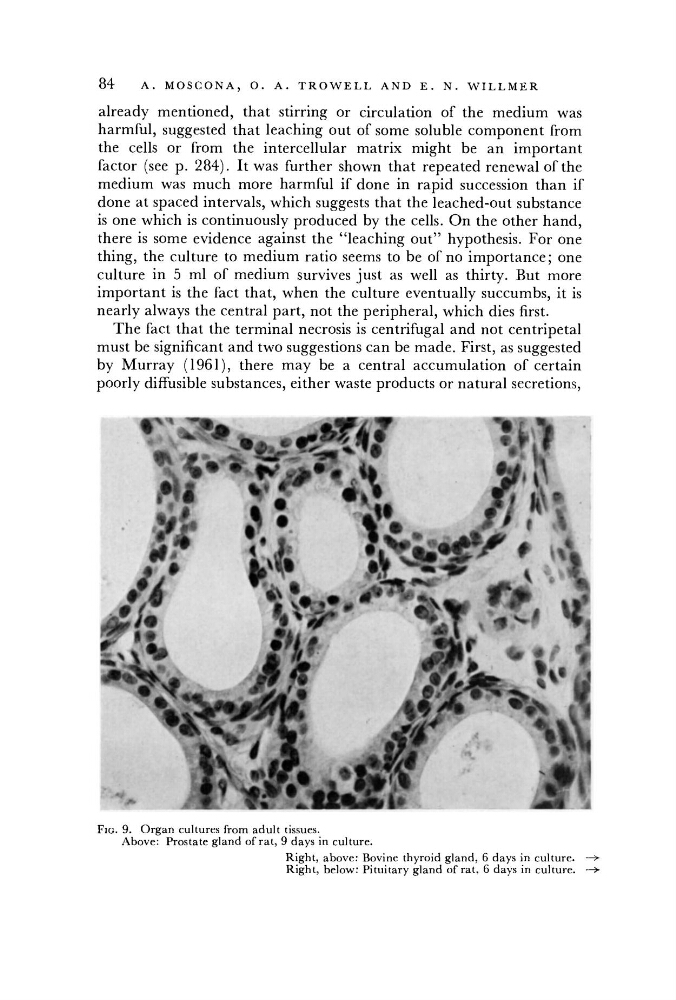
FIG. 9. Organ cultures from adult tissues.
Above: Prostate gland of rat, 9 days in culture.
Right, above: Bovine thyroid gland, 6 days in culture.
Right, below: Pituitary gland of rat, 6 days in culture.
already mentioned, that stirring or circulation of the medium was
harmful, suggested that leaching out of some soluble component from
the cells or from the intercellular matrix might be an important
factor (see p. 284). It was further shown that repeated renewal of the
medium was much more harmful if done in rapid succession than if
done at spaced intervals, which suggests that the leached-out substance
is one which is continuously produced by the cells. On the other hand,
there is some evidence against the "leaching out" hypothesis. For one
thing, the culture to medium ratio seems to be of no importance; one
culture in 5 ml of medium survives just as well as thirty. But more
important is the fact that, when the culture eventually succumbs, it is
nearly always the central part, not the peripheral, which dies first.
The fact that the terminal necrosis is centrifugal and not centripetal
must be significant and two suggestions can be made. First, as suggested
by Murray (1961), there may be a central accumulation of certain
poorly diffusible substances, either waste products or natural secretions,
A . M O S C O N A , O . A . T R O W E L L A N D E . N . W l L L M E R
FIG. 9. Organ cultures from adult tissues.
Above: Prostate gland of rat, 9 days in culture.
Right, above: Bovine thyroid gland, 6 days in culture.
Right, below: Pituitary gland of rat, 6 days in culture.
already mentioned, that stirring or circulation of the medium was
harmful, suggested that leaching out of some soluble component from
the cells or from the intercellular matrix might be an important
factor (see p. 284). It was further shown that repeated renewal of the
medium was much more harmful if done in rapid succession than if
done at spaced intervals, which suggests that the leached-out substance
is one which is continuously produced by the cells. On the other hand,
there is some evidence against the "leaching out" hypothesis. For one
thing, the culture to medium ratio seems to be of no importance; one
culture in 5 ml of medium survives just as well as thirty. But more
important is the fact that, when the culture eventually succumbs, it is
nearly always the central part, not the peripheral, which dies first.
The fact that the terminal necrosis is centrifugal and not centripetal
must be significant and two suggestions can be made. First, as suggested
by Murray (1961), there may be a central accumulation of certain
poorly diffusible substances, either waste products or natural secretions,