

16.
A C T I O N S O F
H O R M O N E S
635
cells and fibres while mammotrophin promoted the growth of the
adipose tissue. If progesterone was included in this combination without
oestradiol, the explants broke down. Cortisone, applied alone, produced
a dilatation of the mammary ducts, a vacuolation of the lining cells and
an increase of the adipose tissue, effects suggestive of beginning secretory activity. If combined with somatotrophin or mammotrophin or
both, it inhibited their growth-promoting action, and cultures exposed
to these combinations showed distended ducts like those kept with cortisone alone, except that the number of cell layers was slightly increased.
These authors believe that cortisone is not released in vivo simultaneously with the pituitary hormones, but at a later stage, and acts
on the already differentiated epithelium. The roles of oestradiol and
progesterone are less easily understood; the authors contend that these
hormones may act in advance of the pituitary hormones and, by
histolysis of the connective tissue, provide a space for the spreading
and unfolding of the growing mammary bud.
Prop (1960, 1961a, b) studied the hormone-dependence of the young
adult gland derived from 6-weeks-old virgins of the CBA or B D /
strains of mice. At this stage the glands consist of ducts lined with
cuboidal epithelium and ending in simple end-buds which regress in
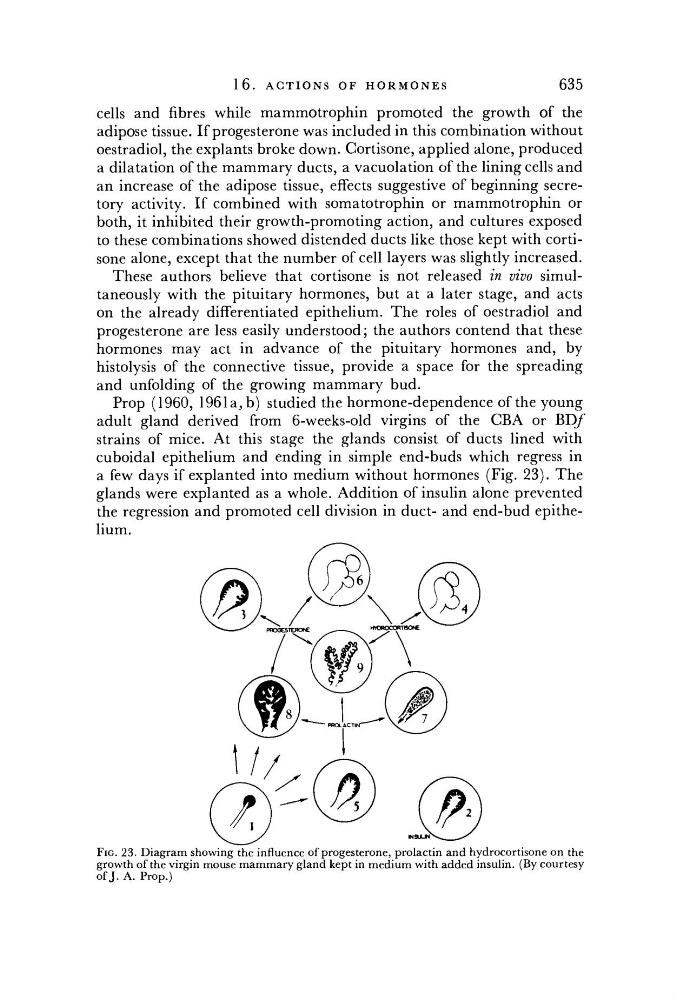
a few days if explanted into medium without hormones (Fig. 23). The
glands were explanted as a whole. Addition of insulin alone prevented
the regression and promoted cell division in duct- and end-bud epithelium.
FIG. 23. Diagram showing the influence of progesterone, prolactin and hydrocortisone on the
growth ofthe virgin mouse mammary gland kept in medium with added insulin. (By courtesy
of J . A . Prop.)