

550
ETIENNE WOLFF
100
i
I
98
H
%
I
62
I I
I I i
0
25 40 60 150
Total induction
100
If 76
1
i
0
25 40 60 150
Trunk-mesodermal induction
58
P
i
55
4
I
44
1
4
P777I
6
_E2L_
17
0
25 40 60 !50
Spino-caudal induction
0
25 40 60 150
Neural induction
17 13
100 95
I
0
25 40 60 150
Deuterencephalic induction
%1 vrm
42
4 6
9
0
25 40 60 150
Archencephalic induction
marrow of guinea-pig, after treatment by
(in seconds); Ordinate, percentages of
25 40 60 150
Mesodermal induction
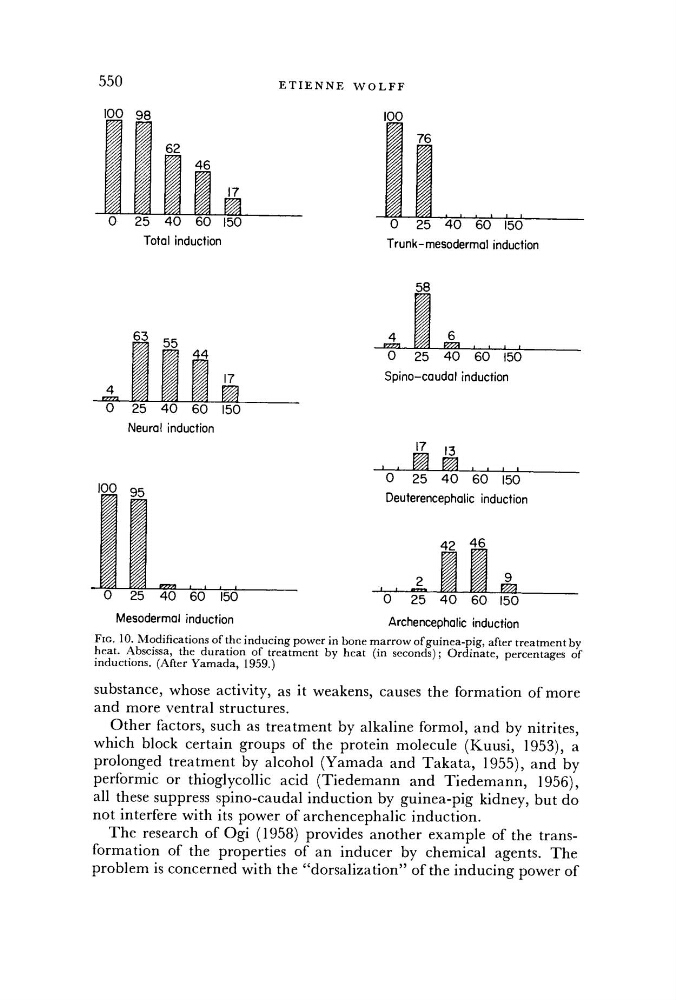
FIG. 10. Modifications ofthe inducing power in bone
heat. Abscissa, the duration of treatment by heat
inductions. (After Yamada, 1959.)
substance, whose activity, as it weakens, causes the formation of more
and more ventral structures.
Other factors, such as treatment by alkaline formol, and by nitrites,
which block certain groups of the protein molecule (Kuusi, 1953), a
prolonged treatment by alcohol (Yamada and Takata, 1955), and by
performic or thioglycollic acid (Tiedemann and Tiedemann, 1956),
all these suppress spino-caudal induction by guinea-pig kidney, but do
not interfere with its power of archencephalic induction.
The research of Ogi (1958) provides another example of the transformation of the properties of an inducer by chemical agents. The
problem is concerned with the "dorsalization" ofthe inducing power of
ETIENNE WOLFF
100
i
I
98
H
%
I
62
I I
I I i
0
25 40 60 150
Total induction
100
If 76
1
i
0
25 40 60 150
Trunk-mesodermal induction
58
P
i
55
4
I
44
1
4
P777I
6
_E2L_
17
0
25 40 60 !50
Spino-caudal induction
0
25 40 60 150
Neural induction
17 13
100 95
I
0
25 40 60 150
Deuterencephalic induction
%1 vrm
42
4 6
9
0
25 40 60 150
Archencephalic induction
marrow of guinea-pig, after treatment by
(in seconds); Ordinate, percentages of
25 40 60 150
Mesodermal induction
FIG. 10. Modifications ofthe inducing power in bone
heat. Abscissa, the duration of treatment by heat
inductions. (After Yamada, 1959.)
substance, whose activity, as it weakens, causes the formation of more
and more ventral structures.
Other factors, such as treatment by alkaline formol, and by nitrites,
which block certain groups of the protein molecule (Kuusi, 1953), a
prolonged treatment by alcohol (Yamada and Takata, 1955), and by
performic or thioglycollic acid (Tiedemann and Tiedemann, 1956),
all these suppress spino-caudal induction by guinea-pig kidney, but do
not interfere with its power of archencephalic induction.
The research of Ogi (1958) provides another example of the transformation of the properties of an inducer by chemical agents. The
problem is concerned with the "dorsalization" ofthe inducing power of