

540
E T I E N N E W O L F F
technique of ectodermal "sandwiches". The presumptive ectoderm of
the young gastrula serves as a test object for the inductive power of
the tissues or extracts under investigation. The advantage of this technique over implantations in the whole embryo is evident. In this
manner the inductive action of host-tissues and their regional influence
on the nature of the differentiation are excluded. Moreover, all the
parts of the ectodermal region of the young gastrula are equivalent
and equally incapable of spontaneous differentiation.
Investigations have been carried out on the inducing action of live
tissues, of devitalized tissues, of more or less purified organic preparations, and of chemical substances isolated from live tissues or prepared
synthetically.
1. Investigation of the Natural Living Inducer
The live organizer, explanted in an "ectodermal sandwich", induces
differentiation of most of the principal organs of a normal embryo.
Even though morphogenesis is a little chaotic in its external aspect,
a histological study shows the existence of structures with almost complete organization. Therefore, one can speak of a true embryogenesis
in vitro. Especially remarkable are the experiments of Holtfreter (1936)
on the cephalic inducer and the trunk inducer in heteroplastic combinations.
The ectoderm is supplied by Triton alpestris, the organizer by Bombinator packypus, or vice versa. The cephalic inducer is taken from an area
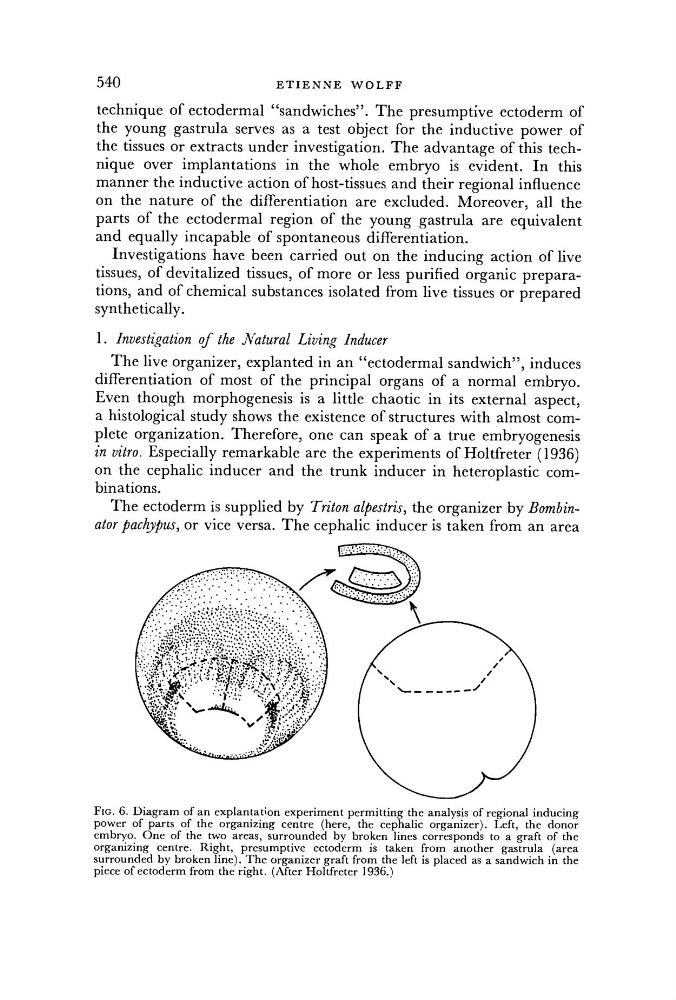
FIG. 6. Diagram of an explantation experiment permitting the analysis of regional inducing
power of parts of the organizing centre (here, the cephalic organizer). Left, the donor
embryo. One of the two areas, surrounded by broken lines corresponds to a graft of the
organizing centre. Right, presumptive ectoderm is taken from another gastrula (area
surrounded by broken line). The organizer graft from the left is placed as a sandwich in the
piece of ectoderm from the right. (After Holtfreter 1936.)
E T I E N N E W O L F F
technique of ectodermal "sandwiches". The presumptive ectoderm of
the young gastrula serves as a test object for the inductive power of
the tissues or extracts under investigation. The advantage of this technique over implantations in the whole embryo is evident. In this
manner the inductive action of host-tissues and their regional influence
on the nature of the differentiation are excluded. Moreover, all the
parts of the ectodermal region of the young gastrula are equivalent
and equally incapable of spontaneous differentiation.
Investigations have been carried out on the inducing action of live
tissues, of devitalized tissues, of more or less purified organic preparations, and of chemical substances isolated from live tissues or prepared
synthetically.
1. Investigation of the Natural Living Inducer
The live organizer, explanted in an "ectodermal sandwich", induces
differentiation of most of the principal organs of a normal embryo.
Even though morphogenesis is a little chaotic in its external aspect,
a histological study shows the existence of structures with almost complete organization. Therefore, one can speak of a true embryogenesis
in vitro. Especially remarkable are the experiments of Holtfreter (1936)
on the cephalic inducer and the trunk inducer in heteroplastic combinations.
The ectoderm is supplied by Triton alpestris, the organizer by Bombinator packypus, or vice versa. The cephalic inducer is taken from an area
FIG. 6. Diagram of an explantation experiment permitting the analysis of regional inducing
power of parts of the organizing centre (here, the cephalic organizer). Left, the donor
embryo. One of the two areas, surrounded by broken lines corresponds to a graft of the
organizing centre. Right, presumptive ectoderm is taken from another gastrula (area
surrounded by broken line). The organizer graft from the left is placed as a sandwich in the
piece of ectoderm from the right. (After Holtfreter 1936.)