

534
E T I E N N E
W O L F F
O n a solid surface like glass the ectoderm can spread out flat, but the
cells separate from one another. T o maintain continuity in this epithelium it is necessary to provide it with a connective-tissue substratum.
If the ectoderm in culture is incapable of self-differentiation, this
is probably not due to a lack or fault in the milieu. In fact, in the neurula stage, the presumptive epidermis and the potential neural tissue,
isolated from the embryo, differentiate in vitro in the same milieu, and
show their specific determinations, giving rise to epidermis and to
neural tissues, respectively.
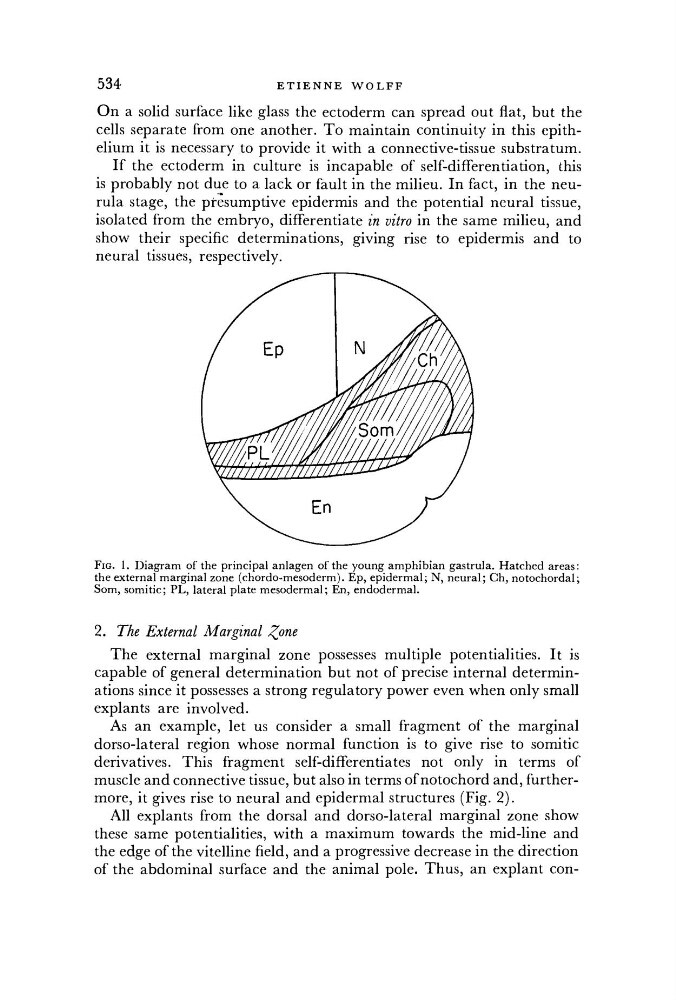
FIG. 1. Diagram of the principal anlagen of the young amphibian gastrula. Hatched areas:
the external marginal zone (chordo-mesoderm). Ep, epidermal; N, neural; Ch, notochordal;
Som, somitic; PL, lateral plate mesodermal; En, endodermal.
2. The External Marginal %pne
The external marginal zone possesses multiple potentialities. It is
capable of general determination but not of precise internal determinations since it possesses a strong regulatory power even when only small
explants are involved.
As an example, let us consider a small fragment of the marginal
dorso-lateral region whose normal function is to give rise to somitic
derivatives. This fragment self-differentiates not only in terms of
muscle and connective tissue, but also in terms of notochord and, furthermore, it gives rise to neural and epidermal structures (Fig. 2).
All explants from the dorsal and dorso-lateral marginal zone show
these same potentialities, with a maximum towards the mid-line and
the edge of the vitelline field, and a progressive decrease in the direction
of the abdominal surface and the animal pole. Thus, an explant con-
E T I E N N E
W O L F F
O n a solid surface like glass the ectoderm can spread out flat, but the
cells separate from one another. T o maintain continuity in this epithelium it is necessary to provide it with a connective-tissue substratum.
If the ectoderm in culture is incapable of self-differentiation, this
is probably not due to a lack or fault in the milieu. In fact, in the neurula stage, the presumptive epidermis and the potential neural tissue,
isolated from the embryo, differentiate in vitro in the same milieu, and
show their specific determinations, giving rise to epidermis and to
neural tissues, respectively.
FIG. 1. Diagram of the principal anlagen of the young amphibian gastrula. Hatched areas:
the external marginal zone (chordo-mesoderm). Ep, epidermal; N, neural; Ch, notochordal;
Som, somitic; PL, lateral plate mesodermal; En, endodermal.
2. The External Marginal %pne
The external marginal zone possesses multiple potentialities. It is
capable of general determination but not of precise internal determinations since it possesses a strong regulatory power even when only small
explants are involved.
As an example, let us consider a small fragment of the marginal
dorso-lateral region whose normal function is to give rise to somitic
derivatives. This fragment self-differentiates not only in terms of
muscle and connective tissue, but also in terms of notochord and, furthermore, it gives rise to neural and epidermal structures (Fig. 2).
All explants from the dorsal and dorso-lateral marginal zone show
these same potentialities, with a maximum towards the mid-line and
the edge of the vitelline field, and a progressive decrease in the direction
of the abdominal surface and the animal pole. Thus, an explant con-