

1 4 . C E L L A G G R E G A T E S
497
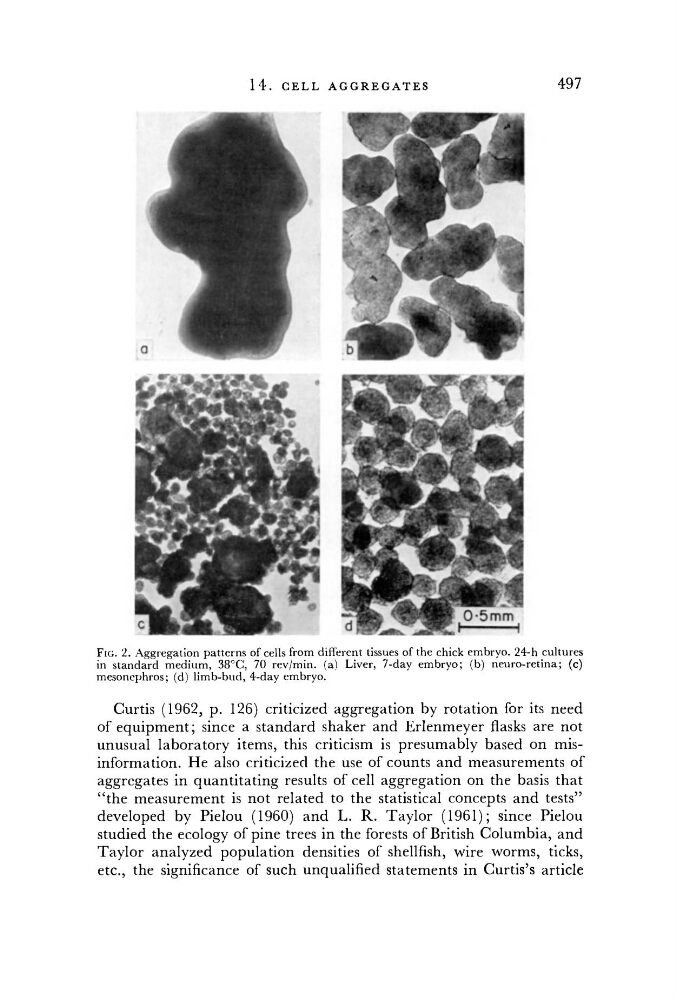
FIG. 2. Aggregation patterns of cells from different tissues ofthe chick embryo. 24-h cultures
in standard medium, 38°C, 70 rev/min. (a) Liver, 7-day embryo; (b) neuro-retina; (c)
mesonephros; (d) limb-bud, 4-day embryo.
Curtis (1962, p. 126) criticized aggregation by rotation for its need
of equipment; since a standard shaker and Erlenmeyer flasks are not
unusual laboratory items, this criticism is presumably based on misinformation. He also criticized the use of counts and measurements of
aggregates in quantitating results of cell aggregation on the basis that
"the measurement is not related to the statistical concepts and tests"
developed by Pielou (1960) and L. R . Taylor (1961); since Pielou
studied the ecology of pine trees in the forests of British Columbia, and
Taylor analyzed population densities of shellfish, wire worms, ticks,
etc., the significance of such unqualified statements in Curtis's article
497
FIG. 2. Aggregation patterns of cells from different tissues ofthe chick embryo. 24-h cultures
in standard medium, 38°C, 70 rev/min. (a) Liver, 7-day embryo; (b) neuro-retina; (c)
mesonephros; (d) limb-bud, 4-day embryo.
Curtis (1962, p. 126) criticized aggregation by rotation for its need
of equipment; since a standard shaker and Erlenmeyer flasks are not
unusual laboratory items, this criticism is presumably based on misinformation. He also criticized the use of counts and measurements of
aggregates in quantitating results of cell aggregation on the basis that
"the measurement is not related to the statistical concepts and tests"
developed by Pielou (1960) and L. R . Taylor (1961); since Pielou
studied the ecology of pine trees in the forests of British Columbia, and
Taylor analyzed population densities of shellfish, wire worms, ticks,
etc., the significance of such unqualified statements in Curtis's article