

492
A. A. MOSCONA
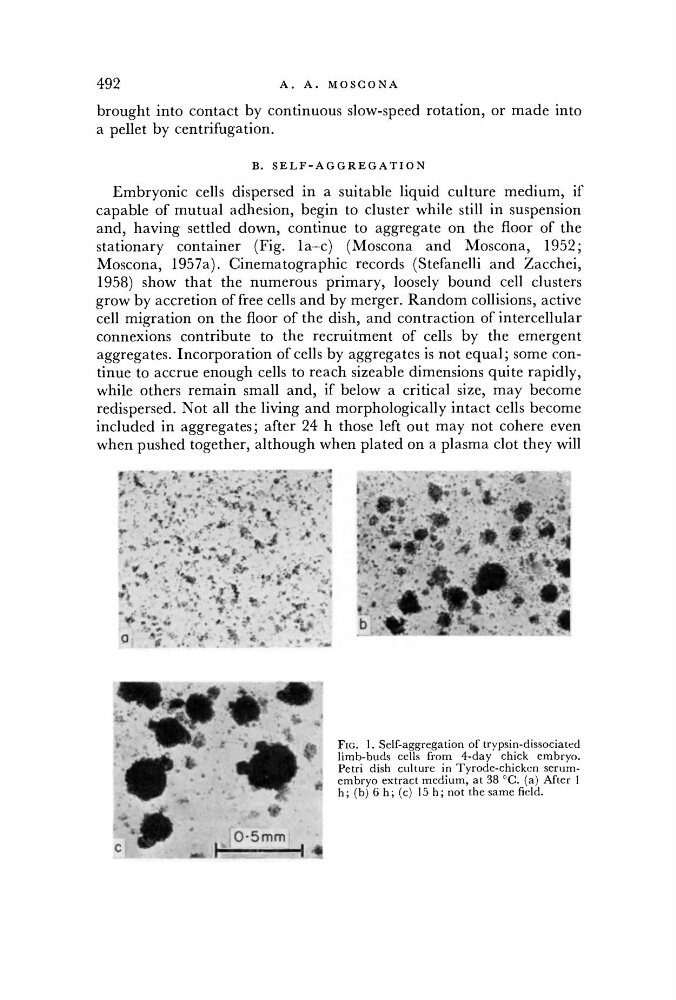
FIG. 1. Self-aggregation of trypsin-dissociated
limb-buds cells from 4-day chick embryo.
Petri dish culture in Tyrode-chicken serumembryo extract medium, at 38 °G. (a) After 1
h; (b) 6 h; (c) 15 h; not the same field.
brought into contact by continuous slow-speed rotation, or made into
a pellet by centrifugation.
B. SELF-AGGREGATION
Embryonic cells dispersed in a suitable liquid culture medium, if
capable of mutual adhesion, begin to cluster while still in suspension
and, having settled down, continue to aggregate on the floor of the
stationary container (Fig. la-c) (Moscona and Moscona, 1952;
Moscona, 1957a). Cinematographic records (Stefanelli and Zacchei,
1958) show that the numerous primary, loosely bound cell clusters
grow by accretion of free cells and by merger. Random collisions, active
cell migration on the floor of the dish, and contraction of intercellular
connexions contribute to the recruitment of cells by the emergent
aggregates. Incorporation of cells by aggregates is not equal; some continue to accrue enough cells to reach sizeable dimensions quite rapidly,
while others remain small and, if below a critical size, may become
redispersed. Not all the living and morphologically intact cells become
included in aggregates; after 24 h those left out may not cohere even
when pushed together, although when plated on a plasma clot they will
A. A. MOSCONA
FIG. 1. Self-aggregation of trypsin-dissociated
limb-buds cells from 4-day chick embryo.
Petri dish culture in Tyrode-chicken serumembryo extract medium, at 38 °G. (a) After 1
h; (b) 6 h; (c) 15 h; not the same field.
brought into contact by continuous slow-speed rotation, or made into
a pellet by centrifugation.
B. SELF-AGGREGATION
Embryonic cells dispersed in a suitable liquid culture medium, if
capable of mutual adhesion, begin to cluster while still in suspension
and, having settled down, continue to aggregate on the floor of the
stationary container (Fig. la-c) (Moscona and Moscona, 1952;
Moscona, 1957a). Cinematographic records (Stefanelli and Zacchei,
1958) show that the numerous primary, loosely bound cell clusters
grow by accretion of free cells and by merger. Random collisions, active
cell migration on the floor of the dish, and contraction of intercellular
connexions contribute to the recruitment of cells by the emergent
aggregates. Incorporation of cells by aggregates is not equal; some continue to accrue enough cells to reach sizeable dimensions quite rapidly,
while others remain small and, if below a critical size, may become
redispersed. Not all the living and morphologically intact cells become
included in aggregates; after 24 h those left out may not cohere even
when pushed together, although when plated on a plasma clot they will