

1 2 . G E N E T I C C Y T O L O G Y
437
IS U H n i:
1
2
3 - X
4
5
i i i i 46
1 i it i i
6
7
8
9
10
11
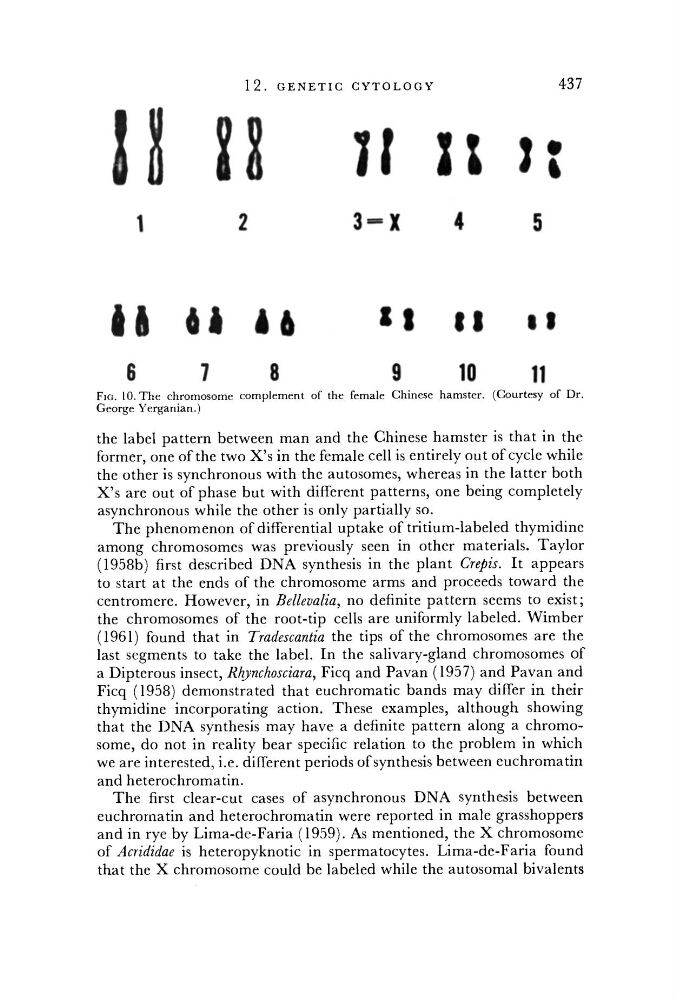
FIG. 10. The chromosome complement of the female Chinese hamster. (Courtesy of Dr.
George Yerganian.)
the label pattern between man and the Chinese hamster is that in the
former, one ofthe two X's in the female cell is entirely out of cycle while
the other is synchronous with the autosomes, whereas in the latter both
X's are out of phase but with different patterns, one being completely
asynchronous while the other is only partially so.
The phenomenon of differential uptake of tritium-labeled thymidine
among chromosomes was previously seen in other materials. Taylor
(1958b) first described D N A synthesis in the plant Crepis. It appears
to start at the ends of the chromosome arms and proceeds toward the
centromere. However, in Bellevalia, no definite pattern seems to exist;
the chromosomes of the root-tip cells are uniformly labeled. Wimber
(1961) found that in Tradescantia
the tips of the chromosomes are the
last segments to take the label. In the salivary-gland chromosomes of
a Dipterous insect, Rhynchosciara, Ficq and Pavan (1957) and Pavan and
Ficq (1958) demonstrated that euchromatic bands may differ in their
thymidine incorporating action. These examples, although showing
that the D N A synthesis may have a definite pattern along a chromosome, do not in reality bear specific relation to the problem in which
we are interested, i.e. different periods of synthesis between euchromatin
and heterochromatin.
The first clear-cut cases of asynchronous D N A synthesis between
euchromatin and heterochromatin were reported in male grasshoppers
and in rye by Lima-de-Faria (1959). As mentioned, the X chromosome
of Acrididae is heteropyknotic in spermatocytes. Lima-de-Faria found
that the X chromosome could be labeled while the autosomal bivalents
437
IS U H n i:
1
2
3 - X
4
5
i i i i 46
1 i it i i
6
7
8
9
10
11
FIG. 10. The chromosome complement of the female Chinese hamster. (Courtesy of Dr.
George Yerganian.)
the label pattern between man and the Chinese hamster is that in the
former, one ofthe two X's in the female cell is entirely out of cycle while
the other is synchronous with the autosomes, whereas in the latter both
X's are out of phase but with different patterns, one being completely
asynchronous while the other is only partially so.
The phenomenon of differential uptake of tritium-labeled thymidine
among chromosomes was previously seen in other materials. Taylor
(1958b) first described D N A synthesis in the plant Crepis. It appears
to start at the ends of the chromosome arms and proceeds toward the
centromere. However, in Bellevalia, no definite pattern seems to exist;
the chromosomes of the root-tip cells are uniformly labeled. Wimber
(1961) found that in Tradescantia
the tips of the chromosomes are the
last segments to take the label. In the salivary-gland chromosomes of
a Dipterous insect, Rhynchosciara, Ficq and Pavan (1957) and Pavan and
Ficq (1958) demonstrated that euchromatic bands may differ in their
thymidine incorporating action. These examples, although showing
that the D N A synthesis may have a definite pattern along a chromosome, do not in reality bear specific relation to the problem in which
we are interested, i.e. different periods of synthesis between euchromatin
and heterochromatin.
The first clear-cut cases of asynchronous D N A synthesis between
euchromatin and heterochromatin were reported in male grasshoppers
and in rye by Lima-de-Faria (1959). As mentioned, the X chromosome
of Acrididae is heteropyknotic in spermatocytes. Lima-de-Faria found
that the X chromosome could be labeled while the autosomal bivalents