

1 2 . G E N E T I C C Y T O L O G Y
4 0 1
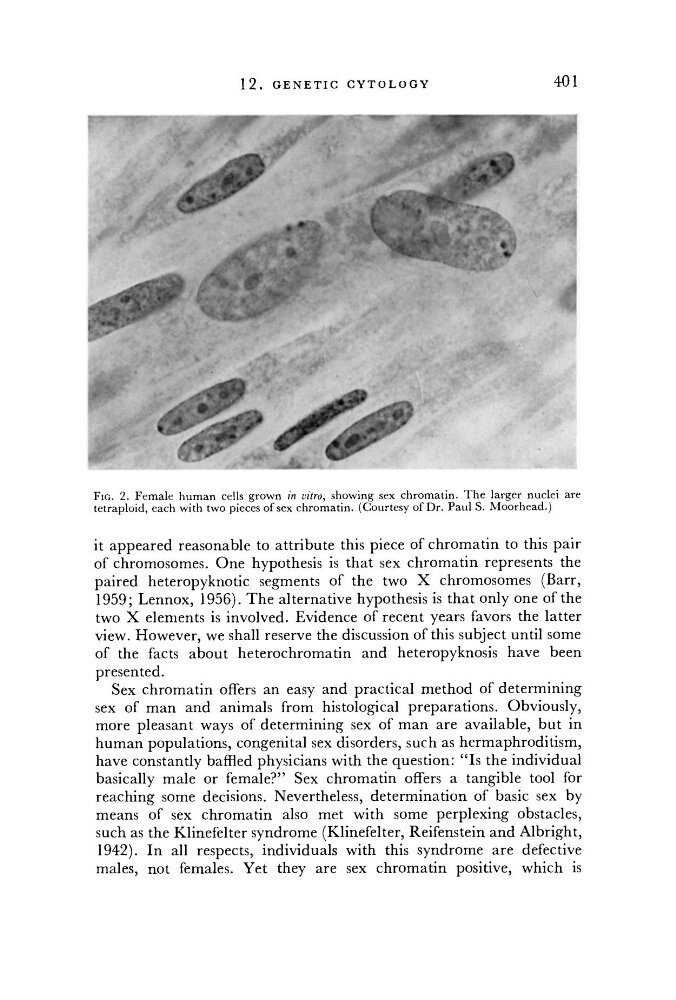
FIG. 2. Female human cells grown in vitro, showing sex chromatin. The larger nuclei are
tetraploid, each with two pieces of sex chromatin. (Courtesy of Dr. Paul S. Moorhead.)
it appeared reasonable to attribute this piece of chromatin to this pair
of chromosomes. One hypothesis is that sex chromatin represents the
paired heteropyknotic segments of the two X chromosomes (Barr,
1959; Lennox, 1956). The alternative hypothesis is that only one of the
two X elements is involved. Evidence of recent years favors the latter
view. However, we shall reserve the discussion of this subject until some
of the facts about heterochromatin and heteropyknosis have been
presented.
Sex chromatin offers an easy and practical method of determining
sex of man and animals from histological preparations. Obviously,
more pleasant ways of determining sex of man are available, but in
human populations, congenital sex disorders, such as hermaphroditism,
have constantly baffled physicians with the question: "Is the individual
basically male or female?" Sex chromatin offers a tangible tool for
reaching some decisions. Nevertheless, determination of basic sex by
means of sex chromatin also met with some perplexing obstacles,
such as the Klinefelter syndrome (Klinefelter, Reifenstein and Albright,
1942). In all respects, individuals with this syndrome are defective
males, not females. Yet they are sex chromatin positive, which is
4 0 1
FIG. 2. Female human cells grown in vitro, showing sex chromatin. The larger nuclei are
tetraploid, each with two pieces of sex chromatin. (Courtesy of Dr. Paul S. Moorhead.)
it appeared reasonable to attribute this piece of chromatin to this pair
of chromosomes. One hypothesis is that sex chromatin represents the
paired heteropyknotic segments of the two X chromosomes (Barr,
1959; Lennox, 1956). The alternative hypothesis is that only one of the
two X elements is involved. Evidence of recent years favors the latter
view. However, we shall reserve the discussion of this subject until some
of the facts about heterochromatin and heteropyknosis have been
presented.
Sex chromatin offers an easy and practical method of determining
sex of man and animals from histological preparations. Obviously,
more pleasant ways of determining sex of man are available, but in
human populations, congenital sex disorders, such as hermaphroditism,
have constantly baffled physicians with the question: "Is the individual
basically male or female?" Sex chromatin offers a tangible tool for
reaching some decisions. Nevertheless, determination of basic sex by
means of sex chromatin also met with some perplexing obstacles,
such as the Klinefelter syndrome (Klinefelter, Reifenstein and Albright,
1942). In all respects, individuals with this syndrome are defective
males, not females. Yet they are sex chromatin positive, which is