

216
H . F I R K E T
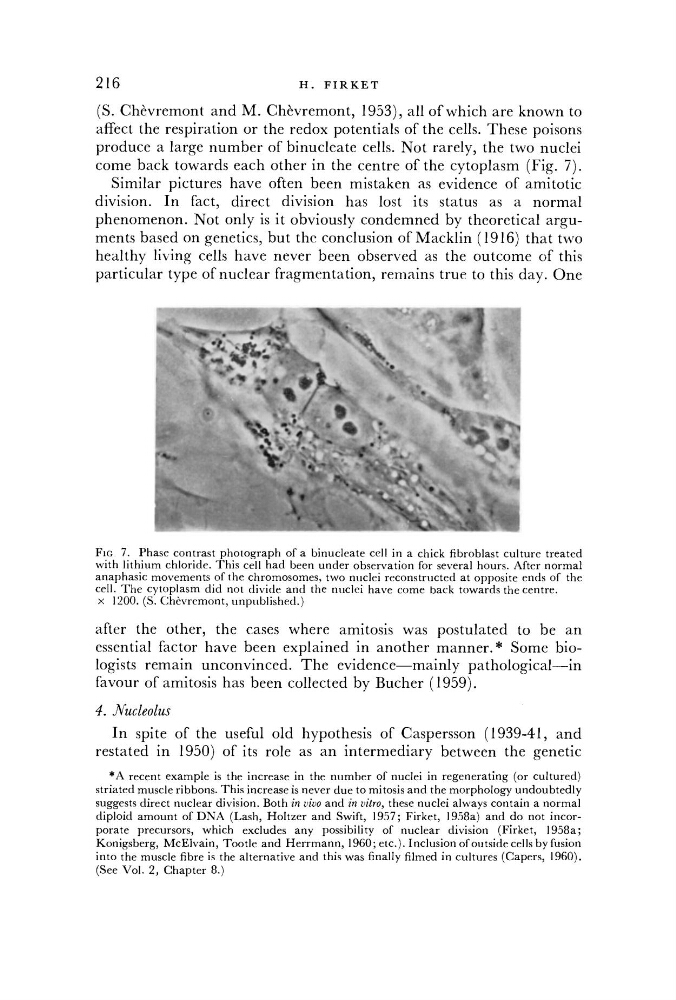
FIG 7. Phase contrast photograph of a binucleate cell in a chick fibroblast culture treated
with lithium chloride. This cell had been under observation for several hours. After normal
anaphasic movements of the chromosomes, two nuclei reconstructed at opposite ends of the
cell. The cytoplasm did not divide and the nuclei have come back towards the centre,
x 1200. (S. Chevremont, unpublished.)
after the other, the cases where amitosis was postulated to be an
essential factor have been explained in another manner.* Some biologists remain unconvinced. The evidence—mainly pathological—in
favour of amitosis has been collected by Bucher (1959).
4. Nucleolus
In spite of the useful old hypothesis of Caspersson (1939-41, and
restated in 1950) of its role as an intermediary between the genetic
*A recent example is the increase in the number of nuclei in regenerating (or cultured)
striated muscle ribbons. This increase is never due to mitosis and the morphology undoubtedly
suggests direct nuclear division. Both in vivo and in vitro, these nuclei always contain a normal
diploid amount of DNA (Lash, Holtzer and Swift, 1957; Firket, 1958a) and do not incorporate precursors, which excludes any possibility of nuclear division (Firket, 1958a;
Konigsberg, McElvain, Tootle and Herrmann, 1960; etc.). Inclusion of outside cells by fusion
into the muscle fibre is the alternative and this was finally filmed in cultures (Capers, 1960).
(See Vol. 2, Chapter 8.)
(S. Chevremont and M . Chevremont, 1953), all of which are known to
affect the respiration or the redox potentials of the cells. These poisons
produce a large number of binucleate cells. Not rarely, the two nuclei
come back towards each other in the centre of the cytoplasm (Fig. 7).
Similar pictures have often been mistaken as evidence of amitotic
division. In fact, direct division has lost its status as a normal
phenomenon. Not only is it obviously condemned by theoretical arguments based on genetics, but the conclusion of Macklin (1916) that two
healthy living cells have never been observed as the outcome of this
particular type of nuclear fragmentation, remains true to this day. One
H . F I R K E T
FIG 7. Phase contrast photograph of a binucleate cell in a chick fibroblast culture treated
with lithium chloride. This cell had been under observation for several hours. After normal
anaphasic movements of the chromosomes, two nuclei reconstructed at opposite ends of the
cell. The cytoplasm did not divide and the nuclei have come back towards the centre,
x 1200. (S. Chevremont, unpublished.)
after the other, the cases where amitosis was postulated to be an
essential factor have been explained in another manner.* Some biologists remain unconvinced. The evidence—mainly pathological—in
favour of amitosis has been collected by Bucher (1959).
4. Nucleolus
In spite of the useful old hypothesis of Caspersson (1939-41, and
restated in 1950) of its role as an intermediary between the genetic
*A recent example is the increase in the number of nuclei in regenerating (or cultured)
striated muscle ribbons. This increase is never due to mitosis and the morphology undoubtedly
suggests direct nuclear division. Both in vivo and in vitro, these nuclei always contain a normal
diploid amount of DNA (Lash, Holtzer and Swift, 1957; Firket, 1958a) and do not incorporate precursors, which excludes any possibility of nuclear division (Firket, 1958a;
Konigsberg, McElvain, Tootle and Herrmann, 1960; etc.). Inclusion of outside cells by fusion
into the muscle fibre is the alternative and this was finally filmed in cultures (Capers, 1960).
(See Vol. 2, Chapter 8.)
(S. Chevremont and M . Chevremont, 1953), all of which are known to
affect the respiration or the redox potentials of the cells. These poisons
produce a large number of binucleate cells. Not rarely, the two nuclei
come back towards each other in the centre of the cytoplasm (Fig. 7).
Similar pictures have often been mistaken as evidence of amitotic
division. In fact, direct division has lost its status as a normal
phenomenon. Not only is it obviously condemned by theoretical arguments based on genetics, but the conclusion of Macklin (1916) that two
healthy living cells have never been observed as the outcome of this
particular type of nuclear fragmentation, remains true to this day. One