

70
A. SARAGEA E7’ A L .
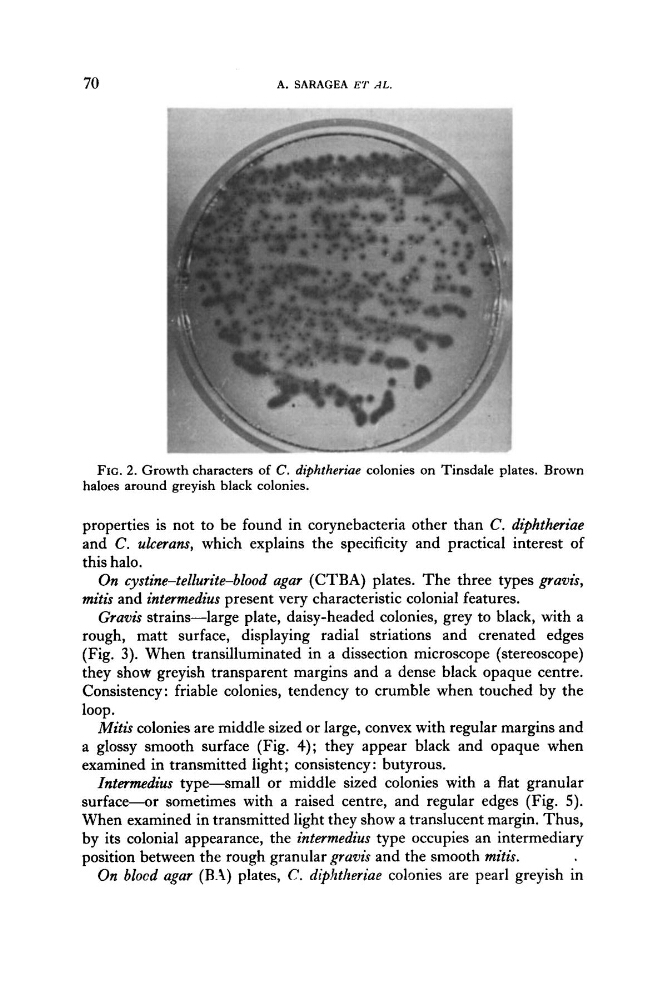
FIG. 2. Growth characters of C. diphtheriue colonies on Tinsdale plates. Brown
haloes around greyish black colonies.
properties is not to be found in corynebacteria other than C. diphtheriae
and C. ulceram, which explains the specificity and practical interest of
this halo.
On cystine-tellurite-blood agar (CTBA) plates. The three types gravis,
mitis and intermedius present very characteristic colonial features.
Gravis strains-large plate, daisy-headed colonies, grey to black, with a
rough, matt surface, displaying radial striations and crenated edges
(Fig. 3). When transilluminated in a dissection microscope (stereoscope)
they show greyish transparent margins and a dense black opaque centre.
Consistency: friable colonies, tendency to crumble when touched by the
Mitis colonies are middle sized or large, convex with regular margins and
a glossy smooth surface (Fig. 4); they appear black and opaque when
examined in transmitted light ; consistency : butyrous.
Intermedius type-small or middle sized colonies with a flat granular
surface-or sometimes with a raised centre, and regular edges (Fig. 5).
When examined in transmitted light they show a translucent margin. Thus,
by its colonial appearance, the intermedius type occupies an intermediary
position between the rough granular gruvis and the smooth mitis.
On blood agar (B.4) plates, C. diphtlzeriue colonies are pearl greyish in
loop.
A. SARAGEA E7’ A L .
FIG. 2. Growth characters of C. diphtheriue colonies on Tinsdale plates. Brown
haloes around greyish black colonies.
properties is not to be found in corynebacteria other than C. diphtheriae
and C. ulceram, which explains the specificity and practical interest of
this halo.
On cystine-tellurite-blood agar (CTBA) plates. The three types gravis,
mitis and intermedius present very characteristic colonial features.
Gravis strains-large plate, daisy-headed colonies, grey to black, with a
rough, matt surface, displaying radial striations and crenated edges
(Fig. 3). When transilluminated in a dissection microscope (stereoscope)
they show greyish transparent margins and a dense black opaque centre.
Consistency: friable colonies, tendency to crumble when touched by the
Mitis colonies are middle sized or large, convex with regular margins and
a glossy smooth surface (Fig. 4); they appear black and opaque when
examined in transmitted light ; consistency : butyrous.
Intermedius type-small or middle sized colonies with a flat granular
surface-or sometimes with a raised centre, and regular edges (Fig. 5).
When examined in transmitted light they show a translucent margin. Thus,
by its colonial appearance, the intermedius type occupies an intermediary
position between the rough granular gruvis and the smooth mitis.
On blood agar (B.4) plates, C. diphtlzeriue colonies are pearl greyish in
loop.