

I. TYPING METHODS FOR CLOSTRIDIUM
23
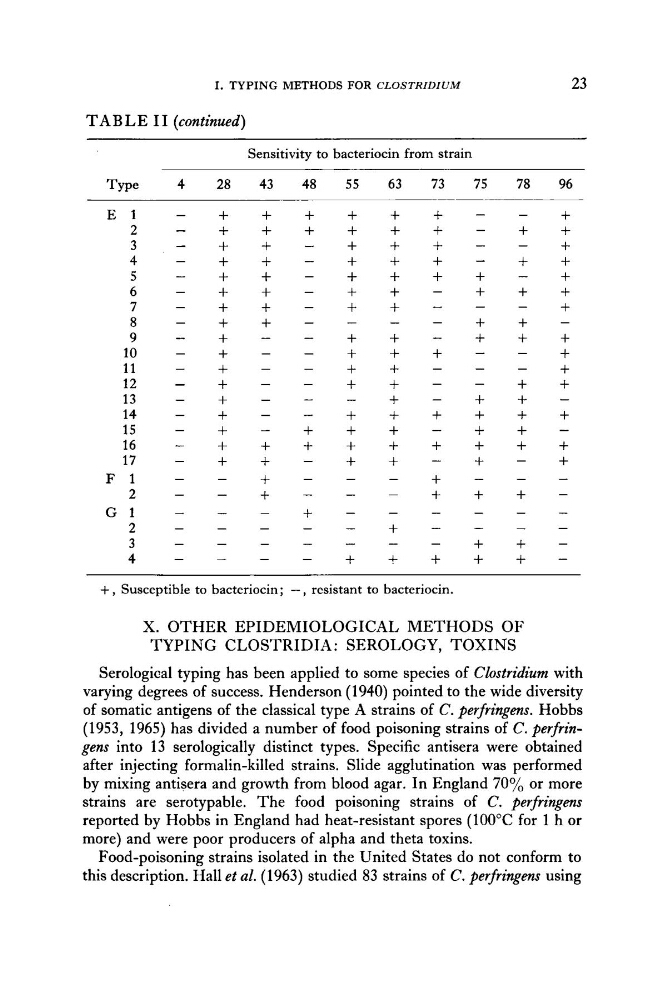
T A B L E I1 (continued)
Sensitivity to bacteriocin from strain
Type
4
28
43
48
55
63
73
75
78
96
E l
- + + + + + + -
- +
2
-
+ + + + + + - + +
+
3
-
+ + - + + + -
-
4
- + + - + + + - + +
5
- + + - + + + + - +
6
- + + -
+ + -
+ + +
+
7
-
+ + - + + -
-
-
8
-
+ + -
-
-
- + + -
9
- + -
-
+ + - + + +
10
-
+ -
- + + + -
- +
11
- + -
- + + -
-
- +
12
-
+ - - + + -
- + +
13
- + -
-
-
+ - + + -
14
-
+ -
- + + + + + +
15
- + - + + + - + + -
16
- + + + + + + + + +
17
-
+ + -
+ + - + -
+
2
-
-
+ -
-
-
+ + + -
-
-
-
+ -
F 1
-
- + -
-
G 1
-
-
- + -
-
-
-
-
-
-
-
-
-
-
- + + -
3
4
-
-
-
-
+ + + + + -
-
+ , Susceptible to bacteriocin; - , resistant to bacteriocin.
X. OTHER EPIDEMIOLOGICAL METHODS OF
TYPING CLOSTRIDIA: SEROLOGY, TOXINS
Serological typing has been applied to some species of Clostridium with
varying degrees of success. Henderson (1940) pointed to the wide diversity
of somatic antigens of the classical type A strains of C. perfringens. Hobbs
(1953, 1965) has divided a number of food poisoning strains of C. perfringens into 13 serologically distinct types. Specific antisera were obtained
after injecting formalin-killed strains. Slide agglutination was performed
by mixing antisera and growth from blood agar. In England 70% or more
strains are serotypable. The food poisoning strains of C. perfringens
reported by Hobbs in England had heat-resistant spores (100°C for 1 h or
more) and were poor producers of alpha and theta toxins.
Food-poisoning strains isolated in the United States do not conform to
this description. Hall et al. (1963) studied 83 strains of C. perfringens using
23
T A B L E I1 (continued)
Sensitivity to bacteriocin from strain
Type
4
28
43
48
55
63
73
75
78
96
E l
- + + + + + + -
- +
2
-
+ + + + + + - + +
+
3
-
+ + - + + + -
-
4
- + + - + + + - + +
5
- + + - + + + + - +
6
- + + -
+ + -
+ + +
+
7
-
+ + - + + -
-
-
8
-
+ + -
-
-
- + + -
9
- + -
-
+ + - + + +
10
-
+ -
- + + + -
- +
11
- + -
- + + -
-
- +
12
-
+ - - + + -
- + +
13
- + -
-
-
+ - + + -
14
-
+ -
- + + + + + +
15
- + - + + + - + + -
16
- + + + + + + + + +
17
-
+ + -
+ + - + -
+
2
-
-
+ -
-
-
+ + + -
-
-
-
+ -
F 1
-
- + -
-
G 1
-
-
- + -
-
-
-
-
-
-
-
-
-
-
- + + -
3
4
-
-
-
-
+ + + + + -
-
+ , Susceptible to bacteriocin; - , resistant to bacteriocin.
X. OTHER EPIDEMIOLOGICAL METHODS OF
TYPING CLOSTRIDIA: SEROLOGY, TOXINS
Serological typing has been applied to some species of Clostridium with
varying degrees of success. Henderson (1940) pointed to the wide diversity
of somatic antigens of the classical type A strains of C. perfringens. Hobbs
(1953, 1965) has divided a number of food poisoning strains of C. perfringens into 13 serologically distinct types. Specific antisera were obtained
after injecting formalin-killed strains. Slide agglutination was performed
by mixing antisera and growth from blood agar. In England 70% or more
strains are serotypable. The food poisoning strains of C. perfringens
reported by Hobbs in England had heat-resistant spores (100°C for 1 h or
more) and were poor producers of alpha and theta toxins.
Food-poisoning strains isolated in the United States do not conform to
this description. Hall et al. (1963) studied 83 strains of C. perfringens using