

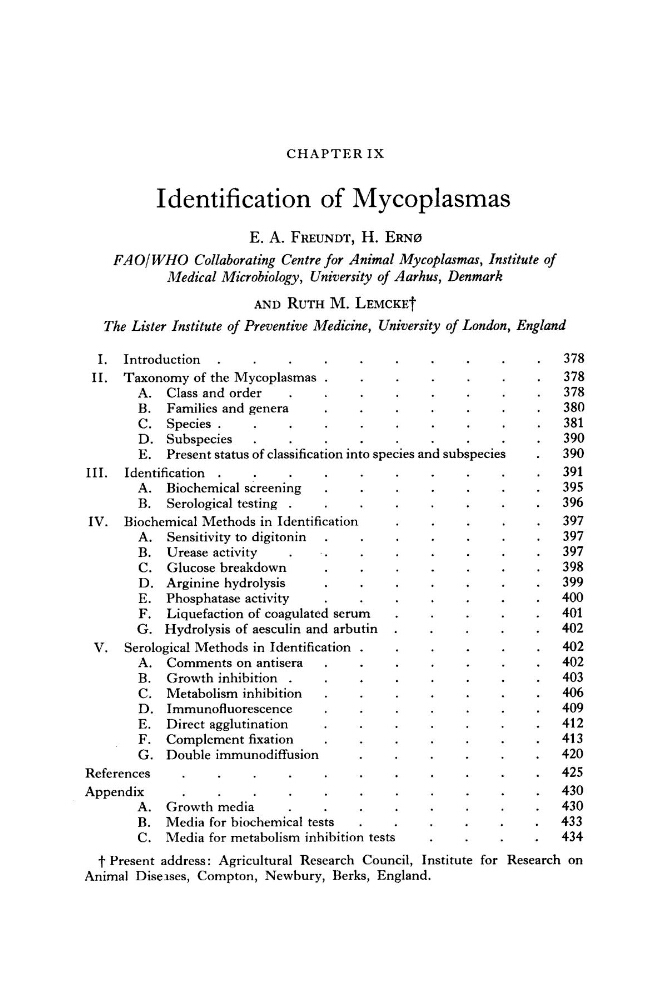
C H A P T E R I X
Identification of Mycoplasmas
E. A. FREUNDT, H. ERN0
FA01 WHO Collaborating Centre for Animal Mycoplasmas, Institute of
Medical Microbiology, University of Aarhus, Denmark
AND RUTH M. LEMCKE~
The Lister Institute of Preventive Medicine, University of London, England
I. Introduction .
. 378
11. Taxonomy of the Mycoplasmas .
. 378
A. Class and order
.
. 378
B. Families and genera
.
. 380
C. Species .
. 381
D. Subspecies
.
. 390
E. Present status of classification into species and subspecies
. 390
111. Identification .
. 391
A. Biochemical screening
.
. 395
B. Serological testing .
. 396
IV. Biochemical Methods in Identification
.
. 397
A. Sensitivity to digitonin .
. 397
B. Urease activity
.
. 397
D. Arginine hydrolysis
.
. 399
C. Glucose breakdown
. 398
E. Phosphatase activity
.
. 400
F. Liquefaction of coagulated serum
.
. 401
G. Hydrolysis of aesculin and arbutin .
. 402
A. Comments on antisera
.
. 402
B. Growth inhibition .
. 403
C. Metabolism inhibition
.
. 406
D. Immunofluorescence
.
. 409
E. Direct agglutination
.
. 412
F. Complement fixation
.
. 413
G. Double immunodiffusion
. 420
References
.
. 425
Appendix
.
. 430
A. Growth media
.
. 430
B. Media for biochemical tests
.
. 433
C. Media for metabolism inhibition tests
.
. 434
-t Present address : Agricultural Research Council, Institute for Research on
V. Serological Methods in Identification .
. 402
Animal Disemes, Compton, Newbury, Berks, England.
Identification of Mycoplasmas
E. A. FREUNDT, H. ERN0
FA01 WHO Collaborating Centre for Animal Mycoplasmas, Institute of
Medical Microbiology, University of Aarhus, Denmark
AND RUTH M. LEMCKE~
The Lister Institute of Preventive Medicine, University of London, England
I. Introduction .
. 378
11. Taxonomy of the Mycoplasmas .
. 378
A. Class and order
.
. 378
B. Families and genera
.
. 380
C. Species .
. 381
D. Subspecies
.
. 390
E. Present status of classification into species and subspecies
. 390
111. Identification .
. 391
A. Biochemical screening
.
. 395
B. Serological testing .
. 396
IV. Biochemical Methods in Identification
.
. 397
A. Sensitivity to digitonin .
. 397
B. Urease activity
.
. 397
D. Arginine hydrolysis
.
. 399
C. Glucose breakdown
. 398
E. Phosphatase activity
.
. 400
F. Liquefaction of coagulated serum
.
. 401
G. Hydrolysis of aesculin and arbutin .
. 402
A. Comments on antisera
.
. 402
B. Growth inhibition .
. 403
C. Metabolism inhibition
.
. 406
D. Immunofluorescence
.
. 409
E. Direct agglutination
.
. 412
F. Complement fixation
.
. 413
G. Double immunodiffusion
. 420
References
.
. 425
Appendix
.
. 430
A. Growth media
.
. 430
B. Media for biochemical tests
.
. 433
C. Media for metabolism inhibition tests
.
. 434
-t Present address : Agricultural Research Council, Institute for Research on
V. Serological Methods in Identification .
. 402
Animal Disemes, Compton, Newbury, Berks, England.