

IV. INVESTIGATION OF C. UIPHTHEHIAE
103
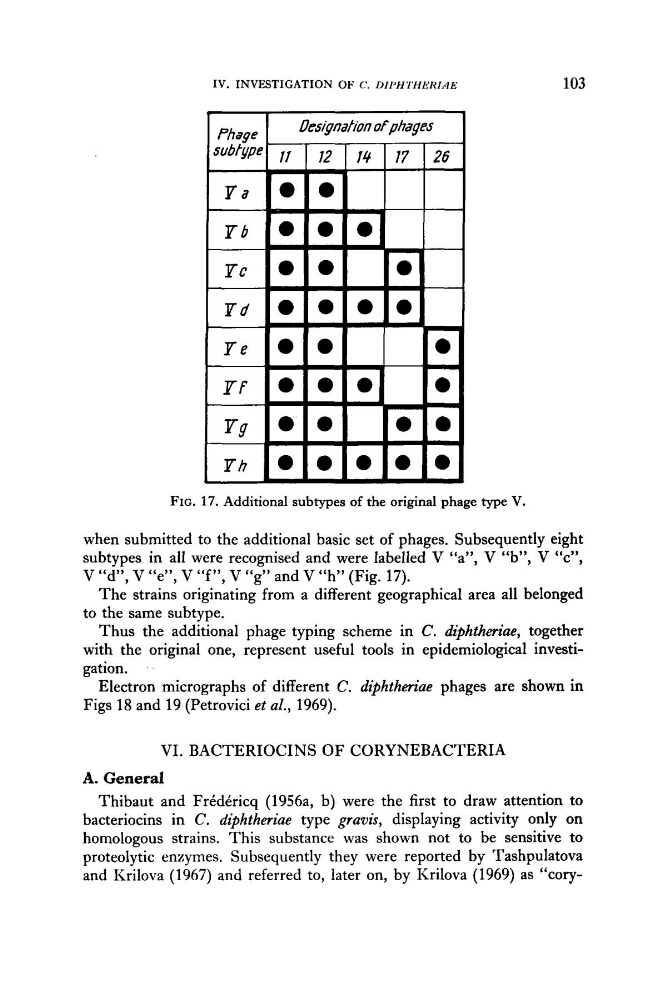
FIG. 17. Additional subtypes of the original phage type V.
when submitted to the additional basic set of phages. Subsequently eight
subtypes in all were recognised and were labelled V “a”, V “b”, V “c”,
V “d”, V “e”, V “f”, V “g” and V “h” (Fig. 17).
The strains originating from a different geographical area all belonged
to the same subtype.
Thus the additional phage typing scheme in C. diphtheriue, together
with the original one, represent useful tools in epidemiological investigation.
Electron micrographs of different C. diphtheriue phages are shown in
Figs 18 and 19 (Petrovici et al., 1969).
VI. BACTERIOCINS O F CORYNEBACTERIA
A. General
Thibaut and FrCdCricq (1956a, b) were the first to draw attention to
bacteriocins in C. diphtheriae type gravis, displaying activity only on
homologous strains. This substance was shown not to be sensitive to
proteolytic enzymes. Subsequently they were reported by Tashpulatova
and Krilova (1967) and referred to, later on, by Krilova (1969) as “cory-
103
FIG. 17. Additional subtypes of the original phage type V.
when submitted to the additional basic set of phages. Subsequently eight
subtypes in all were recognised and were labelled V “a”, V “b”, V “c”,
V “d”, V “e”, V “f”, V “g” and V “h” (Fig. 17).
The strains originating from a different geographical area all belonged
to the same subtype.
Thus the additional phage typing scheme in C. diphtheriue, together
with the original one, represent useful tools in epidemiological investigation.
Electron micrographs of different C. diphtheriue phages are shown in
Figs 18 and 19 (Petrovici et al., 1969).
VI. BACTERIOCINS O F CORYNEBACTERIA
A. General
Thibaut and FrCdCricq (1956a, b) were the first to draw attention to
bacteriocins in C. diphtheriae type gravis, displaying activity only on
homologous strains. This substance was shown not to be sensitive to
proteolytic enzymes. Subsequently they were reported by Tashpulatova
and Krilova (1967) and referred to, later on, by Krilova (1969) as “cory-