

94
A. SARAGEA ET At..
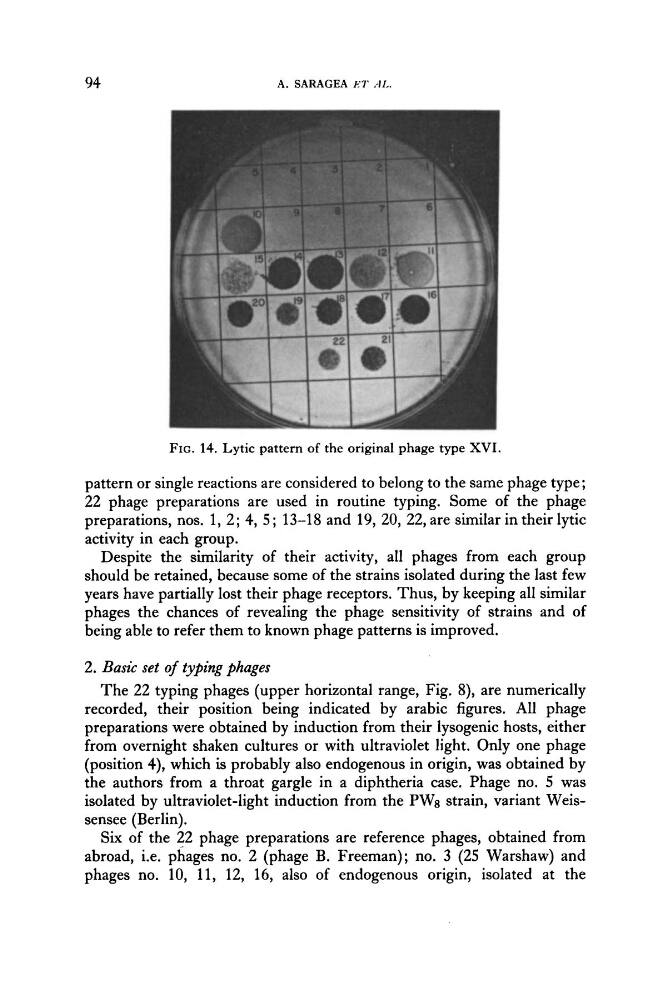
FIG. 14. Lytic pattern of the original phage type XVI.
pattern or single reactions are considered to belong to the same phage type;
22 phage preparations are used in routine typing. Some of the phage
preparations, nos. 1, 2; 4, 5 ; 13-18 and 19, 20, 22, are similar in their lytic
activity in each group.
Despite the similarity of their activity, all phages from each group
should be retained, because some of the strains isolated during the last few
years have partially lost their phage receptors. Thus, by keeping all similar
phages the chances of revealing the phage sensitivity of strains and of
being able to refer them to known phage patterns is improved.
2. Basic set of typing phages
The 22 typing phages (upper horizontal range, Fig. 8), are numerically
recorded, their position being indicated by arabic figures. All phage
preparations were obtained by induction from their lysogenic hosts, either
from overnight shaken cultures or with ultraviolet light. Only one phage
(position 4), which is probably also endogenous in origin, was obtained by
the authors from a throat gargle in a diphtheria case. Phage no. 5 was
isolated by ultraviolet-light induction from the PWs strain, variant Weissensee (Berlin).
Six of the 22 phage preparations are reference phages, obtained from
abroad, i.e. phages no. 2 (phage B. Freeman); no. 3 (25 Warshaw) and
phages no. 10, 11, 12, 16, also of endogenous origin, isolated at the
A. SARAGEA ET At..
FIG. 14. Lytic pattern of the original phage type XVI.
pattern or single reactions are considered to belong to the same phage type;
22 phage preparations are used in routine typing. Some of the phage
preparations, nos. 1, 2; 4, 5 ; 13-18 and 19, 20, 22, are similar in their lytic
activity in each group.
Despite the similarity of their activity, all phages from each group
should be retained, because some of the strains isolated during the last few
years have partially lost their phage receptors. Thus, by keeping all similar
phages the chances of revealing the phage sensitivity of strains and of
being able to refer them to known phage patterns is improved.
2. Basic set of typing phages
The 22 typing phages (upper horizontal range, Fig. 8), are numerically
recorded, their position being indicated by arabic figures. All phage
preparations were obtained by induction from their lysogenic hosts, either
from overnight shaken cultures or with ultraviolet light. Only one phage
(position 4), which is probably also endogenous in origin, was obtained by
the authors from a throat gargle in a diphtheria case. Phage no. 5 was
isolated by ultraviolet-light induction from the PWs strain, variant Weissensee (Berlin).
Six of the 22 phage preparations are reference phages, obtained from
abroad, i.e. phages no. 2 (phage B. Freeman); no. 3 (25 Warshaw) and
phages no. 10, 11, 12, 16, also of endogenous origin, isolated at the