

92
A. SARAGEA ET AI..
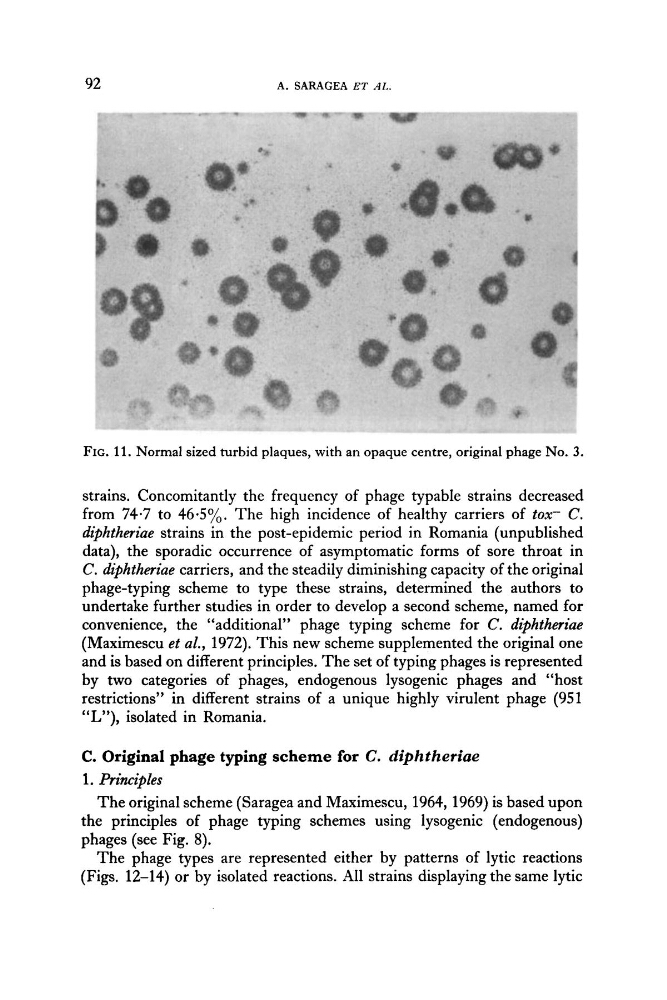
FIG. 11. Normal sized turbid plaques, with an opaque centre, original phage No. 3.
strains. Concomitantly the frequency of phage typable strains decreased
from 74.7 to 46.5%. The high incidence of healthy carriers of tox- C.
diphtheriae strains in the post-epidemic period in Romania (unpublished
data), the sporadic occurrence of asymptomatic forms of sore throat in
C. diphtheriae carriers, and the steadily diminishing capacity of the original
phage-typing scheme to type these strains, determined the authors to
undertake further studies in order to develop a second scheme, named for
convenience, the “additional” phage typing scheme for C. diphtheriae
(Maximescu et al., 1972). This new scheme supplemented the original one
and is based on different principles. The set of typing phages is represented
by two categories of phages, endogenous lysogenic phages and “host
restrictions” in different strains of a unique highly virulent phage (951
“L”), isolated in Romania.
C. Original phage typing scheme for C. diphtheriae
1. Princip Ies
The original scheme (Saragea and Maximescu, 1964,1969) is based upon
the principles of phage typing schemes using lysogenic (endogenous)
phages (see Fig. 8).
The phage types are represented either by patterns of lytic reactions
(Figs. 12-14) or by isolated reactions. All strains displaying the same lytic
A. SARAGEA ET AI..
FIG. 11. Normal sized turbid plaques, with an opaque centre, original phage No. 3.
strains. Concomitantly the frequency of phage typable strains decreased
from 74.7 to 46.5%. The high incidence of healthy carriers of tox- C.
diphtheriae strains in the post-epidemic period in Romania (unpublished
data), the sporadic occurrence of asymptomatic forms of sore throat in
C. diphtheriae carriers, and the steadily diminishing capacity of the original
phage-typing scheme to type these strains, determined the authors to
undertake further studies in order to develop a second scheme, named for
convenience, the “additional” phage typing scheme for C. diphtheriae
(Maximescu et al., 1972). This new scheme supplemented the original one
and is based on different principles. The set of typing phages is represented
by two categories of phages, endogenous lysogenic phages and “host
restrictions” in different strains of a unique highly virulent phage (951
“L”), isolated in Romania.
C. Original phage typing scheme for C. diphtheriae
1. Princip Ies
The original scheme (Saragea and Maximescu, 1964,1969) is based upon
the principles of phage typing schemes using lysogenic (endogenous)
phages (see Fig. 8).
The phage types are represented either by patterns of lytic reactions
(Figs. 12-14) or by isolated reactions. All strains displaying the same lytic