

90
A. SARAGEA ET AL.
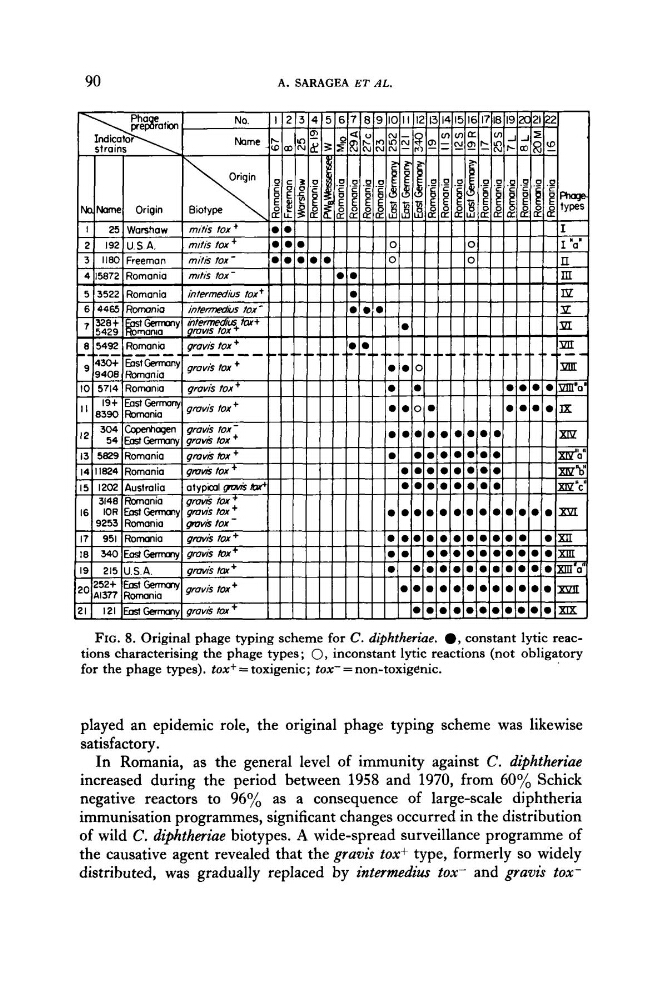
FIG. 8. Original phage typing scheme for C. diphtheriae. 0 , constant lytic reactions characterising the phage types; 0, inconstant lytic reactions (not obligatory
for the phage types). toxf = toxigenic; tox- = non-toxigenic.
played an epidemic role, the original phage typing scheme was likewise
satisfactory.
In Romania, as the general level of immunity against C. diphtheriue
increased during the period between 1958 and 1970, from 60% Schick
negative reactors to 96% as a consequence of large-scale diphtheria
immunisation programmes, significant changes occurred in the distribution
of wild C. diphtheriue biotypes. A wide-spread surveillance programme of
the causative agent revealed that the gruvis toxf type, formerly so widely
distributed, was gradually replaced by intermedius tox- and gruvis tox-
A. SARAGEA ET AL.
FIG. 8. Original phage typing scheme for C. diphtheriae. 0 , constant lytic reactions characterising the phage types; 0, inconstant lytic reactions (not obligatory
for the phage types). toxf = toxigenic; tox- = non-toxigenic.
played an epidemic role, the original phage typing scheme was likewise
satisfactory.
In Romania, as the general level of immunity against C. diphtheriue
increased during the period between 1958 and 1970, from 60% Schick
negative reactors to 96% as a consequence of large-scale diphtheria
immunisation programmes, significant changes occurred in the distribution
of wild C. diphtheriue biotypes. A wide-spread surveillance programme of
the causative agent revealed that the gruvis toxf type, formerly so widely
distributed, was gradually replaced by intermedius tox- and gruvis tox-