

32
1.
Introduction
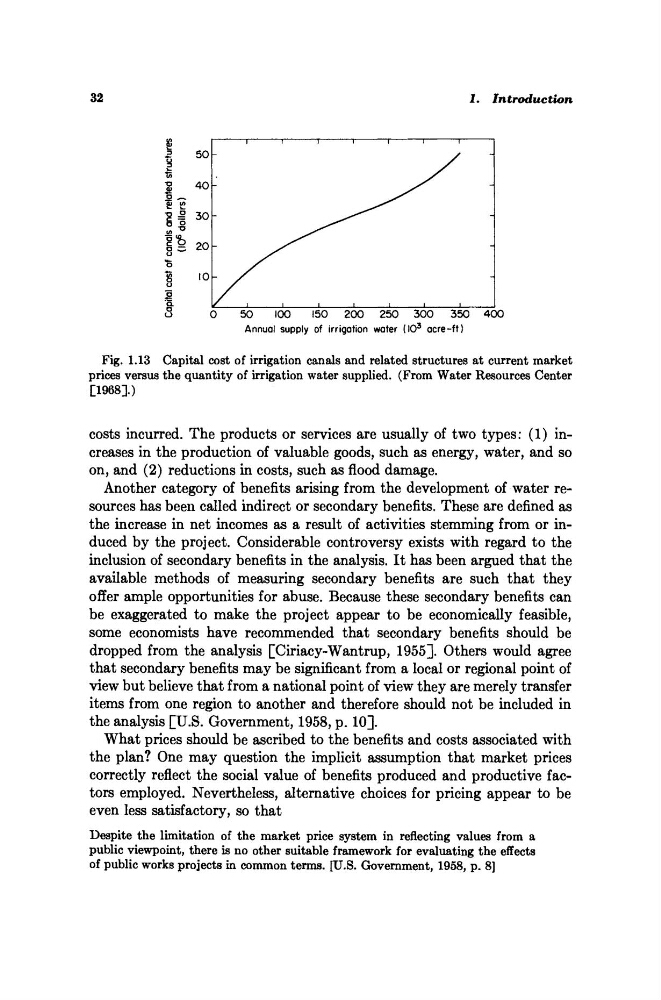
Fig. 1.13 Capital cost of irrigation canals and related structures at current market
prices versus the quantity of irrigation water supplied. (From Water Resources Center
[1968].)
costs incurred. The products or services are usually of two types: (1) increases in the production of valuable goods, such as energy, water, and so
on, and (2) reductions in costs, such as flood damage.
Another category of benefits arising from the development of water resources has been called indirect or secondary benefits. These are defined as
the increase in net incomes as a result of activities stemming from or induced by the project. Considerable controversy exists with regard to the
inclusion of secondary benefits in the analysis. It has been argued that the
available methods of measuring secondary benefits are such that they
offer ample opportunities for abuse. Because these secondary benefits can
be exaggerated to make the project appear to be economically feasible,
some economists have recommended that secondary benefits should be
dropped from the analysis [Ciriacy-Wantrup, 1955], Others would agree
that secondary benefits may be significant from a local or regional point of
view but believe that from a national point of view they are merely transfer
items from one region to another and therefore should not be included in
the analysis [U.S. Government, 1958, p. 10].
What prices should be ascribed to the benefits and costs associated with
the plan? One may question the implicit assumption that market prices
correctly reflect the social value of benefits produced and productive factors employed. Nevertheless, alternative choices for pricing appear to be
even less satisfactory, so that
Despite the limitation of the market price system in reflecting values from a
public viewpoint, there is no other suitable framework for evaluating the effects
of public works projects in common terms. [U.S. Government, 1958, p. 8]
1.
Introduction
Fig. 1.13 Capital cost of irrigation canals and related structures at current market
prices versus the quantity of irrigation water supplied. (From Water Resources Center
[1968].)
costs incurred. The products or services are usually of two types: (1) increases in the production of valuable goods, such as energy, water, and so
on, and (2) reductions in costs, such as flood damage.
Another category of benefits arising from the development of water resources has been called indirect or secondary benefits. These are defined as
the increase in net incomes as a result of activities stemming from or induced by the project. Considerable controversy exists with regard to the
inclusion of secondary benefits in the analysis. It has been argued that the
available methods of measuring secondary benefits are such that they
offer ample opportunities for abuse. Because these secondary benefits can
be exaggerated to make the project appear to be economically feasible,
some economists have recommended that secondary benefits should be
dropped from the analysis [Ciriacy-Wantrup, 1955], Others would agree
that secondary benefits may be significant from a local or regional point of
view but believe that from a national point of view they are merely transfer
items from one region to another and therefore should not be included in
the analysis [U.S. Government, 1958, p. 10].
What prices should be ascribed to the benefits and costs associated with
the plan? One may question the implicit assumption that market prices
correctly reflect the social value of benefits produced and productive factors employed. Nevertheless, alternative choices for pricing appear to be
even less satisfactory, so that
Despite the limitation of the market price system in reflecting values from a
public viewpoint, there is no other suitable framework for evaluating the effects
of public works projects in common terms. [U.S. Government, 1958, p. 8]