

156
6. Water Quality and Pollution
Considerations
(
START
)
r
Value of
(6.1)
NO
PICK A NEW COMBINATION
OF
WATER QUALITY CONSTRAINTS
THE WATER QUANTITY PROBLEM
MAXIMIZE OBJECTIVE FUNCTION
(2.1) SUBJECT TO EXPRESSIONS
(2. 2) TO (2.17)
Λ
Qimt>hjt>
s ijh
D ijti
\ jt (j =tf+l,
°jti
E ijt
THE WATER QUALITY PROBLEM
MAXIMIZE OBJECTIVE FUNCTION
(2.1) LESS (6.1) SUBJECT TO
EXPRESSIONS (6. 2) TO (6.19)
HAVE ALL
COMBINATIONS OF
WATER QUALITY CONSTRAINTS
BEEN SEARCH AND/OR
ELIMINATED?
M), F i}
YES
STOP
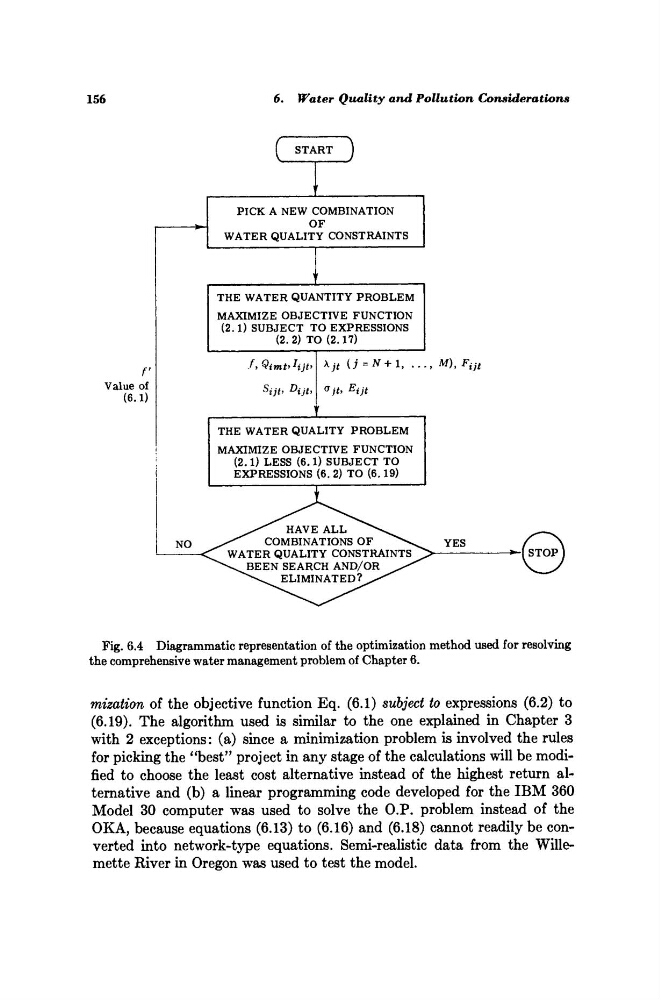
Fig. 6.4 Diagrammatic representation of the optimization method used for resolving
the comprehensive water management problem of Chapter 6.
mization of the objective function Eq. (6.1) subject to expressions (6.2) to
(6.19). The algorithm used is similar to the one explained in Chapter 3
with 2 exceptions: (a) since a minimization problem is involved the rules
for picking the "best" project in any stage of the calculations will be modified to choose the least cost alternative instead of the highest return alternative and (b) a linear programming code developed for the IBM 360
Model 30 computer was used to solve the O.P. problem instead of the
OKA, because equations (6.13) to (6.16) and (6.18) cannot readily be converted into network-type equations. Semi-realistic data from the Willemette River in Oregon was used to test the model.
6. Water Quality and Pollution
Considerations
(
START
)
r
Value of
(6.1)
NO
PICK A NEW COMBINATION
OF
WATER QUALITY CONSTRAINTS
THE WATER QUANTITY PROBLEM
MAXIMIZE OBJECTIVE FUNCTION
(2.1) SUBJECT TO EXPRESSIONS
(2. 2) TO (2.17)
Λ
Qimt>hjt>
s ijh
D ijti
\ jt (j =tf+l,
°jti
E ijt
THE WATER QUALITY PROBLEM
MAXIMIZE OBJECTIVE FUNCTION
(2.1) LESS (6.1) SUBJECT TO
EXPRESSIONS (6. 2) TO (6.19)
HAVE ALL
COMBINATIONS OF
WATER QUALITY CONSTRAINTS
BEEN SEARCH AND/OR
ELIMINATED?
M), F i}
YES
STOP
Fig. 6.4 Diagrammatic representation of the optimization method used for resolving
the comprehensive water management problem of Chapter 6.
mization of the objective function Eq. (6.1) subject to expressions (6.2) to
(6.19). The algorithm used is similar to the one explained in Chapter 3
with 2 exceptions: (a) since a minimization problem is involved the rules
for picking the "best" project in any stage of the calculations will be modified to choose the least cost alternative instead of the highest return alternative and (b) a linear programming code developed for the IBM 360
Model 30 computer was used to solve the O.P. problem instead of the
OKA, because equations (6.13) to (6.16) and (6.18) cannot readily be converted into network-type equations. Semi-realistic data from the Willemette River in Oregon was used to test the model.