

114
4. Application
of the Optimization
Algorithm
(239). The flows in arcs 1-10, 63-72, and 11-18 are assured by setting the
upper and lower bounds of these arcs at the same value. The consumptively
used irrigation waters are removed from the system to the sink node (arcs
119-130).
Municipal and industrial demands have been taken into account by
specifying the minimum flows in arcs 36 and 40 of period 1 (summer) and
in arcs 90 and 94 of period 2 (winter). Recreation demands are satisfied by
specifying the minimum flows in arcs 60, 62, 114, and 116. All exit flows
from the system (arcs 117 and 118) and all final reservoir volumes (arcs
109-116) are removed to the sink node. An artificial arc (131) connects
the sink node (240) to the source node (239) to complete the circulation
network. Figure 4.2 shows the information flow for inputs and outputs to
the system.
Note that the OKA solves the linear programming problem known as
the minimum-cost circulation problem. This entails that all inputs to the
system (incoming hydrological flows, reservoir initial conditions) must
come from the source node. Likewise all outputs from the system (consumptively used irrigation waters, outgoing hydrological flows, reservoir
final conditions) must go to the sink node.
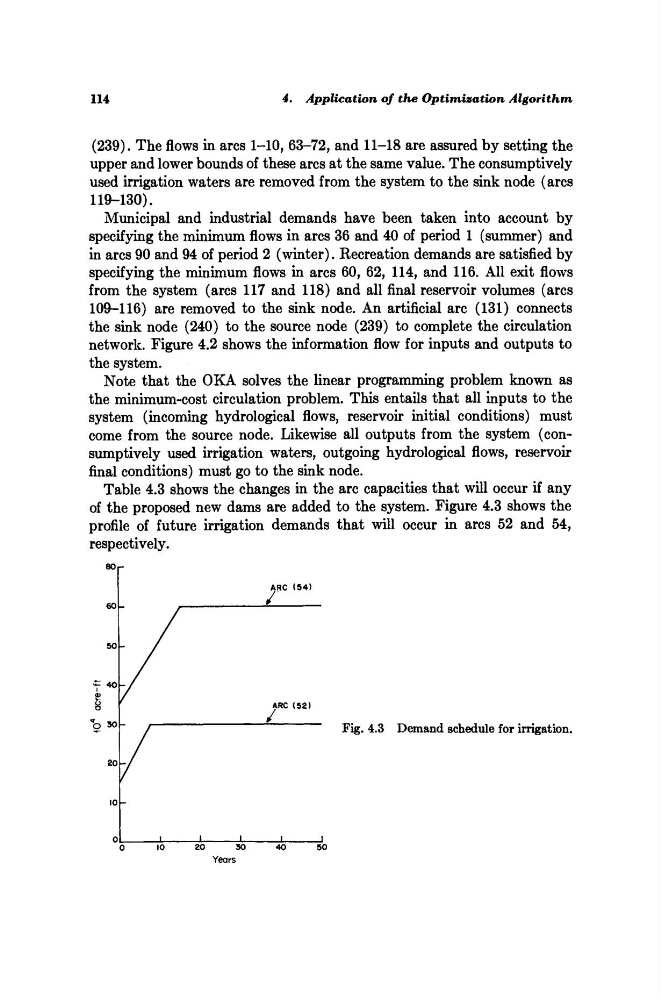
Table 4.3 shows the changes in the arc capacities that will occur if any
of the proposed new dams are added to the system. Figure 4.3 shows the
profile of future irrigation demands that will occur in arcs 52 and 54,
respectively.
1
Fig. 4.3 Demand schedule for irrigation.
io
ο
IO
4. Application
of the Optimization
Algorithm
(239). The flows in arcs 1-10, 63-72, and 11-18 are assured by setting the
upper and lower bounds of these arcs at the same value. The consumptively
used irrigation waters are removed from the system to the sink node (arcs
119-130).
Municipal and industrial demands have been taken into account by
specifying the minimum flows in arcs 36 and 40 of period 1 (summer) and
in arcs 90 and 94 of period 2 (winter). Recreation demands are satisfied by
specifying the minimum flows in arcs 60, 62, 114, and 116. All exit flows
from the system (arcs 117 and 118) and all final reservoir volumes (arcs
109-116) are removed to the sink node. An artificial arc (131) connects
the sink node (240) to the source node (239) to complete the circulation
network. Figure 4.2 shows the information flow for inputs and outputs to
the system.
Note that the OKA solves the linear programming problem known as
the minimum-cost circulation problem. This entails that all inputs to the
system (incoming hydrological flows, reservoir initial conditions) must
come from the source node. Likewise all outputs from the system (consumptively used irrigation waters, outgoing hydrological flows, reservoir
final conditions) must go to the sink node.
Table 4.3 shows the changes in the arc capacities that will occur if any
of the proposed new dams are added to the system. Figure 4.3 shows the
profile of future irrigation demands that will occur in arcs 52 and 54,
respectively.
1
Fig. 4.3 Demand schedule for irrigation.
io
ο
IO