

VIII. PIMAN INDIANS OF THE SONORAN DESERT
503
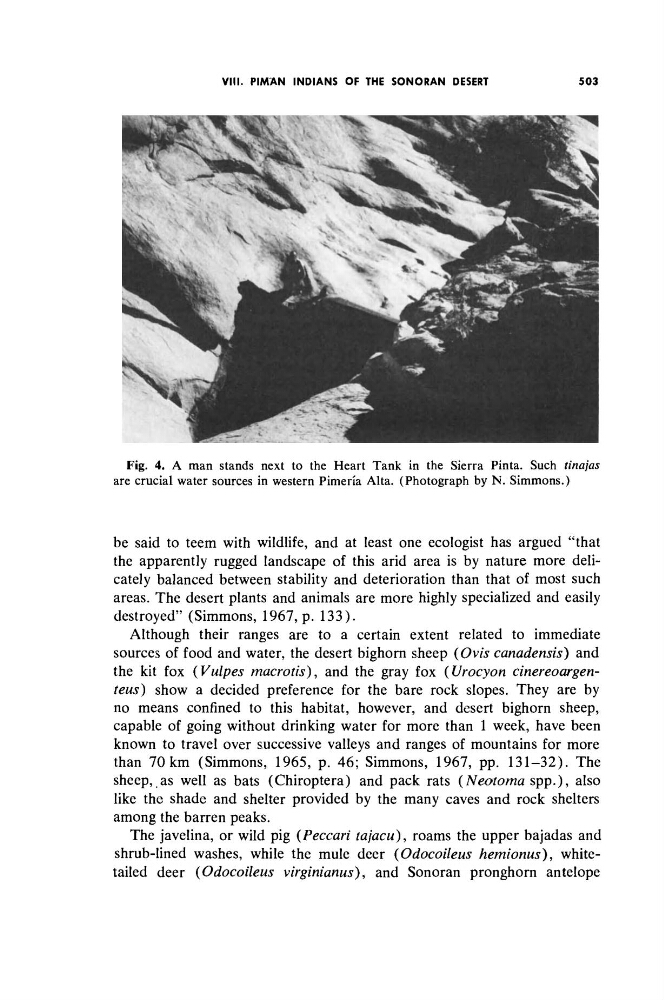
Fig. 4. A man stands next to the Heart Tank in the Sierra Pinta. Such tinajas
are crucial water sources in western Pimeria Alta. (Photograph by N. Simmons.)
be said to teem with wildlife, and at least one ecologist has argued "that
the apparently rugged landscape of this arid area is by nature more delicately balanced between stability and deterioration than that of most such
areas. The desert plants and animals are more highly specialized and easily
destroyed" (Simmons, 1967, p. 133).
Although their ranges are to a certain extent related to immediate
sources of food and water, the desert bighorn sheep (Ovis canadensis) and
the kit fox (Vulpes macrotis), and the gray fox (Urocyon cinereoargenteus) show a decided preference for the bare rock slopes. They are by
no means confined to this habitat, however, and desert bighorn sheep,
capable of going without drinking water for more than 1 week, have been
known to travel over successive valleys and ranges of mountains for more
than 70km (Simmons, 1965, p. 46; Simmons, 1967, pp. 131-32). The
sheep, as well as bats (Chiroptera) and pack rats ( Neatoma spp.), also
like the shade and shelter provided by the many caves and rock shelters
among the barren peaks.
The javelina, or wild pig (Peccari tajacu), roams the upper bajadas and
shrub-lined washes, while the mule deer (Odocoileus hemionus), whitetailed deer (Odocoileus virginianus), and Sonoran pronghorn antelope
503
Fig. 4. A man stands next to the Heart Tank in the Sierra Pinta. Such tinajas
are crucial water sources in western Pimeria Alta. (Photograph by N. Simmons.)
be said to teem with wildlife, and at least one ecologist has argued "that
the apparently rugged landscape of this arid area is by nature more delicately balanced between stability and deterioration than that of most such
areas. The desert plants and animals are more highly specialized and easily
destroyed" (Simmons, 1967, p. 133).
Although their ranges are to a certain extent related to immediate
sources of food and water, the desert bighorn sheep (Ovis canadensis) and
the kit fox (Vulpes macrotis), and the gray fox (Urocyon cinereoargenteus) show a decided preference for the bare rock slopes. They are by
no means confined to this habitat, however, and desert bighorn sheep,
capable of going without drinking water for more than 1 week, have been
known to travel over successive valleys and ranges of mountains for more
than 70km (Simmons, 1965, p. 46; Simmons, 1967, pp. 131-32). The
sheep, as well as bats (Chiroptera) and pack rats ( Neatoma spp.), also
like the shade and shelter provided by the many caves and rock shelters
among the barren peaks.
The javelina, or wild pig (Peccari tajacu), roams the upper bajadas and
shrub-lined washes, while the mule deer (Odocoileus hemionus), whitetailed deer (Odocoileus virginianus), and Sonoran pronghorn antelope