

VII. DESERT FISHES
449
AIR «
WATER
SURFACE.
SEDIMENT
SURFACE .
2 cm INTO
SEDIMENT«
i
1
i
i
1/26/67
3/25/67
4 / 2 2 / 6 7
i '
i
8 A
7 ,'
1 /
1
/ /
/
:
/ /
'
! / /
1 i
/
!
\ \4 PM
\
\ \
1 /
A
1
/
1
|
'
1
f
1
. 4PM
I /
M
IA PM
/
/ 1
1
1
1
Xx \ s
7 / 3 0 / 6 7
/
/
8 AM/
i
7 !
/
l
/
i
/
1 1
1
1
1
,
1
/
/
/ 4 PM
1
/
9 / 2 / 6 7
9AM>
7
/
/
/
f 1
1
1
1
| 5 PM
1
TEMPERATURE
( * C )
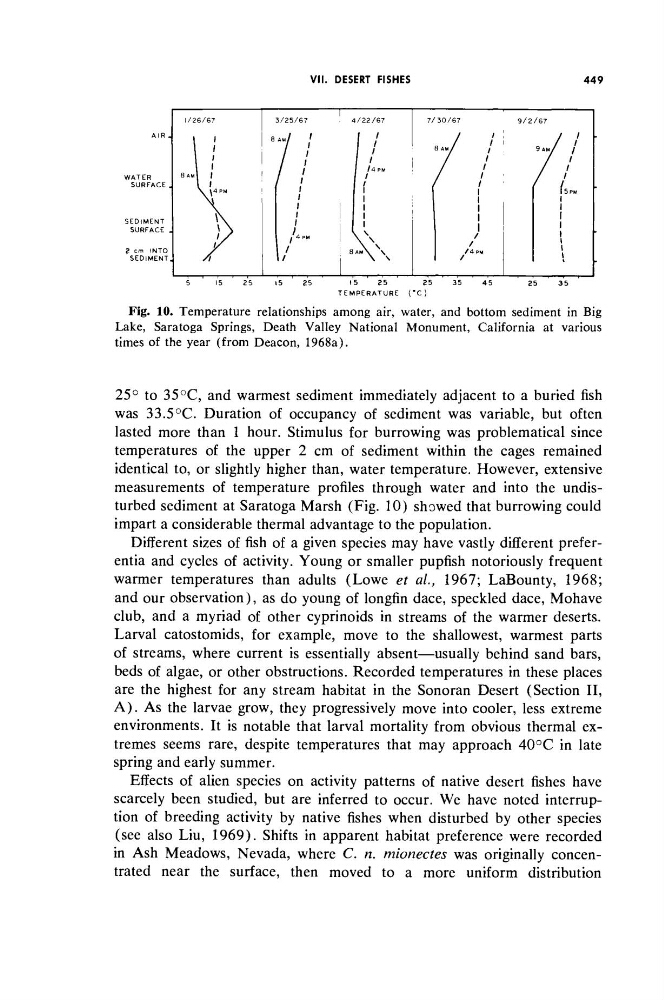
Fig. 10. Temperature relationships among air, water, and bottom sediment in Big
Lake, Saratoga Springs, Death Valley National Monument, California at various
times of the year (from Deacon, 1968a).
25° to 35°C, and warmest sediment immediately adjacent to a buried fish
was 33.5°C. Duration of occupancy of sediment was variable, but often
lasted more than 1 hour. Stimulus for burrowing was problematical since
temperatures of the upper 2 cm of sediment within the cages remained
identical to, or slightly higher than, water temperature. However, extensive
measurements of temperature profiles through water and into the undisturbed sediment at Saratoga Marsh (Fig. 10) showed that burrowing could
impart a considerable thermal advantage to the population.
Different sizes of fish of a given species may have vastly different preferentia and cycles of activity. Young or smaller pupfish notoriously frequent
warmer temperatures than adults (Lowe et al., 1967; LaBounty, 1968;
and our observation), as do young of longfin dace, speckled dace, Mohave
club, and a myriad of other cyprinoids in streams of the warmer deserts,
Larval catostomids, for example, move to the shallowest, warmest parts
of streams, where current is essentially absent—usually behind sand bars,
beds of algae, or other obstructions. Recorded temperatures in these places
are the highest for any stream habitat in the Sonoran Desert (Section II,
A). As the larvae grow, they progressively move into cooler, less extreme
environments. It is notable that larval mortality from obvious thermal extremes seems rare, despite temperatures that may approach 40°C in late
spring and early summer.
Effects of alien species on activity patterns of native desert fishes have
scarcely been studied, but are inferred to occur. We have noted interruption of breeding activity by native fishes when disturbed by other species
(see also Liu, 1969). Shifts in apparent habitat preference were recorded
in Ash Meadows, Nevada, where C. n. mionectes was originally concentrated near the surface, then moved to a more uniform distribution
449
AIR «
WATER
SURFACE.
SEDIMENT
SURFACE .
2 cm INTO
SEDIMENT«
i
1
i
i
1/26/67
3/25/67
4 / 2 2 / 6 7
i '
i
8 A
7 ,'
1 /
1
/ /
/
:
/ /
'
! / /
1 i
/
!
\ \4 PM
\
\ \
1 /
A
1
/
1
|
'
1
f
1
. 4PM
I /
M
IA PM
/
/ 1
1
1
1
Xx \ s
7 / 3 0 / 6 7
/
/
8 AM/
i
7 !
/
l
/
i
/
1 1
1
1
1
,
1
/
/
/ 4 PM
1
/
9 / 2 / 6 7
9AM>
7
/
/
/
f 1
1
1
1
| 5 PM
1
TEMPERATURE
( * C )
Fig. 10. Temperature relationships among air, water, and bottom sediment in Big
Lake, Saratoga Springs, Death Valley National Monument, California at various
times of the year (from Deacon, 1968a).
25° to 35°C, and warmest sediment immediately adjacent to a buried fish
was 33.5°C. Duration of occupancy of sediment was variable, but often
lasted more than 1 hour. Stimulus for burrowing was problematical since
temperatures of the upper 2 cm of sediment within the cages remained
identical to, or slightly higher than, water temperature. However, extensive
measurements of temperature profiles through water and into the undisturbed sediment at Saratoga Marsh (Fig. 10) showed that burrowing could
impart a considerable thermal advantage to the population.
Different sizes of fish of a given species may have vastly different preferentia and cycles of activity. Young or smaller pupfish notoriously frequent
warmer temperatures than adults (Lowe et al., 1967; LaBounty, 1968;
and our observation), as do young of longfin dace, speckled dace, Mohave
club, and a myriad of other cyprinoids in streams of the warmer deserts,
Larval catostomids, for example, move to the shallowest, warmest parts
of streams, where current is essentially absent—usually behind sand bars,
beds of algae, or other obstructions. Recorded temperatures in these places
are the highest for any stream habitat in the Sonoran Desert (Section II,
A). As the larvae grow, they progressively move into cooler, less extreme
environments. It is notable that larval mortality from obvious thermal extremes seems rare, despite temperatures that may approach 40°C in late
spring and early summer.
Effects of alien species on activity patterns of native desert fishes have
scarcely been studied, but are inferred to occur. We have noted interruption of breeding activity by native fishes when disturbed by other species
(see also Liu, 1969). Shifts in apparent habitat preference were recorded
in Ash Meadows, Nevada, where C. n. mionectes was originally concentrated near the surface, then moved to a more uniform distribution