

424
JAMES E. DEACON AND W. L. MINCKLEY
140£ 1202 100to
TO
!
80CD
>
O
£ 6 0 -
"5
£
4 0 -
2 0 -
0 -
Baume units (American stand.) Liqu ds heavier than water
0
1 2
3
4
5
6
7
8
9
10
II
12
13
14
260
220
180
140
14
16
18
20
lî
>°
2
3
5°
45°
/ ,
1.100 1.120 1.140 l.l€ >0
/ / /
Φ
X
1 5°
15°
//^Z^ 1 '
25
°
/^é^^
^0^
^ ^ ^
-ι
1—'
0.990 1.000 1.010 1.020 1.030 1.040 1.050 1.060 1.070 1.080 1.090 1.100 1. 110
Specific gravity (Density)
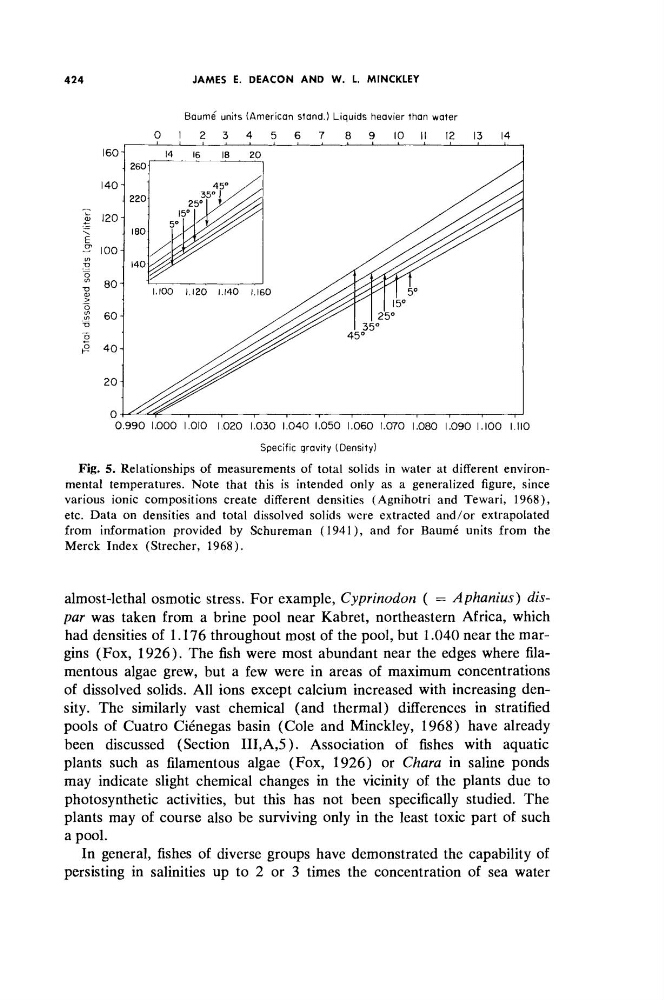
Fig. 5. Relationships of measurements of total solids in water at different environmental temperatures. Note that this is intended only as a generalized figure, since
various ionic compositions create different densities (Agnihotri and Tewari, 1968),
etc. Data on densities and total dissolved solids were extracted and/or extrapolated
from information provided by Schureman (1941), and for Baume units from the
Merck Index (Strecher, 1968).
almost-lethal osmotic stress. For example, Cyprinodon ( = Aphanius) dispar was taken from a brine pool near Kabret, northeastern Africa, which
had densities of 1.176 throughout most of the pool, but 1.040 near the margins (Fox, 1926). The fish were most abundant near the edges where filamentous algae grew, but a few were in areas of maximum concentrations
of dissolved solids. All ions except calcium increased with increasing density. The similarly vast chemical (and thermal) differences in stratified
pools of Cuatro Ciénegas basin (Cole and Minckley, 1968) have already
been discussed (Section III,A,5). Association of fishes with aquatic
plants such as filamentous algae (Fox, 1926) or Char a in saline ponds
may indicate slight chemical changes in the vicinity of the plants due to
photosynthetic activities, but this has not been specifically studied. The
plants may of course also be surviving only in the least toxic part of such
a pool.
In general, fishes of diverse groups have demonstrated the capability of
persisting in salinities up to 2 or 3 times the concentration of sea water
JAMES E. DEACON AND W. L. MINCKLEY
140£ 1202 100to
TO
!
80CD
>
O
£ 6 0 -
"5
£
4 0 -
2 0 -
0 -
Baume units (American stand.) Liqu ds heavier than water
0
1 2
3
4
5
6
7
8
9
10
II
12
13
14
260
220
180
140
14
16
18
20
lî
>°
2
3
5°
45°
/ ,
1.100 1.120 1.140 l.l€ >0
/ / /
Φ
X
1 5°
15°
//^Z^ 1 '
25
°
/^é^^
^0^
^ ^ ^
-ι
1—'
0.990 1.000 1.010 1.020 1.030 1.040 1.050 1.060 1.070 1.080 1.090 1.100 1. 110
Specific gravity (Density)
Fig. 5. Relationships of measurements of total solids in water at different environmental temperatures. Note that this is intended only as a generalized figure, since
various ionic compositions create different densities (Agnihotri and Tewari, 1968),
etc. Data on densities and total dissolved solids were extracted and/or extrapolated
from information provided by Schureman (1941), and for Baume units from the
Merck Index (Strecher, 1968).
almost-lethal osmotic stress. For example, Cyprinodon ( = Aphanius) dispar was taken from a brine pool near Kabret, northeastern Africa, which
had densities of 1.176 throughout most of the pool, but 1.040 near the margins (Fox, 1926). The fish were most abundant near the edges where filamentous algae grew, but a few were in areas of maximum concentrations
of dissolved solids. All ions except calcium increased with increasing density. The similarly vast chemical (and thermal) differences in stratified
pools of Cuatro Ciénegas basin (Cole and Minckley, 1968) have already
been discussed (Section III,A,5). Association of fishes with aquatic
plants such as filamentous algae (Fox, 1926) or Char a in saline ponds
may indicate slight chemical changes in the vicinity of the plants due to
photosynthetic activities, but this has not been specifically studied. The
plants may of course also be surviving only in the least toxic part of such
a pool.
In general, fishes of diverse groups have demonstrated the capability of
persisting in salinities up to 2 or 3 times the concentration of sea water