

V I I . DESERT FISHES
403
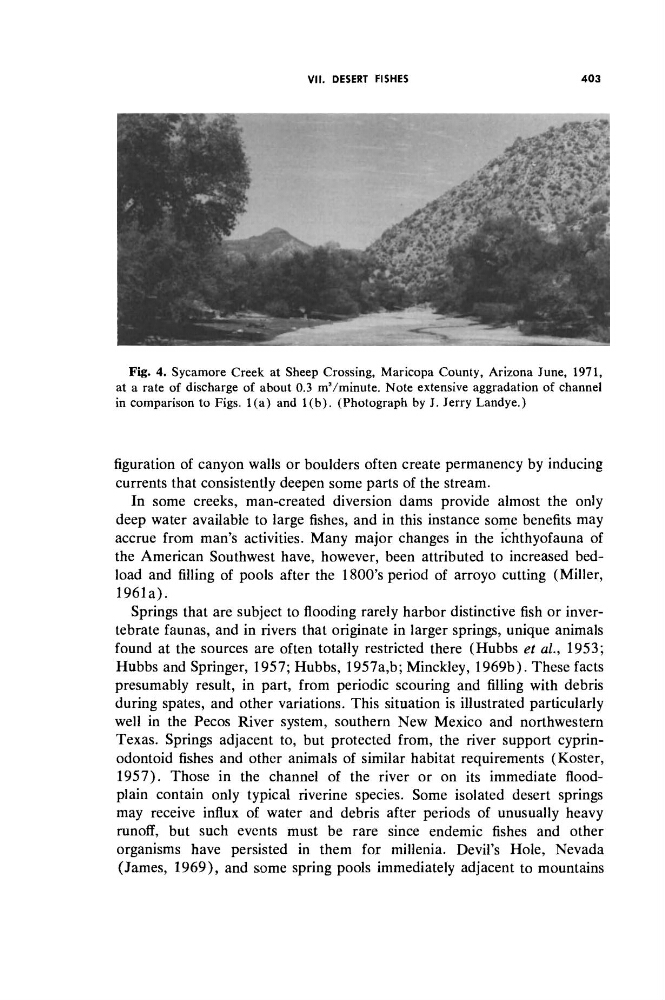
Fig. 4. Sycamore Creek at Sheep Crossing, Maricopa County, Arizona June, 1971,
at a rate of discharge of about 0.3 m
3 /minute. Note extensive aggradation of channel
in comparison to Figs. 1(a) and 1(b). (Photograph by J. Jerry Landye.)
figuration of canyon walls or boulders often create permanency by inducing
currents that consistently deepen some parts of the stream.
In some creeks, man-created diversion dams provide almost the only
deep water available to large fishes, and in this instance some benefits may
accrue from man's activities. Many major changes in the ichthyofauna of
the American Southwest have, however, been attributed to increased bedload and filling of pools after the 1800's period of arroyo cutting (Miller,
1961a).
Springs that are subject to flooding rarely harbor distinctive fish or invertebrate faunas, and in rivers that originate in larger springs, unique animals
found at the sources are often totally restricted there (Hubbs et al., 1953;
Hubbs and Springer, 1957; Hubbs, 1957a,b; Minckley, 1969b). These facts
presumably result, in part, from periodic scouring and filling with debris
during spates, and other variations. This situation is illustrated particularly
well in the Pecos River system, southern New Mexico and northwestern
Texas. Springs adjacent to, but protected from, the river support cyprinodontoid fishes and other animals of similar habitat requirements (Koster,
1957). Those in the channel of the river or on its immediate floodplain contain only typical riverine species. Some isolated desert springs
may receive influx of water and debris after periods of unusually heavy
runoff, but such events must be rare since endemic fishes and other
organisms have persisted in them for millenia. Devil's Hole, Nevada
(James, 1969), and some spring pools immediately adjacent to mountains
403
Fig. 4. Sycamore Creek at Sheep Crossing, Maricopa County, Arizona June, 1971,
at a rate of discharge of about 0.3 m
3 /minute. Note extensive aggradation of channel
in comparison to Figs. 1(a) and 1(b). (Photograph by J. Jerry Landye.)
figuration of canyon walls or boulders often create permanency by inducing
currents that consistently deepen some parts of the stream.
In some creeks, man-created diversion dams provide almost the only
deep water available to large fishes, and in this instance some benefits may
accrue from man's activities. Many major changes in the ichthyofauna of
the American Southwest have, however, been attributed to increased bedload and filling of pools after the 1800's period of arroyo cutting (Miller,
1961a).
Springs that are subject to flooding rarely harbor distinctive fish or invertebrate faunas, and in rivers that originate in larger springs, unique animals
found at the sources are often totally restricted there (Hubbs et al., 1953;
Hubbs and Springer, 1957; Hubbs, 1957a,b; Minckley, 1969b). These facts
presumably result, in part, from periodic scouring and filling with debris
during spates, and other variations. This situation is illustrated particularly
well in the Pecos River system, southern New Mexico and northwestern
Texas. Springs adjacent to, but protected from, the river support cyprinodontoid fishes and other animals of similar habitat requirements (Koster,
1957). Those in the channel of the river or on its immediate floodplain contain only typical riverine species. Some isolated desert springs
may receive influx of water and debris after periods of unusually heavy
runoff, but such events must be rare since endemic fishes and other
organisms have persisted in them for millenia. Devil's Hole, Nevada
(James, 1969), and some spring pools immediately adjacent to mountains