

VI. DESERT ARTHROPODS
357
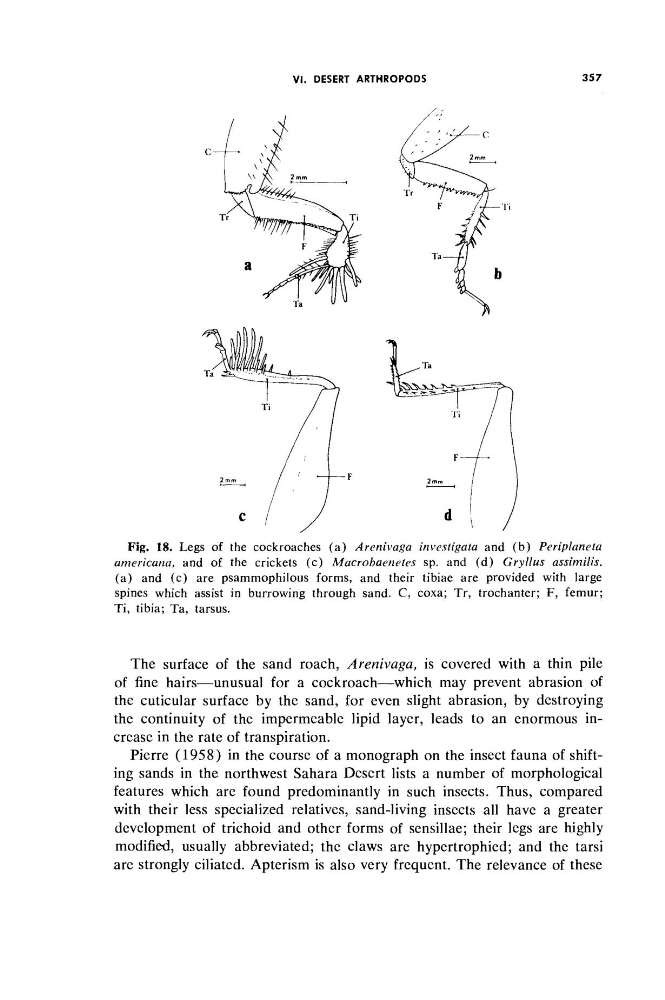
Fig. 18. Legs of the cockroaches (a) Arenivaga investigata and (b) Periplane ta
americana, and of the crickets (c) Macrobaenetes
sp. and (d) Gryllus
assimilis.
(a) and (c) are psammophilous forms, and their tibiae are provided with large
spines which assist in burrowing through sand. C, coxa; Tr, trochanter; F, femur;
Ti, tibia; Ta, tarsus.
The surface of the sand roach, Arenivaga, is covered with a thin pile
of fine hairs—unusual for a cockroach—which may prevent abrasion of
the cuticular surface by the sand, for even slight abrasion, by destroying
the continuity of the impermeable lipid layer, leads to an enormous increase in the rate of transpiration.
Pierre (1958) in the course of a monograph on the insect fauna of shifting sands in the northwest Sahara Desert lists a number of morphological
features which are found predominantly in such insects. Thus, compared
with their less specialized relatives, sand-living insects all have a greater
development of trichoid and other forms of sensillae; their legs are highly
modified, usually abbreviated; the claws are hypertrophied; and the tarsi
are strongly ciliated. Apterism is also very frequent. The relevance of these
357
Fig. 18. Legs of the cockroaches (a) Arenivaga investigata and (b) Periplane ta
americana, and of the crickets (c) Macrobaenetes
sp. and (d) Gryllus
assimilis.
(a) and (c) are psammophilous forms, and their tibiae are provided with large
spines which assist in burrowing through sand. C, coxa; Tr, trochanter; F, femur;
Ti, tibia; Ta, tarsus.
The surface of the sand roach, Arenivaga, is covered with a thin pile
of fine hairs—unusual for a cockroach—which may prevent abrasion of
the cuticular surface by the sand, for even slight abrasion, by destroying
the continuity of the impermeable lipid layer, leads to an enormous increase in the rate of transpiration.
Pierre (1958) in the course of a monograph on the insect fauna of shifting sands in the northwest Sahara Desert lists a number of morphological
features which are found predominantly in such insects. Thus, compared
with their less specialized relatives, sand-living insects all have a greater
development of trichoid and other forms of sensillae; their legs are highly
modified, usually abbreviated; the claws are hypertrophied; and the tarsi
are strongly ciliated. Apterism is also very frequent. The relevance of these