

VI. DESERT ARTHROPODS
3 4 5
91.9
87.2
63.9
A
B
C
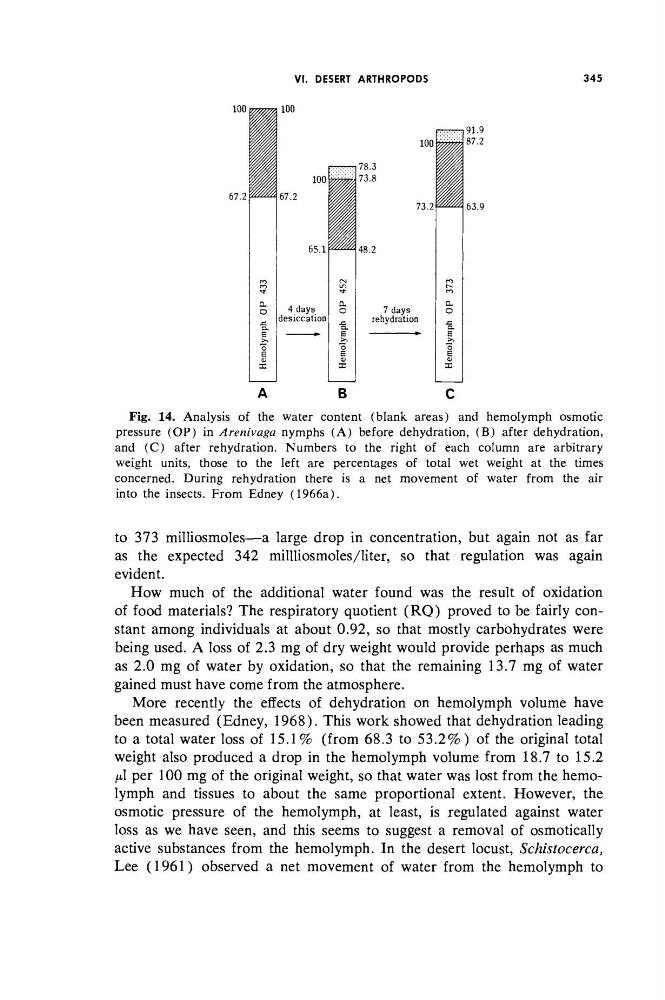
Fig. 14. Analysis of the water content (blank areas) and hemolymph osmotic
pressure (OP) in Arenivaga nymphs (A) before dehydration, (B) after dehydration,
and (C) after rehydration. Numbers to the right of each column are arbitrary
weight units, those to the left are percentages of total wet weight at the times
concerned. During rehydration there is a net movement of water from the air
into the insects. From Edney (1966a).
to 373 milliosmoles—a large drop in concentration, but again not as far
as the expected 342 millliosmoles/liter, so that regulation was again
evident.
How much of the additional water found was the result of oxidation
of food materials? The respiratory quotient (RQ) proved to be fairly constant among individuals at about 0.92, so that mostly carbohydrates were
being used. A loss of 2.3 mg of dry weight would provide perhaps as much
as 2.0 mg of water by oxidation, so that the remaining 13.7 mg of water
gained must have come from the atmosphere.
More recently the effects of dehydration on hemolymph volume have
been measured (Edney, 1968). This work showed that dehydration leading
to a total water loss of 15.1% (from 68.3 to 53.2%) of the original total
weight also produced a drop in the hemolymph volume from 18.7 to 15.2
μ\ per 100 mg of the original weight, so that water was lost from the hemolymph and tissues to about the same proportional extent. However, the
osmotic pressure of the hemolymph, at least, is regulated against water
loss as we have seen, and this seems to suggest a removal of osmotically
active substances from the hemolymph. In the desert locust, Schistocerca,
Lee (1961) observed a net movement of water from the hemolymph to
IUU Ç
67.2P
I U U
100
67.2
65.1
4 days
desiccation
■
CM
0.
O
a.
E
CD
78.3
73.8
48.2
100 b
73.2P
7 days
rehydration
a
o
3 4 5
91.9
87.2
63.9
A
B
C
Fig. 14. Analysis of the water content (blank areas) and hemolymph osmotic
pressure (OP) in Arenivaga nymphs (A) before dehydration, (B) after dehydration,
and (C) after rehydration. Numbers to the right of each column are arbitrary
weight units, those to the left are percentages of total wet weight at the times
concerned. During rehydration there is a net movement of water from the air
into the insects. From Edney (1966a).
to 373 milliosmoles—a large drop in concentration, but again not as far
as the expected 342 millliosmoles/liter, so that regulation was again
evident.
How much of the additional water found was the result of oxidation
of food materials? The respiratory quotient (RQ) proved to be fairly constant among individuals at about 0.92, so that mostly carbohydrates were
being used. A loss of 2.3 mg of dry weight would provide perhaps as much
as 2.0 mg of water by oxidation, so that the remaining 13.7 mg of water
gained must have come from the atmosphere.
More recently the effects of dehydration on hemolymph volume have
been measured (Edney, 1968). This work showed that dehydration leading
to a total water loss of 15.1% (from 68.3 to 53.2%) of the original total
weight also produced a drop in the hemolymph volume from 18.7 to 15.2
μ\ per 100 mg of the original weight, so that water was lost from the hemolymph and tissues to about the same proportional extent. However, the
osmotic pressure of the hemolymph, at least, is regulated against water
loss as we have seen, and this seems to suggest a removal of osmotically
active substances from the hemolymph. In the desert locust, Schistocerca,
Lee (1961) observed a net movement of water from the hemolymph to
IUU Ç
67.2P
I U U
100
67.2
65.1
4 days
desiccation
■
CM
0.
O
a.
E
CD
78.3
73.8
48.2
100 b
73.2P
7 days
rehydration
a
o