

342
E. B. EDNEY
- 30r
u -10
"
/
/
/
/ / '
/ /
''
1
/ /
' /
/
// y
*/--^&^^
1
--^fS-*·*
^**^Δ —Γ-'
-1 ' s'ls
° "
s<''
Γ
"
'<'
i ^
t
.
1
1
1
1
1
•
/
' 30°C
25°C
'l5°C
"*-Δ
10°C
i
i
80
85
Relative humidity (%)
90
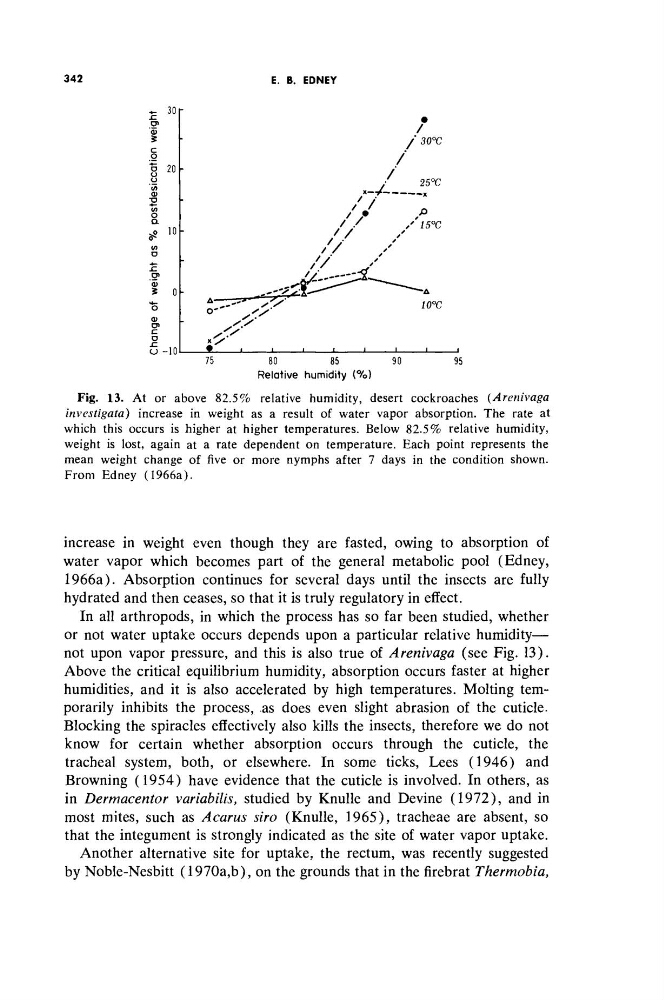
Fig. 13. At or above 82.5% relative humidity, desert cockroaches (Arenivaga
investigata) increase in weight as a result of water vapor absorption. The rate at
which this occurs is higher at higher temperatures. Below 82.5% relative humidity,
weight is lost, again at a rate dependent on temperature. Each point represents the
mean weight change of five or more nymphs after 7 days in the condition shown.
From Edney (1966a).
increase in weight even though they are fasted, owing to absorption of
water vapor which becomes part of the general metabolic pool (Edney,
1966a). Absorption continues for several days until the insects are fully
hydrated and then ceases, so that it is truly regulatory in effect.
In all arthropods, in which the process has so far been studied, whether
or not water uptake occurs depends upon a particular relative humidity—
not upon vapor pressure, and this is also true of Arenivaga (see Fig. 13).
Above the critical equilibrium humidity, absorption occurs faster at higher
humidities, and it is also accelerated by high temperatures. Molting temporarily inhibits the process, as does even slight abrasion of the cuticle.
Blocking the spiracles effectively also kills the insects, therefore we do not
know for certain whether absorption occurs through the cuticle, the
trachéal system, both, or elsewhere. In some ticks, Lees (1946) and
Browning (1954) have evidence that the cuticle is involved. In others, as
in Dermacentor variabilis, studied by Knülle and Devine (1972), and in
most mites, such as Acarus siro (Knülle, 1965), tracheae are absent, so
that the integument is strongly indicated as the site of water vapor uptake.
Another alternative site for uptake, the rectum, was recently suggested
by Noble-Nesbitt (1970a,b), on the grounds that in the firebrat Thermobia,
E. B. EDNEY
- 30r
u -10
"
/
/
/
/ / '
/ /
''
1
/ /
' /
/
// y
*/--^&^^
1
--^fS-*·*
^**^Δ —Γ-'
-1 ' s'ls
° "
s<''
Γ
"
'<'
i ^
t
.
1
1
1
1
1
•
/
' 30°C
25°C
'l5°C
"*-Δ
10°C
i
i
80
85
Relative humidity (%)
90
Fig. 13. At or above 82.5% relative humidity, desert cockroaches (Arenivaga
investigata) increase in weight as a result of water vapor absorption. The rate at
which this occurs is higher at higher temperatures. Below 82.5% relative humidity,
weight is lost, again at a rate dependent on temperature. Each point represents the
mean weight change of five or more nymphs after 7 days in the condition shown.
From Edney (1966a).
increase in weight even though they are fasted, owing to absorption of
water vapor which becomes part of the general metabolic pool (Edney,
1966a). Absorption continues for several days until the insects are fully
hydrated and then ceases, so that it is truly regulatory in effect.
In all arthropods, in which the process has so far been studied, whether
or not water uptake occurs depends upon a particular relative humidity—
not upon vapor pressure, and this is also true of Arenivaga (see Fig. 13).
Above the critical equilibrium humidity, absorption occurs faster at higher
humidities, and it is also accelerated by high temperatures. Molting temporarily inhibits the process, as does even slight abrasion of the cuticle.
Blocking the spiracles effectively also kills the insects, therefore we do not
know for certain whether absorption occurs through the cuticle, the
trachéal system, both, or elsewhere. In some ticks, Lees (1946) and
Browning (1954) have evidence that the cuticle is involved. In others, as
in Dermacentor variabilis, studied by Knülle and Devine (1972), and in
most mites, such as Acarus siro (Knülle, 1965), tracheae are absent, so
that the integument is strongly indicated as the site of water vapor uptake.
Another alternative site for uptake, the rectum, was recently suggested
by Noble-Nesbitt (1970a,b), on the grounds that in the firebrat Thermobia,