

VI. DESERT ARTHROPODS
339
100
25
30
35
Air temperature ( °C )
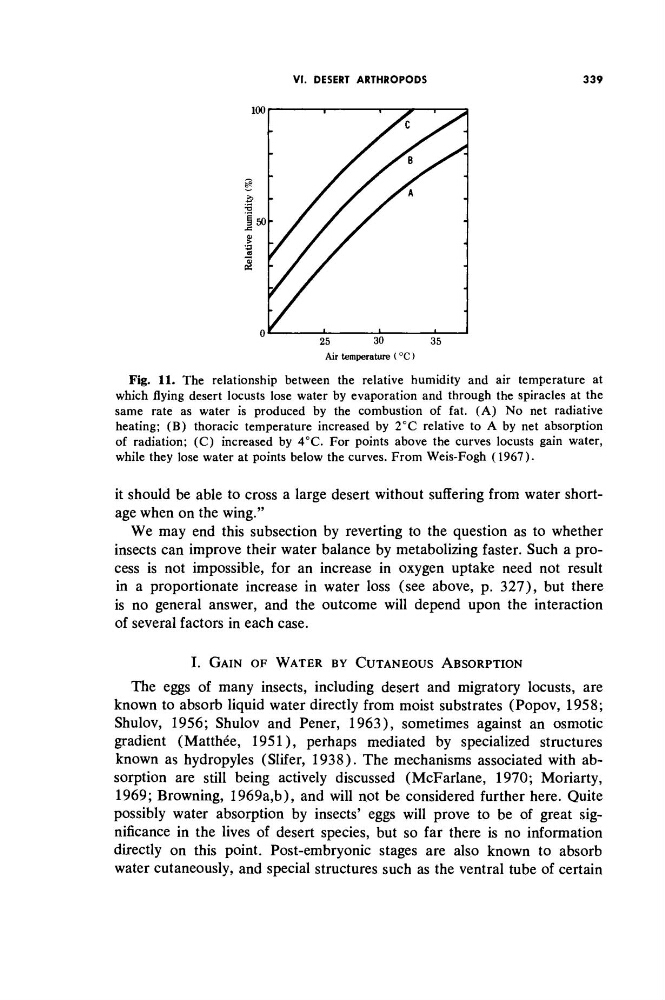
Fig. 11. The relationship between the relative humidity and air temperature at
which flying desert locusts lose water by evaporation and through the spiracles at the
same rate as water is produced by the combustion of fat. (A) No net radiative
heating; (B) thoracic temperature increased by 2°C relative to A by net absorption
of radiation; (C) increased by 4°C. For points above the curves locusts gain water,
while they lose water at points below the curves. From Weis-Fogh (1967).
it should be able to cross a large desert without suffering from water shortage when on the wing."
We may end this subsection by reverting to the question as to whether
insects can improve their water balance by metabolizing faster. Such a process is not impossible, for an increase in oxygen uptake need not result
in a proportionate increase in water loss (see above, p. 327), but there
is no general answer, and the outcome will depend upon the interaction
of several factors in each case.
I. GAIN OF WATER BY CUTANEOUS ABSORPTION
The eggs of many insects, including desert and migratory locusts, are
known to absorb liquid water directly from moist substrates (Popov, 1958;
Shulov, 1956; Shulov and Pener, 1963), sometimes against an osmotic
gradient (Matthée, 1951), perhaps mediated by specialized structures
known as hydropyles (Slifer, 1938). The mechanisms associated with absorption are still being actively discussed (McFarlane, 1970; Moriarty,
1969; Browning, 1969a,b), and will n,ot be considered further here. Quite
possibly water absorption by insects' eggs will prove to be of great significance in the lives of desert species, but so far there is no information
directly on this point. Post-embryonic stages are also known to absorb
water cutaneously, and special structures such as the ventral tube of certain
339
100
25
30
35
Air temperature ( °C )
Fig. 11. The relationship between the relative humidity and air temperature at
which flying desert locusts lose water by evaporation and through the spiracles at the
same rate as water is produced by the combustion of fat. (A) No net radiative
heating; (B) thoracic temperature increased by 2°C relative to A by net absorption
of radiation; (C) increased by 4°C. For points above the curves locusts gain water,
while they lose water at points below the curves. From Weis-Fogh (1967).
it should be able to cross a large desert without suffering from water shortage when on the wing."
We may end this subsection by reverting to the question as to whether
insects can improve their water balance by metabolizing faster. Such a process is not impossible, for an increase in oxygen uptake need not result
in a proportionate increase in water loss (see above, p. 327), but there
is no general answer, and the outcome will depend upon the interaction
of several factors in each case.
I. GAIN OF WATER BY CUTANEOUS ABSORPTION
The eggs of many insects, including desert and migratory locusts, are
known to absorb liquid water directly from moist substrates (Popov, 1958;
Shulov, 1956; Shulov and Pener, 1963), sometimes against an osmotic
gradient (Matthée, 1951), perhaps mediated by specialized structures
known as hydropyles (Slifer, 1938). The mechanisms associated with absorption are still being actively discussed (McFarlane, 1970; Moriarty,
1969; Browning, 1969a,b), and will n,ot be considered further here. Quite
possibly water absorption by insects' eggs will prove to be of great significance in the lives of desert species, but so far there is no information
directly on this point. Post-embryonic stages are also known to absorb
water cutaneously, and special structures such as the ventral tube of certain