

294
H. WALTER AND E. STADELMANN
500/xm
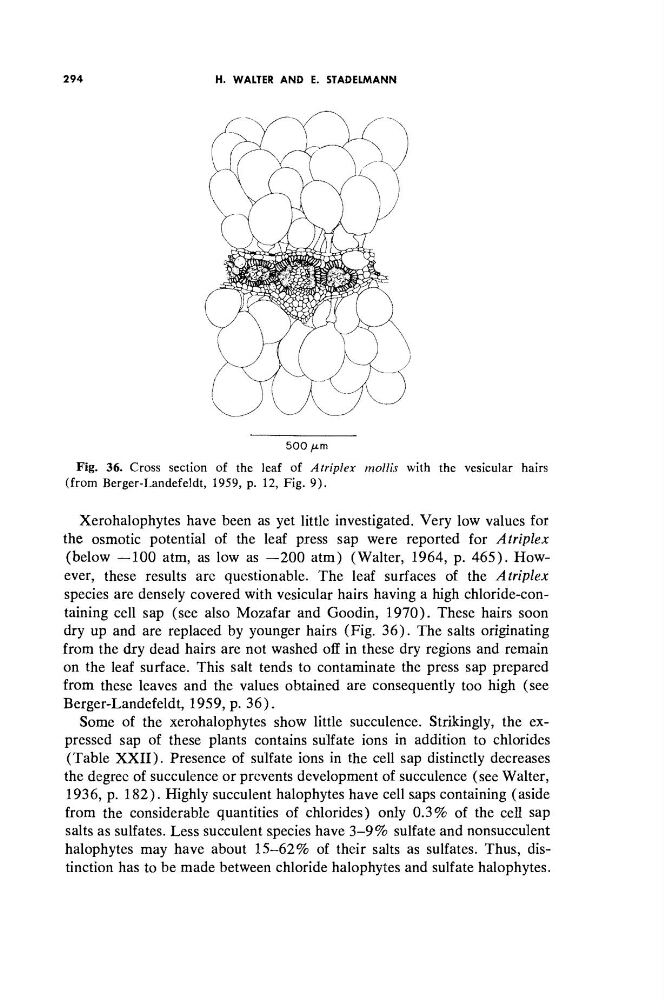
Fig. 36. Cross section of the leaf of Atriplex mollis with the vesicular hairs
(from Berger-Landefeldt, 1959, p. 12, Fig. 9).
Xerohalophytes have been as yet little investigated. Very low values for
the osmotic potential of the leaf press sap were reported for Atriplex
(below —100 atm, as low as —200 atm) (Walter, 1964, p. 465). However, these results are questionable. The leaf surfaces of the Atriplex
species are densely covered with vesicular hairs having a high chloride-containing cell sap (see also Mozafar and Goodin, 1970). These hairs soon
dry up and are replaced by younger hairs (Fig. 36). The salts originating
from the dry dead hairs are not washed off in these dry regions and remain
on the leaf surface. This salt tends to contaminate the press sap prepared
from these leaves and the values obtained are consequently too high (see
Berger-Landefeldt, 1959, p. 36).
Some of the xerohalophytes show little succulence. Strikingly, the expressed sap of these plants contains sulfate ions in addition to chlorides
(Table XXII). Presence of sulfate ions in the cell sap distinctly decreases
the degree of succulence or prevents development of succulence (see Walter,
1936, p. 182). Highly succulent halophytes have cell saps containing (aside
from the considerable quantities of chlorides) only 0.3% of the cell sap
salts as sulfates. Less succulent species have 3-9% sulfate and nonsucculent
halophytes may have about 15-62% of their salts as sulfates. Thus, distinction has to be made between chloride halophytes and sulfate halophytes.
H. WALTER AND E. STADELMANN
500/xm
Fig. 36. Cross section of the leaf of Atriplex mollis with the vesicular hairs
(from Berger-Landefeldt, 1959, p. 12, Fig. 9).
Xerohalophytes have been as yet little investigated. Very low values for
the osmotic potential of the leaf press sap were reported for Atriplex
(below —100 atm, as low as —200 atm) (Walter, 1964, p. 465). However, these results are questionable. The leaf surfaces of the Atriplex
species are densely covered with vesicular hairs having a high chloride-containing cell sap (see also Mozafar and Goodin, 1970). These hairs soon
dry up and are replaced by younger hairs (Fig. 36). The salts originating
from the dry dead hairs are not washed off in these dry regions and remain
on the leaf surface. This salt tends to contaminate the press sap prepared
from these leaves and the values obtained are consequently too high (see
Berger-Landefeldt, 1959, p. 36).
Some of the xerohalophytes show little succulence. Strikingly, the expressed sap of these plants contains sulfate ions in addition to chlorides
(Table XXII). Presence of sulfate ions in the cell sap distinctly decreases
the degree of succulence or prevents development of succulence (see Walter,
1936, p. 182). Highly succulent halophytes have cell saps containing (aside
from the considerable quantities of chlorides) only 0.3% of the cell sap
salts as sulfates. Less succulent species have 3-9% sulfate and nonsucculent
halophytes may have about 15-62% of their salts as sulfates. Thus, distinction has to be made between chloride halophytes and sulfate halophytes.