

V. NEW APPROACH TO WATER RELATIONS OF DESERT PLANTS
261
Month
- 2
XI
XII
T~T
10
E
CO
o
-8
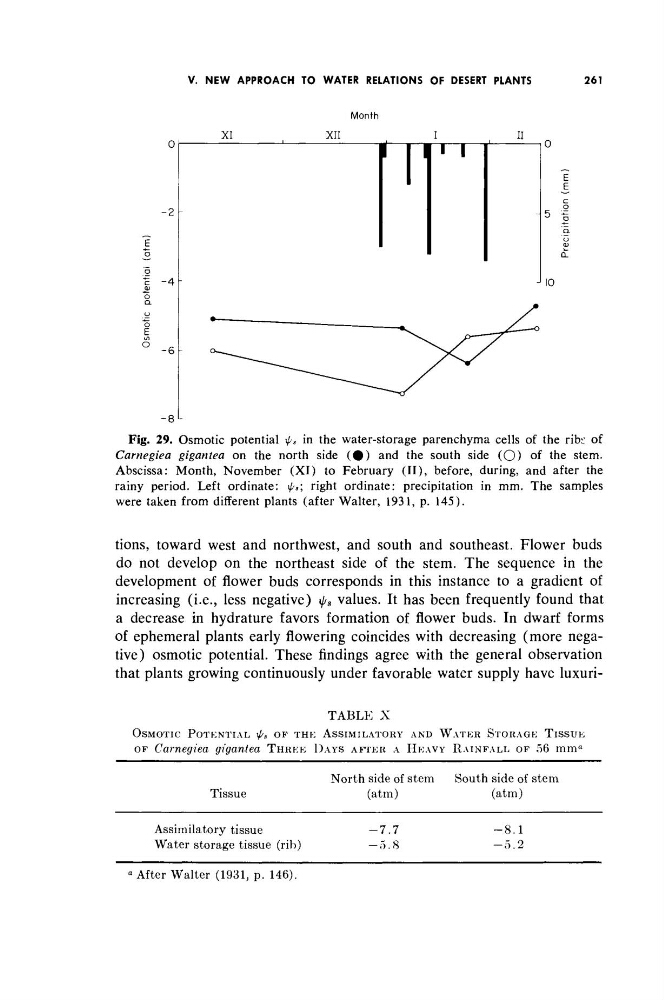
Fig. 29. Osmotic potential φ, in the water-storage parenchyma cells of the ribi of
Carnegiea gigantea on the north side ( # ) and the south side ( O ) of the stem.
Abscissa: Month, November (XI) to February ( I I ) , before, during, and after the
rainy period. Left ordinate: φ β ; right ordinate: precipitation in mm. The samples
were taken from different plants (after Walter, 1931, p. 145).
tions, toward west and northwest, and south and southeast. Flower buds
do not develop on the northeast side of the stem. The sequence in the
development of flower buds corresponds in this instance to a gradient of
increasing (i.e., less negative) ψ 8 values. It has been frequently found that
a decrease in hydrature favors formation of flower buds. In dwarf forms
of ephemeral plants early flowering coincides with decreasing (more negative) osmotic potential. These findings agree with the general observation
that plants growing continuously under favorable water supply have luxuriTABLE X
OSMOTIC POTENTIAL ψ8 OF THE ASSIMILATORY AND W A T E R STORAGE T I S S U E
OF Carnegiea gigantea T H R E E DAYS AFTER A HEAVY RAINFALL OF 56 m m
a
Tissue
North side of stem
(atm)
South side of stem
(atm)
Assimilatory tissue
Water storage tissue (rib)
- 7 . 7
- 5 . 8
- 8 . 1
- 5 . 2
« After Walter (1931, p . 146).
261
Month
- 2
XI
XII
T~T
10
E
CO
o
-8
Fig. 29. Osmotic potential φ, in the water-storage parenchyma cells of the ribi of
Carnegiea gigantea on the north side ( # ) and the south side ( O ) of the stem.
Abscissa: Month, November (XI) to February ( I I ) , before, during, and after the
rainy period. Left ordinate: φ β ; right ordinate: precipitation in mm. The samples
were taken from different plants (after Walter, 1931, p. 145).
tions, toward west and northwest, and south and southeast. Flower buds
do not develop on the northeast side of the stem. The sequence in the
development of flower buds corresponds in this instance to a gradient of
increasing (i.e., less negative) ψ 8 values. It has been frequently found that
a decrease in hydrature favors formation of flower buds. In dwarf forms
of ephemeral plants early flowering coincides with decreasing (more negative) osmotic potential. These findings agree with the general observation
that plants growing continuously under favorable water supply have luxuriTABLE X
OSMOTIC POTENTIAL ψ8 OF THE ASSIMILATORY AND W A T E R STORAGE T I S S U E
OF Carnegiea gigantea T H R E E DAYS AFTER A HEAVY RAINFALL OF 56 m m
a
Tissue
North side of stem
(atm)
South side of stem
(atm)
Assimilatory tissue
Water storage tissue (rib)
- 7 . 7
- 5 . 8
- 8 . 1
- 5 . 2
« After Walter (1931, p . 146).