

III. PHYSICAL AND VEGETATIONAL ASPECTS OF THE SAHARA
151
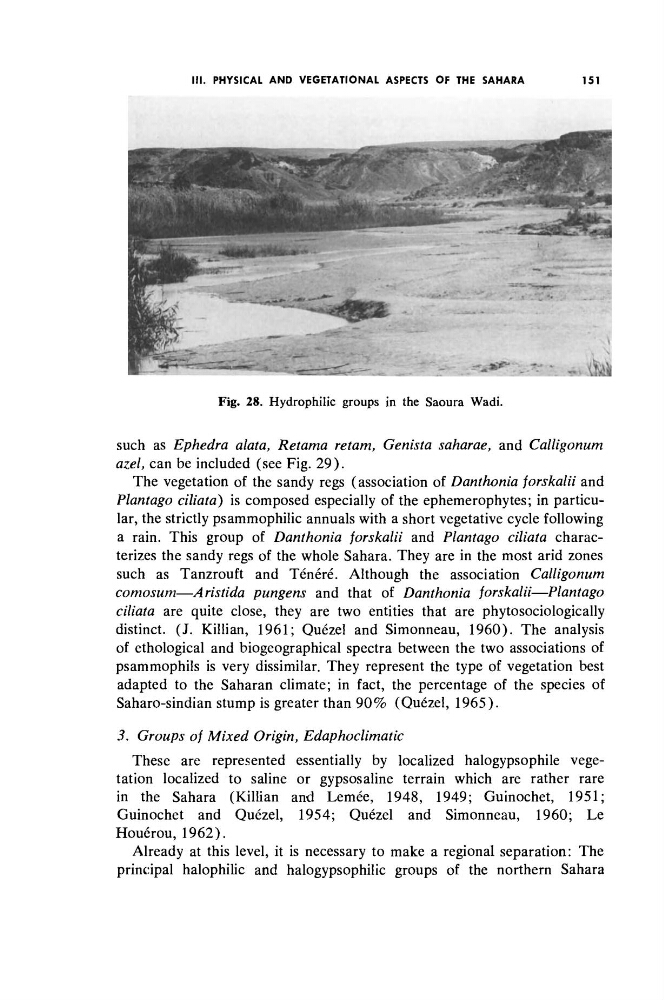
Fig. 28. Hydrophilic groups in the Saoura Wadi.
such as Ephedra alata, Rétama retam, Genista saharae, and Calligonum
azel, can be included (see Fig. 29).
The vegetation of the sandy regs (association of Danthonia forskalii and
Plantago ciliata) is composed especially of the ephemerophytes; in particular, the strictly psammophilic annuals with a short vegetative cycle following
a rain. This group of Danthonia forskalii and Plantago ciliata characterizes the sandy regs of the whole Sahara. They are in the most arid zones
such as Tanzrouft and Ténéré. Although the association Calligonum
comosum—Aristida pungens and that of Danthonia forskalii—Plantago
ciliata are quite close, they are two entities that are phytosociologically
distinct. (J. Killian, 1961; Quézel and Simonneau, 1960). The analysis
of ethological and biogeographical spectra between the two associations of
psammophils is very dissimilar. They represent the type of vegetation best
adapted to the Saharan climate; in fact, the percentage of the species of
Saharo-sindian stump is greater than 90% (Quézel, 1965).
3. Groups of Mixed Origin, Edaphoclimatic
These are represented essentially by localized halogypsophile vegetation localized to saline or gypsosaline terrain which are rather rare
in the Sahara (Killian and Lemée, 1948, 1949; Guinochet, 1951;
Guinochet and Quézel, 1954; Quézel and Simonneau, 1960; Le
Houérou, 1962).
Already at this level, it is necessary to make a regional separation: The
principal halophilic and halogypsophilic groups of the northern Sahara
151
Fig. 28. Hydrophilic groups in the Saoura Wadi.
such as Ephedra alata, Rétama retam, Genista saharae, and Calligonum
azel, can be included (see Fig. 29).
The vegetation of the sandy regs (association of Danthonia forskalii and
Plantago ciliata) is composed especially of the ephemerophytes; in particular, the strictly psammophilic annuals with a short vegetative cycle following
a rain. This group of Danthonia forskalii and Plantago ciliata characterizes the sandy regs of the whole Sahara. They are in the most arid zones
such as Tanzrouft and Ténéré. Although the association Calligonum
comosum—Aristida pungens and that of Danthonia forskalii—Plantago
ciliata are quite close, they are two entities that are phytosociologically
distinct. (J. Killian, 1961; Quézel and Simonneau, 1960). The analysis
of ethological and biogeographical spectra between the two associations of
psammophils is very dissimilar. They represent the type of vegetation best
adapted to the Saharan climate; in fact, the percentage of the species of
Saharo-sindian stump is greater than 90% (Quézel, 1965).
3. Groups of Mixed Origin, Edaphoclimatic
These are represented essentially by localized halogypsophile vegetation localized to saline or gypsosaline terrain which are rather rare
in the Sahara (Killian and Lemée, 1948, 1949; Guinochet, 1951;
Guinochet and Quézel, 1954; Quézel and Simonneau, 1960; Le
Houérou, 1962).
Already at this level, it is necessary to make a regional separation: The
principal halophilic and halogypsophilic groups of the northern Sahara