

III. PHYSICAL AND VEGETATIONAL ASPECTS OF THE SAHARA
121
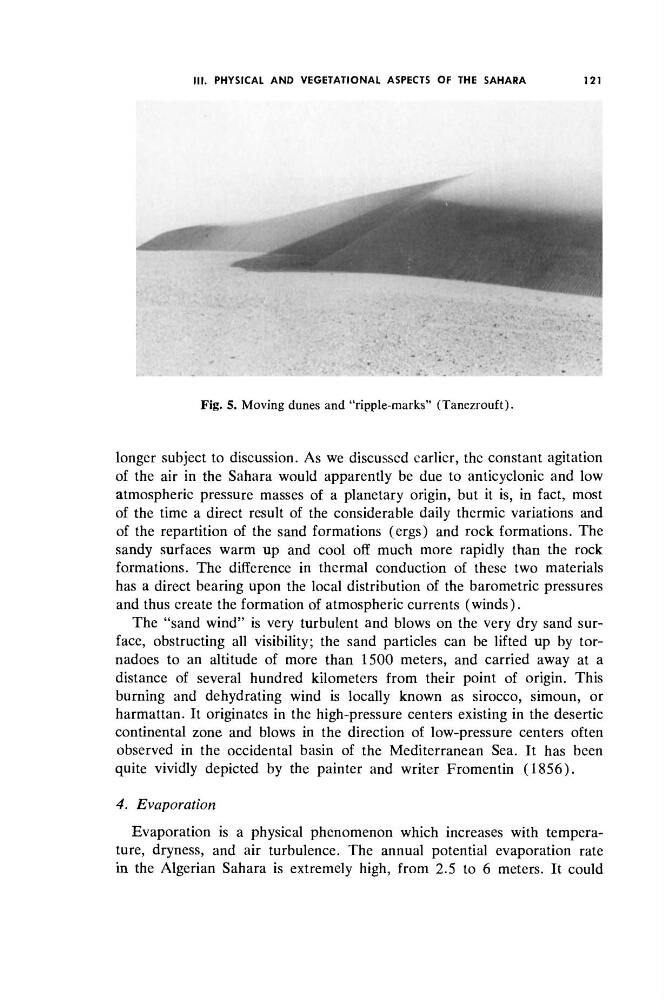
Fig. 5. Moving dunes and "ripple-marks" (Tanezrouft).
longer subject to discussion. As we discussed earlier, the constant agitation
of the air in the Sahara would apparently be due to anticyclonic and low
atmospheric pressure masses of a planetary origin, but it is, in fact, most
of the time a direct result of the considerable daily thermic variations and
of the repartition of the sand formations (ergs) and rock formations. The
sandy surfaces warm up and cool off much more rapidly than the rock
formations. The difference in thermal conduction of these two materials
has a direct bearing upon the local distribution of the barometric pressures
and thus create the formation of atmospheric currents (winds).
The "sand wind" is very turbulent and blows on the very dry sand surface, obstructing all visibility; the sand particles can be lifted up by tornadoes to an altitude of more than 1500 meters, and carried away at a
distance of several hundred kilometers from their point of origin. This
burning and dehydrating wind is locally known as sirocco, simoun, or
harmattan. It originates in the high-pressure centers existing in the desertic
continental zone and blows in the direction of low-pressure centers often
observed in the occidental basin of the Mediterranean Sea. It has been
quite vividly depicted by the painter and writer Fromentin (1856).
4. Evaporation
Evaporation is a physical phenomenon which increases with temperature, dryness, and air turbulence. The annual potential evaporation rate
in the Algerian Sahara is extremely high, from 2.5 to 6 meters. It could
121
Fig. 5. Moving dunes and "ripple-marks" (Tanezrouft).
longer subject to discussion. As we discussed earlier, the constant agitation
of the air in the Sahara would apparently be due to anticyclonic and low
atmospheric pressure masses of a planetary origin, but it is, in fact, most
of the time a direct result of the considerable daily thermic variations and
of the repartition of the sand formations (ergs) and rock formations. The
sandy surfaces warm up and cool off much more rapidly than the rock
formations. The difference in thermal conduction of these two materials
has a direct bearing upon the local distribution of the barometric pressures
and thus create the formation of atmospheric currents (winds).
The "sand wind" is very turbulent and blows on the very dry sand surface, obstructing all visibility; the sand particles can be lifted up by tornadoes to an altitude of more than 1500 meters, and carried away at a
distance of several hundred kilometers from their point of origin. This
burning and dehydrating wind is locally known as sirocco, simoun, or
harmattan. It originates in the high-pressure centers existing in the desertic
continental zone and blows in the direction of low-pressure centers often
observed in the occidental basin of the Mediterranean Sea. It has been
quite vividly depicted by the painter and writer Fromentin (1856).
4. Evaporation
Evaporation is a physical phenomenon which increases with temperature, dryness, and air turbulence. The annual potential evaporation rate
in the Algerian Sahara is extremely high, from 2.5 to 6 meters. It could