

112
CLAUDE J. GRENOT
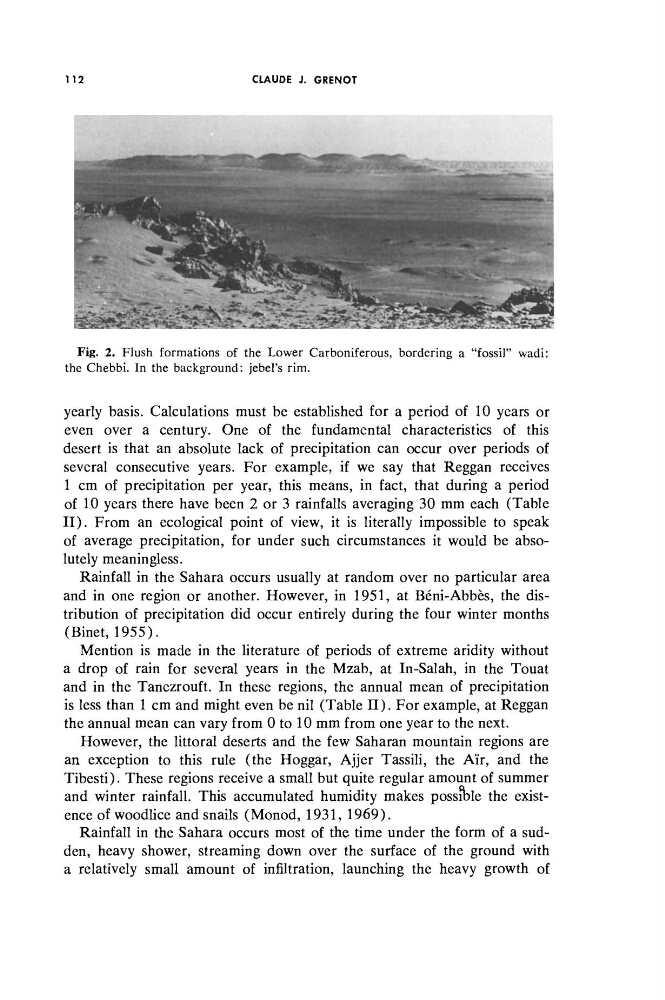
Fig. 2. Flush formations of the Lower Carboniferous, bordering a "fossil" wadi:
the Chebbi. In the background: jebel's rim.
yearly basis. Calculations must be established for a period of 10 years or
even over a century. One of the fundamental characteristics of this
desert is that an absolute lack of precipitation can occur over periods of
several consecutive years. For example, if we say that Reggan receives
1 cm of precipitation per year, this means, in fact, that during a period
of 10 years there have been 2 or 3 rainfalls averaging 30 mm each (Table
II). From an ecological point of view, it is literally impossible to speak
of average precipitation, for under such circumstances it would be absolutely meaningless.
Rainfall in the Sahara occurs usually at random over no particular area
and in one region or another. However, in 1951, at Béni-Abbès, the distribution of precipitation did occur entirely during the four winter months
(Binet, 1955).
Mention is made in the literature of periods of extreme aridity without
a drop of rain for several years in the Mzab, at In-Salah, in the Touat
and in the Tanezrouft. In these regions, the annual mean of precipitation
is less than 1 cm and might even be nil (Table II). For example, at Reggan
the annual mean can vary from 0 to 10 mm from one year to the next.
However, the littoral deserts and the few Saharan mountain regions are
an exception to this rule (the Hoggar, Ajjer Tassili, the Aïr, and the
Tibesti). These regions receive a small but quite regular amount of summer
and winter rainfall. This accumulated humidity makes possible the existence of woodlice and snails (Monod, 1931, 1969).
Rainfall in the Sahara occurs most of the time under the form of a sudden, heavy shower, streaming down over the surface of the ground with
a relatively small amount of infiltration, launching the heavy growth of
CLAUDE J. GRENOT
Fig. 2. Flush formations of the Lower Carboniferous, bordering a "fossil" wadi:
the Chebbi. In the background: jebel's rim.
yearly basis. Calculations must be established for a period of 10 years or
even over a century. One of the fundamental characteristics of this
desert is that an absolute lack of precipitation can occur over periods of
several consecutive years. For example, if we say that Reggan receives
1 cm of precipitation per year, this means, in fact, that during a period
of 10 years there have been 2 or 3 rainfalls averaging 30 mm each (Table
II). From an ecological point of view, it is literally impossible to speak
of average precipitation, for under such circumstances it would be absolutely meaningless.
Rainfall in the Sahara occurs usually at random over no particular area
and in one region or another. However, in 1951, at Béni-Abbès, the distribution of precipitation did occur entirely during the four winter months
(Binet, 1955).
Mention is made in the literature of periods of extreme aridity without
a drop of rain for several years in the Mzab, at In-Salah, in the Touat
and in the Tanezrouft. In these regions, the annual mean of precipitation
is less than 1 cm and might even be nil (Table II). For example, at Reggan
the annual mean can vary from 0 to 10 mm from one year to the next.
However, the littoral deserts and the few Saharan mountain regions are
an exception to this rule (the Hoggar, Ajjer Tassili, the Aïr, and the
Tibesti). These regions receive a small but quite regular amount of summer
and winter rainfall. This accumulated humidity makes possible the existence of woodlice and snails (Monod, 1931, 1969).
Rainfall in the Sahara occurs most of the time under the form of a sudden, heavy shower, streaming down over the surface of the ground with
a relatively small amount of infiltration, launching the heavy growth of