

II. DESERT SOILS
91
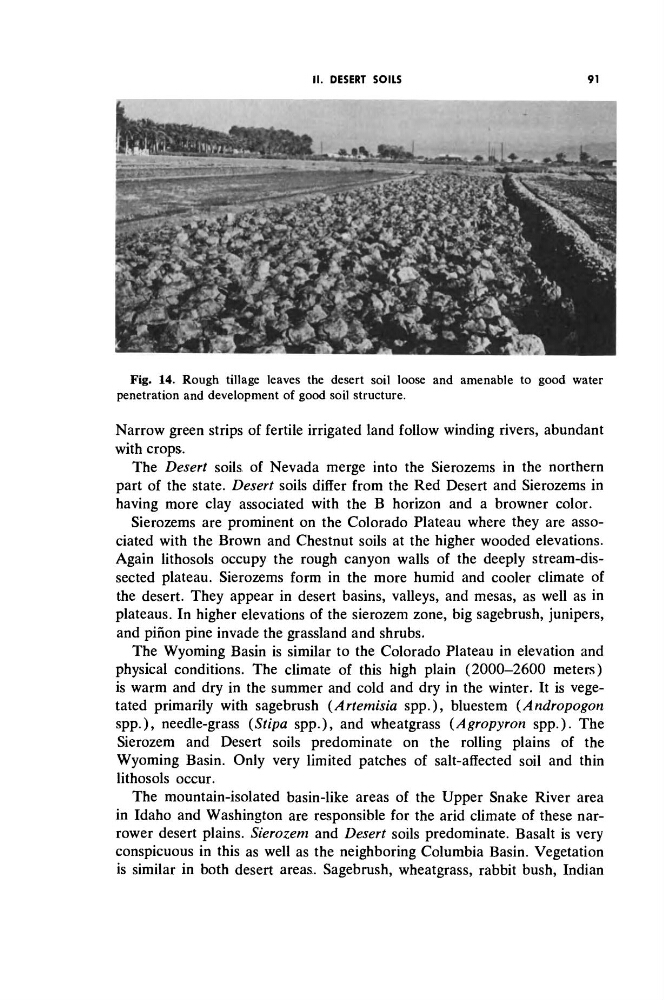
Fig. 14. Rough tillage leaves the desert soil loose and amenable to good water
penetration and development of good soil structure.
Narrow green strips of fertile irrigated land follow winding rivers, abundant
with crops.
The Desert soils of Nevada merge into the Sierozems in the northern
part of the state. Desert soils differ from the Red Desert and Sierozems in
having more clay associated with the B horizon and a browner color.
Sierozems are prominent on the Colorado Plateau where they are associated with the Brown and Chestnut soils at the higher wooded elevations.
Again lithosols occupy the rough canyon walls of the deeply stream-dissected plateau. Sierozems form in the more humid and cooler climate of
the desert. They appear in desert basins, valleys, and mesas, as well as in
plateaus. In higher elevations of the sierozem zone, big sagebrush, junipers,
and pinon pine invade the grassland and shrubs.
The Wyoming Basin is similar to the Colorado Plateau in elevation and
physical conditions. The climate of this high plain (2000-2600 meters)
is warm and dry in the summer and cold and dry in the winter. It is vegetated primarily with sagebrush {Artemisia spp.), bluestem (Andropogon
spp.), needle-grass (Stipa spp.), and wheatgrass (Agropyron spp.). The
Sierozem and Desert soils predominate on the rolling plains of the
Wyoming Basin. Only very limited patches of salt-affected soil and thin
lithosols occur.
The mountain-isolated basin-like areas of the Upper Snake River area
in Idaho and Washington are responsible for the arid climate of these narrower desert plains. Sierozem and Desert soils predominate. Basalt is very
conspicuous in this as well as the neighboring Columbia Basin. Vegetation
is similar in both desert areas. Sagebrush, wheatgrass, rabbit bush, Indian
91
Fig. 14. Rough tillage leaves the desert soil loose and amenable to good water
penetration and development of good soil structure.
Narrow green strips of fertile irrigated land follow winding rivers, abundant
with crops.
The Desert soils of Nevada merge into the Sierozems in the northern
part of the state. Desert soils differ from the Red Desert and Sierozems in
having more clay associated with the B horizon and a browner color.
Sierozems are prominent on the Colorado Plateau where they are associated with the Brown and Chestnut soils at the higher wooded elevations.
Again lithosols occupy the rough canyon walls of the deeply stream-dissected plateau. Sierozems form in the more humid and cooler climate of
the desert. They appear in desert basins, valleys, and mesas, as well as in
plateaus. In higher elevations of the sierozem zone, big sagebrush, junipers,
and pinon pine invade the grassland and shrubs.
The Wyoming Basin is similar to the Colorado Plateau in elevation and
physical conditions. The climate of this high plain (2000-2600 meters)
is warm and dry in the summer and cold and dry in the winter. It is vegetated primarily with sagebrush {Artemisia spp.), bluestem (Andropogon
spp.), needle-grass (Stipa spp.), and wheatgrass (Agropyron spp.). The
Sierozem and Desert soils predominate on the rolling plains of the
Wyoming Basin. Only very limited patches of salt-affected soil and thin
lithosols occur.
The mountain-isolated basin-like areas of the Upper Snake River area
in Idaho and Washington are responsible for the arid climate of these narrower desert plains. Sierozem and Desert soils predominate. Basalt is very
conspicuous in this as well as the neighboring Columbia Basin. Vegetation
is similar in both desert areas. Sagebrush, wheatgrass, rabbit bush, Indian