

CHAPTER 3 Igneous Rocks and Intrusive Activity
68
Glassy texture produced
by very rapid cooling.
(Pumice, a frothy, glassy
mass.)
Pyroclastic texture
produced from debris
of explosive eruption
Aphanitic (fine-grained)
texture produced when
lava cooled quickly on or
near Earth’s surface
A.
B.
C.
D.
E.
Phaneritic
(coarse-grained) texture
produced when magma
cools slowly at depth
Porphyritic texture
produced by slow then
rapid cooling
Extrusive
igneous
activity
Intrusive
igneous
activity
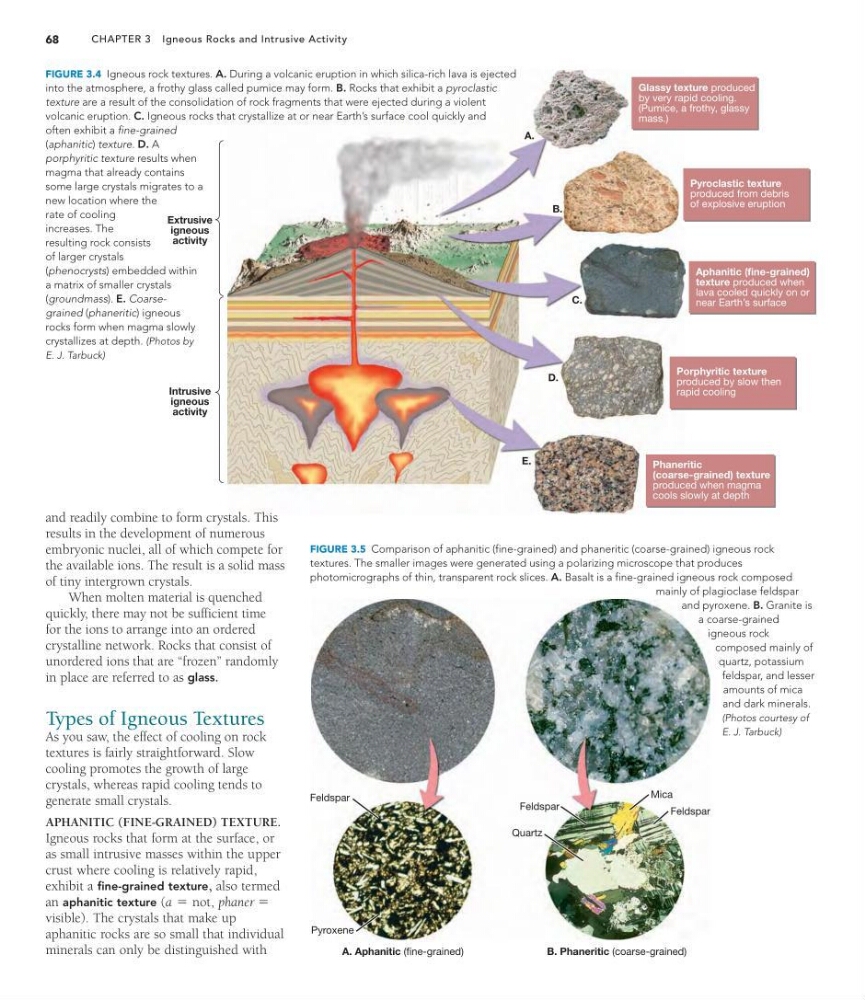
FIGURE 3.4 Igneous rock textures. A. During a volcanic eruption in which silica-rich lava is ejected
into the atmosphere, a frothy glass called pumice may form. B. Rocks that exhibit a pyroclastic
texture are a result of the consolidation of rock fragments that were ejected during a violent
volcanic eruption. C. Igneous rocks that crystallize at or near Earth’s surface cool quickly and
often exhibit a fine-grained
(aphanitic) texture. D. A
porphyritic texture results when
magma that already contains
some large crystals migrates to a
new location where the
rate of cooling
increases. The
resulting rock consists
of larger crystals
(phenocrysts) embedded within
a matrix of smaller crystals
(groundmass). E. Coarsegrained (phaneritic) igneous
rocks form when magma slowly
crystallizes at depth. (Photos by
E. J. Tarbuck)
G
b
(
m
A. Aphanitic (fine-grained)
B. Phaneritic (coarse-grained)
Feldspar
Feldspar
Feldspar
Pyroxene
Quartz
Mica
FIGURE 3.5 Comparison of aphanitic (fine-grained) and phaneritic (coarse-grained) igneous rock
textures. The smaller images were generated using a polarizing microscope that produces
photomicrographs of thin, transparent rock slices. A. Basalt is a fine-grained igneous rock composed
mainly of plagioclase feldspar
and pyroxene. B. Granite is
a coarse-grained
igneous rock
composed mainly of
quartz, potassium
feldspar, and lesser
amounts of mica
and dark minerals.
(Photos courtesy of
E. J. Tarbuck)
and readily combine to form crystals. This
results in the development of numerous
embryonic nuclei, all of which compete for
the available ions. The result is a solid mass
of tiny intergrown crystals.
When molten material is quenched
quickly, there may not be sufficient time
for the ions to arrange into an ordered
crystalline network. Rocks that consist of
unordered ions that are “frozen” randomly
in place are referred to as glass.
Types of Igneous Textures
As you saw, the effect of cooling on rock
textures is fairly straightforward. Slow
cooling promotes the growth of large
crystals, whereas rapid cooling tends to
generate small crystals.
APHANITIC (FINE-GRAINED) TEXTURE.
Igneous rocks that form at the surface, or
as small intrusive masses within the upper
crust where cooling is relatively rapid,
exhibit a fine-grained texture, also termed
an aphanitic texture (
,
). The crystals that make up
aphanitic rocks are so small that individual
minerals can only be distinguished with
visible
phaner =
a = not
68
Glassy texture produced
by very rapid cooling.
(Pumice, a frothy, glassy
mass.)
Pyroclastic texture
produced from debris
of explosive eruption
Aphanitic (fine-grained)
texture produced when
lava cooled quickly on or
near Earth’s surface
A.
B.
C.
D.
E.
Phaneritic
(coarse-grained) texture
produced when magma
cools slowly at depth
Porphyritic texture
produced by slow then
rapid cooling
Extrusive
igneous
activity
Intrusive
igneous
activity
FIGURE 3.4 Igneous rock textures. A. During a volcanic eruption in which silica-rich lava is ejected
into the atmosphere, a frothy glass called pumice may form. B. Rocks that exhibit a pyroclastic
texture are a result of the consolidation of rock fragments that were ejected during a violent
volcanic eruption. C. Igneous rocks that crystallize at or near Earth’s surface cool quickly and
often exhibit a fine-grained
(aphanitic) texture. D. A
porphyritic texture results when
magma that already contains
some large crystals migrates to a
new location where the
rate of cooling
increases. The
resulting rock consists
of larger crystals
(phenocrysts) embedded within
a matrix of smaller crystals
(groundmass). E. Coarsegrained (phaneritic) igneous
rocks form when magma slowly
crystallizes at depth. (Photos by
E. J. Tarbuck)
G
b
(
m
A. Aphanitic (fine-grained)
B. Phaneritic (coarse-grained)
Feldspar
Feldspar
Feldspar
Pyroxene
Quartz
Mica
FIGURE 3.5 Comparison of aphanitic (fine-grained) and phaneritic (coarse-grained) igneous rock
textures. The smaller images were generated using a polarizing microscope that produces
photomicrographs of thin, transparent rock slices. A. Basalt is a fine-grained igneous rock composed
mainly of plagioclase feldspar
and pyroxene. B. Granite is
a coarse-grained
igneous rock
composed mainly of
quartz, potassium
feldspar, and lesser
amounts of mica
and dark minerals.
(Photos courtesy of
E. J. Tarbuck)
and readily combine to form crystals. This
results in the development of numerous
embryonic nuclei, all of which compete for
the available ions. The result is a solid mass
of tiny intergrown crystals.
When molten material is quenched
quickly, there may not be sufficient time
for the ions to arrange into an ordered
crystalline network. Rocks that consist of
unordered ions that are “frozen” randomly
in place are referred to as glass.
Types of Igneous Textures
As you saw, the effect of cooling on rock
textures is fairly straightforward. Slow
cooling promotes the growth of large
crystals, whereas rapid cooling tends to
generate small crystals.
APHANITIC (FINE-GRAINED) TEXTURE.
Igneous rocks that form at the surface, or
as small intrusive masses within the upper
crust where cooling is relatively rapid,
exhibit a fine-grained texture, also termed
an aphanitic texture (
,
). The crystals that make up
aphanitic rocks are so small that individual
minerals can only be distinguished with
visible
phaner =
a = not