

CHAPTER 2 Matter and Minerals
38
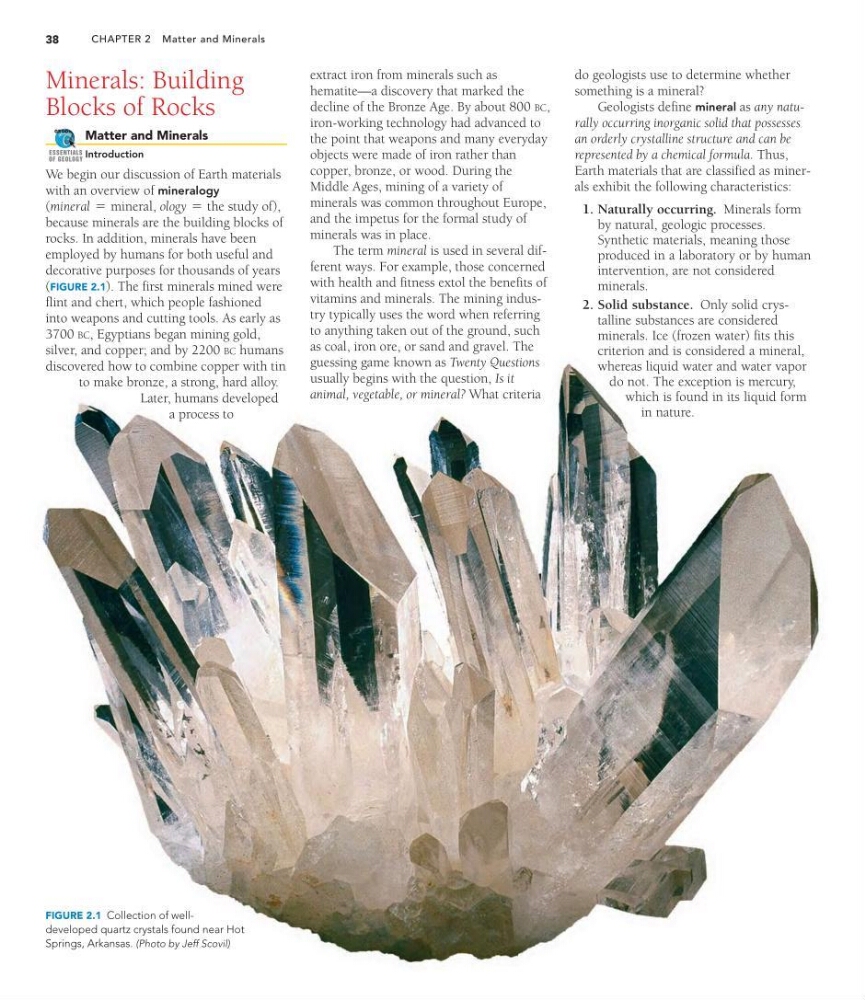
FIGURE 2.1 Collection of welldeveloped quartz crystals found near Hot
Springs, Arkansas. (Photo by Jeff Scovil)
Minerals: Building
Blocks of Rocks
Matter and Minerals
Introduction
We begin our discussion of Earth materials
with an overview of mineralogy
(
,
) ,
because minerals are the building blocks of
rocks. In addition, minerals have been
employed by humans for both useful and
decorative purposes for thousands of years
(FIGURE 2.1). The first minerals mined were
flint and chert, which people fashioned
into weapons and cutting tools. As early as
3700 BC, Egyptians began mining gold,
silver, and copper; and by 2200 BC humans
discovered how to combine copper with tin
to make bronze, a strong, hard alloy.
Later, humans developed
a process to
ology = the study of
mineral = mineral
GEODe
ESSENTIALS
OF GEOLOGY
extract iron from minerals such as
hematite—a discovery that marked the
decline of the Bronze Age. By about 800 BC,
iron-working technology had advanced to
the point that weapons and many everyday
objects were made of iron rather than
copper, bronze, or wood. During the
Middle Ages, mining of a variety of
minerals was common throughout Europe,
and the impetus for the formal study of
minerals was in place.
The term mineral is used in several different ways. For example, those concerned
with health and fitness extol the benefits of
vitamins and minerals. The mining industry typically uses the word when referring
to anything taken out of the ground, such
as coal, iron ore, or sand and gravel. The
guessing game known as Twenty Questions
usually begins with the question, Is it
animal, vegetable, or mineral? What criteria
do geologists use to determine whether
something is a mineral?
Geologists define mineral as any naturally occurring inorganic solid that possesses
an orderly crystalline structure and can be
represented by a chemical formula. Thus,
Earth materials that are classified as minerals exhibit the following characteristics:
1. Naturally occurring. Minerals form
by natural, geologic processes.
Synthetic materials, meaning those
produced in a laboratory or by human
intervention, are not considered
minerals.
2. Solid substance. Only solid crystalline substances are considered
minerals. Ice (frozen water) fits this
criterion and is considered a mineral,
whereas liquid water and water vapor
do not. The exception is mercury,
which is found in its liquid form
in nature.
38
FIGURE 2.1 Collection of welldeveloped quartz crystals found near Hot
Springs, Arkansas. (Photo by Jeff Scovil)
Minerals: Building
Blocks of Rocks
Matter and Minerals
Introduction
We begin our discussion of Earth materials
with an overview of mineralogy
(
,
) ,
because minerals are the building blocks of
rocks. In addition, minerals have been
employed by humans for both useful and
decorative purposes for thousands of years
(FIGURE 2.1). The first minerals mined were
flint and chert, which people fashioned
into weapons and cutting tools. As early as
3700 BC, Egyptians began mining gold,
silver, and copper; and by 2200 BC humans
discovered how to combine copper with tin
to make bronze, a strong, hard alloy.
Later, humans developed
a process to
ology = the study of
mineral = mineral
GEODe
ESSENTIALS
OF GEOLOGY
extract iron from minerals such as
hematite—a discovery that marked the
decline of the Bronze Age. By about 800 BC,
iron-working technology had advanced to
the point that weapons and many everyday
objects were made of iron rather than
copper, bronze, or wood. During the
Middle Ages, mining of a variety of
minerals was common throughout Europe,
and the impetus for the formal study of
minerals was in place.
The term mineral is used in several different ways. For example, those concerned
with health and fitness extol the benefits of
vitamins and minerals. The mining industry typically uses the word when referring
to anything taken out of the ground, such
as coal, iron ore, or sand and gravel. The
guessing game known as Twenty Questions
usually begins with the question, Is it
animal, vegetable, or mineral? What criteria
do geologists use to determine whether
something is a mineral?
Geologists define mineral as any naturally occurring inorganic solid that possesses
an orderly crystalline structure and can be
represented by a chemical formula. Thus,
Earth materials that are classified as minerals exhibit the following characteristics:
1. Naturally occurring. Minerals form
by natural, geologic processes.
Synthetic materials, meaning those
produced in a laboratory or by human
intervention, are not considered
minerals.
2. Solid substance. Only solid crystalline substances are considered
minerals. Ice (frozen water) fits this
criterion and is considered a mineral,
whereas liquid water and water vapor
do not. The exception is mercury,
which is found in its liquid form
in nature.