

23
Earth’s Internal Structure
Outer core
(liquid)
Inner
core
(solid)
Continental
crust
Oceanic
crust
Lithosphere
(solid and rigid
100 km thick)
Asthenosphere
(solid, but mobile)
660 km
Lithosphere
Core
(iron + nickel)
Atmosphere
(gas)
Hydrosphere
(liquid)
Upper
mantle
Lower mantle
(solid)
Mantle
(high density rock)
Crust
(low density rock
7–70 km thick)
U p p e r m
a n t l e
( s o l i d )
Layering by
Physical Properties
Layering by
Chemical Composition
6 3 7 1 k m
2 8 9 0 k m
2 8 9 0 k m
660 km
5 1 5 0 k
m
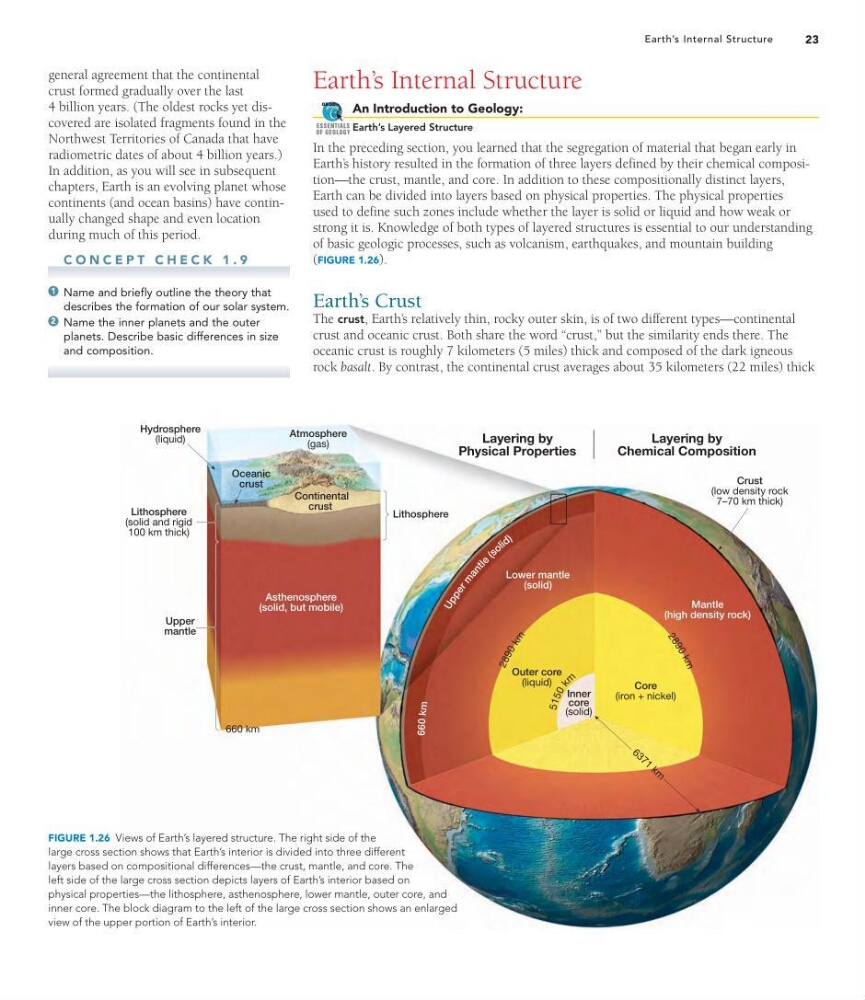
FIGURE 1.26 Views of Earth’s layered structure. The right side of the
large cross section shows that Earth’s interior is divided into three different
layers based on compositional differences—the crust, mantle, and core. The
left side of the large cross section depicts layers of Earth’s interior based on
physical properties—the lithosphere, asthenosphere, lower mantle, outer core, and
inner core. The block diagram to the left of the large cross section shows an enlarged
view of the upper portion of Earth’s interior.
general agreement that the continental
crust formed gradually over the last
4 billion years. (The oldest rocks yet discovered are isolated fragments found in the
Northwest Territories of Canada that have
radiometric dates of about 4 billion years.)
In addition, as you will see in subsequent
chapters, Earth is an evolving planet whose
continents (and ocean basins) have continually changed shape and even location
during much of this period.
C O N C E P T C H E C K 1 . 9
Name and briefly outline the theory that
describes the formation of our solar system.
Name the inner planets and the outer
planets. Describe basic differences in size
and composition.
2
1
Earth’ s Internal Structure
An Introduction to Geology:
Earth’s Layered Structure
In the preceding section, you learned that the segregation of material that began early in
Earth’ s history resulted in the formation of three layers defined by their chemical composition—the crust, mantle, and core. In addition to these compositionally distinct layers,
Earth can be divided into layers based on physical properties. The physical properties
used to define such zones include whether the layer is solid or liquid and how weak or
strong it is. Knowledge of both types of layered structures is essential to our understanding
of basic geologic processes, such as volcanism, earthquakes, and mountain building
(FIGURE 1.26).
Earth’ s Crust
The crust, Earth’ s relatively thin, rocky outer skin, is of two different types—continental
crust and oceanic crust. Both share the word “crust,” but the similarity ends there. The
oceanic crust is roughly 7 kilometers (5 miles) thick and composed of the dark igneous
rock basalt. By contrast, the continental crust averages about 35 kilometers (22 miles) thick
GEODe
ESSENTIALS
OF GEOLOGY
Earth’s Internal Structure
Outer core
(liquid)
Inner
core
(solid)
Continental
crust
Oceanic
crust
Lithosphere
(solid and rigid
100 km thick)
Asthenosphere
(solid, but mobile)
660 km
Lithosphere
Core
(iron + nickel)
Atmosphere
(gas)
Hydrosphere
(liquid)
Upper
mantle
Lower mantle
(solid)
Mantle
(high density rock)
Crust
(low density rock
7–70 km thick)
U p p e r m
a n t l e
( s o l i d )
Layering by
Physical Properties
Layering by
Chemical Composition
6 3 7 1 k m
2 8 9 0 k m
2 8 9 0 k m
660 km
5 1 5 0 k
m
FIGURE 1.26 Views of Earth’s layered structure. The right side of the
large cross section shows that Earth’s interior is divided into three different
layers based on compositional differences—the crust, mantle, and core. The
left side of the large cross section depicts layers of Earth’s interior based on
physical properties—the lithosphere, asthenosphere, lower mantle, outer core, and
inner core. The block diagram to the left of the large cross section shows an enlarged
view of the upper portion of Earth’s interior.
general agreement that the continental
crust formed gradually over the last
4 billion years. (The oldest rocks yet discovered are isolated fragments found in the
Northwest Territories of Canada that have
radiometric dates of about 4 billion years.)
In addition, as you will see in subsequent
chapters, Earth is an evolving planet whose
continents (and ocean basins) have continually changed shape and even location
during much of this period.
C O N C E P T C H E C K 1 . 9
Name and briefly outline the theory that
describes the formation of our solar system.
Name the inner planets and the outer
planets. Describe basic differences in size
and composition.
2
1
Earth’ s Internal Structure
An Introduction to Geology:
Earth’s Layered Structure
In the preceding section, you learned that the segregation of material that began early in
Earth’ s history resulted in the formation of three layers defined by their chemical composition—the crust, mantle, and core. In addition to these compositionally distinct layers,
Earth can be divided into layers based on physical properties. The physical properties
used to define such zones include whether the layer is solid or liquid and how weak or
strong it is. Knowledge of both types of layered structures is essential to our understanding
of basic geologic processes, such as volcanism, earthquakes, and mountain building
(FIGURE 1.26).
Earth’ s Crust
The crust, Earth’ s relatively thin, rocky outer skin, is of two different types—continental
crust and oceanic crust. Both share the word “crust,” but the similarity ends there. The
oceanic crust is roughly 7 kilometers (5 miles) thick and composed of the dark igneous
rock basalt. By contrast, the continental crust averages about 35 kilometers (22 miles) thick
GEODe
ESSENTIALS
OF GEOLOGY