

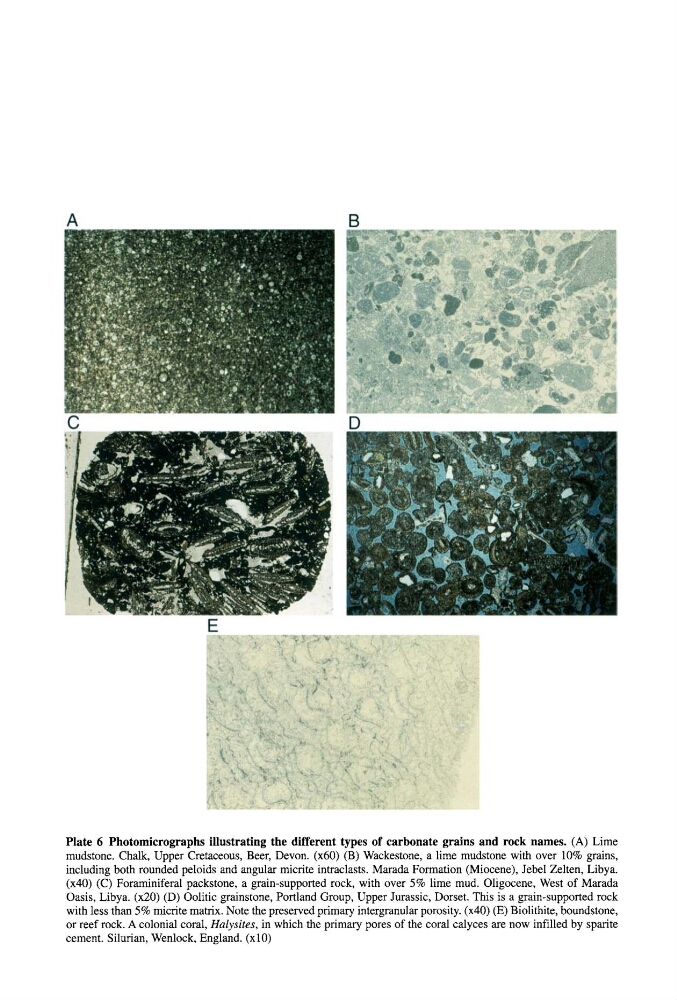
Plate 6 Photomicrographs illustrating the different types of carbonate grains and rock names. (A) Lime
mudstone. Chalk, Upper Cretaceous, Beer, Devon. (x60) (B) Wackestone, a lime mudstone with over 10% grains,
including both rounded peloids and angular micrite intraclasts. Marada Formation (Miocene), Jebel Zelten, Libya.
(x40) (C) Foraminiferal packstone, a grain-supported rock, with over 5% lime mud. Oligocene, West of Marada
Oasis, Libya. (x20) (D) Oolitic grainstone, Portland Group, Upper Jurassic, Dorset. This is a grain-supported rock
with less than 5% micrite matrix. Note the preserved primary intergranular porosity. (x40) (E) Biolithite, boundstone,
or reef rock. A colonial coral, Halysites, in which the primary pores of the coral calyces are now infilled by sparite
cement. Silurian, Wenlock, England. (xl0)
mudstone. Chalk, Upper Cretaceous, Beer, Devon. (x60) (B) Wackestone, a lime mudstone with over 10% grains,
including both rounded peloids and angular micrite intraclasts. Marada Formation (Miocene), Jebel Zelten, Libya.
(x40) (C) Foraminiferal packstone, a grain-supported rock, with over 5% lime mud. Oligocene, West of Marada
Oasis, Libya. (x20) (D) Oolitic grainstone, Portland Group, Upper Jurassic, Dorset. This is a grain-supported rock
with less than 5% micrite matrix. Note the preserved primary intergranular porosity. (x40) (E) Biolithite, boundstone,
or reef rock. A colonial coral, Halysites, in which the primary pores of the coral calyces are now infilled by sparite
cement. Silurian, Wenlock, England. (xl0)