

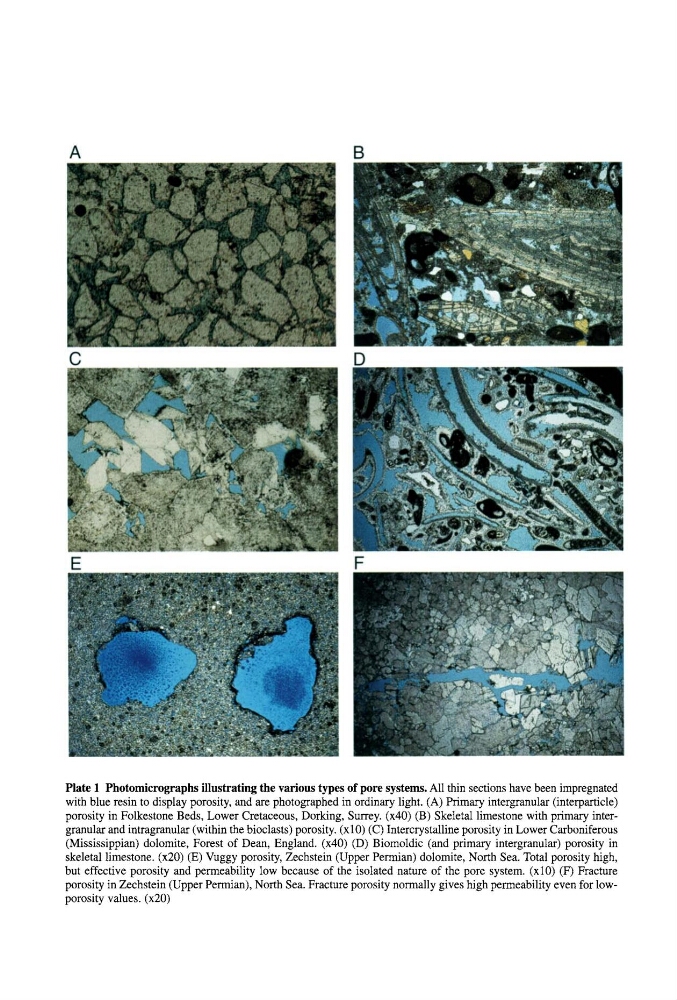
Plate 1 Photomicrographs illustrating the various types of pore systems. All thin sections have been impregnated
with blue resin to display porosity, and are photographed in ordinary light. (A) Primary intergranular (interparticle)
porosity in Folkestone Beds, Lower Cretaceous, Dorking, Surrey. (x40) (B) Skeletal limestone with primary intergranular and intragranular (within the bioclasts) porosity. (xl0) (C) Intercrystalline porosity in Lower Carboniferous
(Mississippian) dolomite, Forest of Dean, England. (x40) (D) Biomoldic (and primary intergranular) porosity in
skeletal limestone. (x20) (E) Vuggy porosity, Zechstein (Upper Permian) dolomite, North Sea. Total porosity high,
but effective porosity and permeability low because of the isolated nature of the pore system. (xl0) (F) Fracture
porosity in Zechstein (Upper Permian), North Sea. Fracture porosity normally gives high permeability even for lowporosity values. (x20)
with blue resin to display porosity, and are photographed in ordinary light. (A) Primary intergranular (interparticle)
porosity in Folkestone Beds, Lower Cretaceous, Dorking, Surrey. (x40) (B) Skeletal limestone with primary intergranular and intragranular (within the bioclasts) porosity. (xl0) (C) Intercrystalline porosity in Lower Carboniferous
(Mississippian) dolomite, Forest of Dean, England. (x40) (D) Biomoldic (and primary intergranular) porosity in
skeletal limestone. (x20) (E) Vuggy porosity, Zechstein (Upper Permian) dolomite, North Sea. Total porosity high,
but effective porosity and permeability low because of the isolated nature of the pore system. (xl0) (F) Fracture
porosity in Zechstein (Upper Permian), North Sea. Fracture porosity normally gives high permeability even for lowporosity values. (x20)